AI Human Impact: The Startling Paradox of American Acceptance and Deep-Seated Fear
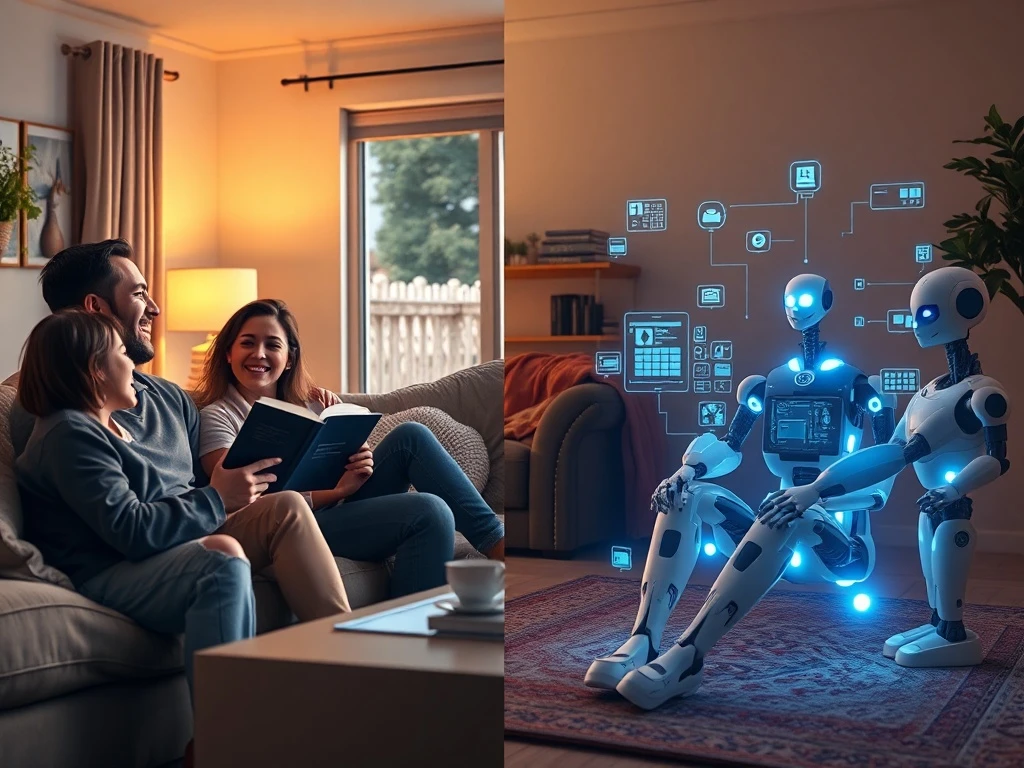
In September 2025, a comprehensive Pew Research Center survey unveiled a startling contradiction in the American technological psyche: while artificial intelligence has become embedded in daily life, a growing majority of citizens fear it threatens their fundamental humanity. This 5,000-adult study reveals that exactly half of Americans now report feeling more worried than excited about AI’s rapid advancement, marking a significant shift from previous years and highlighting a critical moment in human-technology relations.
The AI Human Impact: Convenience Versus Core Identity
The Pew Research Center’s June 2025 survey methodology employed stratified random sampling across all 50 states, ensuring demographic representation matching U.S. Census data. Researchers conducted both online and telephone interviews, asking participants to rate their emotional responses to AI integration across multiple life domains. Consequently, the results show a nation deeply divided about technological progress.
Also read: AI Trading Agents: The Revolutionary Path to Mastering Your Crypto Portfolio in 2025
Specifically, 73% of respondents expressed willingness to delegate repetitive domestic tasks to AI systems. These tasks include cleaning, scheduling, and basic household management. However, this practical acceptance comes with significant conditions. Importantly, 61% of those same respondents demanded explicit safeguards preventing AI from invading all life spheres. This conditional acceptance pattern reveals what psychologists call “calculated adoption”—using technology while maintaining psychological distance.
Artificial Intelligence Fears Rooted in Human Essence
The survey’s most revealing findings concern perceived threats to human uniqueness. Over half of participants (53%) believe AI systems actively reduce human creativity by providing prefabricated solutions. Simultaneously, 50% worry that AI weakens genuine human relationships through excessive mediation. These concerns have grown substantially since 2019, when only 37% expressed similar apprehensions.
Also read: RunBot AI Trading Bot: Revolutionizing Automated Cryptocurrency Strategies with Machine Learning
Stanford University’s 2025 AI Index Report provides crucial context for these findings. The international study shows similar patterns across developed nations, with Germany and the United Kingdom displaying comparable anxiety levels. However, American concerns appear particularly pronounced regarding creativity and social connection, possibly reflecting cultural values around individualism and innovation.
The Generational Divide in Technology Perception
Contrary to expectations, younger Americans demonstrate greater pessimism despite higher AI familiarity. The survey reveals that 61% of those under 30 believe AI harms creativity, compared to just 42% of those over 65. This generational pattern appears consistent across multiple studies, including recent campus surveys showing Generation Z doubts about AI’s educational impact.
Academic research from MIT and UC Berkeley helps explain this paradox. Younger generations, having grown up with digital technology, possess more nuanced understanding of both capabilities and limitations. They recognize AI’s potential for both assistance and displacement, leading to more complex emotional responses than simple enthusiasm or rejection.
Pew Research AI 2025: The Expert-Public Perception Gap
The survey reveals a dramatic divergence between expert and public opinion. While 56% of AI specialists anticipate positive economic impacts, only 17% of the general public shares this optimism. This 39-percentage-point gap represents one of the largest expert-public divides in technology history, exceeding previous gaps observed during internet and smartphone adoption periods.
| Belief Category | Experts Agreeing | Public Agreeing | Gap |
|---|---|---|---|
| Positive Economic Impact | 56% | 17% | 39% |
| Enhanced Creativity | 48% | 22% | 26% |
| Improved Relationships | 31% | 15% | 16% |
| Trust in AI Content | 42% | 18% | 24% |
This perception gap has significant policy implications. The Gallup-SCSP 2025 study shows 72% of Americans now want stricter government AI regulation, reflecting public desire for oversight that experts often consider unnecessary or innovation-hindering. This regulatory tension will likely dominate technology policy debates through the late 2020s.
Technology Adoption Psychology: The Control Imperative
Human psychology research explains why Americans demand control alongside adoption. The University of Chicago’s Technology Acceptance Model, updated in 2024, identifies perceived control as the strongest predictor of technology adoption after perceived usefulness. When people feel they can limit technology’s scope and influence, acceptance increases dramatically despite underlying concerns.
The survey identifies three primary control mechanisms Americans desire:
- Scope limitation: Keeping AI out of personal relationships and creative endeavors
- Transparency requirements: Knowing when they’re interacting with AI versus humans
- Manual override: Maintaining ability to disconnect AI systems completely
These control mechanisms represent what sociologists call “boundary maintenance”—establishing clear lines between technological assistance and human autonomy. Successful AI implementation in coming years will likely depend on honoring these psychological boundaries.
Minority Communities and Amplified Concerns
The survey reveals particularly strong concerns among minority and vulnerable populations. Historical experiences with biased systems have created what researchers term “algorithmic distrust”—skepticism rooted in documented discrimination patterns. Multiple academic studies confirm these concerns, showing AI systems often amplify existing social biases in employment, housing, and justice applications.
Harvard’s Algorithmic Justice Project 2024 report provides concrete examples. Facial recognition systems show significantly higher error rates for darker-skinned individuals, while hiring algorithms frequently disadvantage applicants from non-traditional educational backgrounds. These documented problems validate minority concerns and explain their heightened survey responses.
AI Societal Concerns: The Trust Deficit
A critical finding involves Americans’ declining ability to distinguish AI-generated from human-created content. Over half of survey participants (52%) admit they cannot reliably make this distinction, creating what psychologists call “reality uncertainty.” This confusion fuels broader trust issues, particularly as confidence in major technology companies has declined steadily since 2020.
The trust deficit manifests in several concerning ways:
- Increased skepticism toward all digital information
- Reluctance to use AI for important decisions
- Preference for human interaction despite AI efficiency
- Resistance to AI in education and healthcare
Rebuilding this trust represents perhaps the greatest challenge for AI developers and policymakers. Without addressing fundamental trust issues, even technically superior AI systems may face public rejection or limited adoption.
Conclusion
The 2025 Pew Research findings reveal a nation at a technological crossroads regarding AI human impact. Americans clearly recognize artificial intelligence’s practical benefits while simultaneously fearing its potential to erode human uniqueness. This paradox will likely define technology adoption patterns through the remainder of the decade. Successful integration will require addressing not just technical capabilities but profound psychological and social concerns. Ultimately, the future of AI in America depends on balancing efficiency with humanity, convenience with connection, and progress with preservation of what makes us uniquely human.
FAQs
Q1: What percentage of Americans are more worried than excited about AI according to the 2025 survey?
Exactly 50% of Americans report feeling more worried than excited about artificial intelligence, representing a significant increase from 37% in 2019 and indicating growing public apprehension.
Q2: How do younger and older Americans differ in their AI concerns?
Younger Americans (under 30) show greater concern despite higher AI familiarity, with 61% believing AI harms creativity compared to 42% of those over 65, revealing a surprising generational pattern.
Q3: What tasks are Americans most willing to delegate to AI systems?
73% of Americans would accept AI assistance with repetitive domestic chores like cleaning and scheduling, but this acceptance is conditional on maintaining control over AI’s scope and influence.
Q4: How large is the gap between expert and public opinion on AI’s economic impact?
The gap is substantial: 56% of AI experts anticipate positive economic impacts while only 17% of the public agrees, creating a 39-percentage-point divergence in perception.
Q5: What regulatory measures do Americans want regarding AI development?
72% of Americans support stricter government regulation of artificial intelligence, reflecting strong public desire for oversight and safeguards as AI becomes more integrated into daily life.

This article was produced with AI assistance and reviewed by our editorial team for accuracy and quality.