AI Energy Consumption Sparks Alarming Backlash, Repeating Crypto Mining’s Costly Mistakes
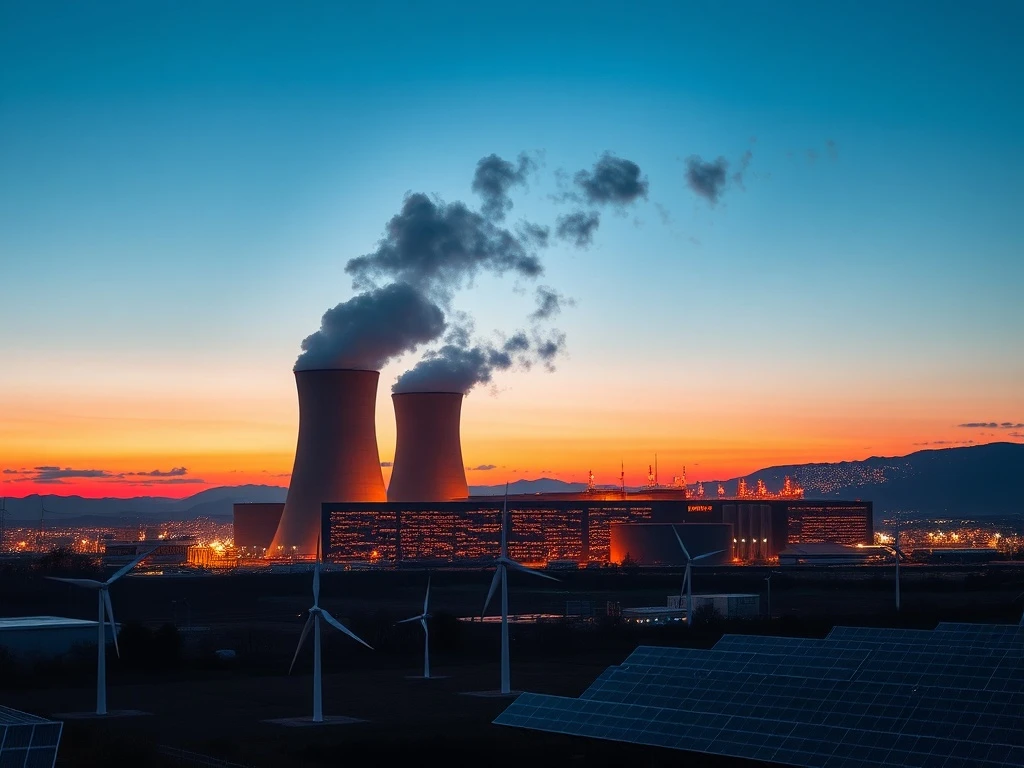
Across the United States in early 2025, a growing wave of local resistance is blocking artificial intelligence infrastructure projects, mirroring the contentious battles once fought against cryptocurrency mining operations. Communities from Oregon to Georgia are rejecting AI data center developments, creating a significant obstacle for technology companies pursuing the next phase of artificial intelligence expansion. This emerging pattern reveals how AI energy consumption is triggering the same public backlash that cryptocurrency mining faced years earlier, raising fundamental questions about sustainable technological growth.
AI Energy Consumption Meets Community Resistance
Artificial intelligence systems require rare computational power, driving massive energy demands that strain local infrastructure. According to industry reports, data center projects worth approximately $64 billion currently face delays or cancellations due to organized opposition. Citizen groups, municipal governments, and environmental organizations have mobilized against these developments, citing concerns about electricity grid stability, water resource depletion, and increased utility costs for residents. This grassroots movement represents a significant shift in public perception toward technology infrastructure projects.
Also read: AI Trading Agents: The Revolutionary Path to Mastering Your Crypto Portfolio in 2025
The resistance follows a familiar pattern established during the cryptocurrency mining boom of the late 2010s and early 2020s. During that period, Bitcoin mining operations faced similar opposition in communities where they concentrated, particularly in regions with inexpensive electricity. Residents complained about noise pollution from cooling systems, skyrocketing energy prices, and the environmental impact of fossil-fuel-powered mining operations. Today, AI companies encounter identical objections as they seek locations for their energy-intensive data centers.
Data Center Expansion Faces Organized Opposition
Current tracking indicates 142 active citizen groups specifically opposing data center developments across multiple states. These organizations employ various strategies including legal challenges, municipal ballot initiatives, and public awareness campaigns. Their concerns extend beyond immediate environmental impacts to broader questions about resource allocation and community benefit. Many communities question whether the promised economic benefits—primarily temporary construction jobs and tax revenues—justify the permanent infrastructure burdens.
Also read: RunBot AI Trading Bot: Revolutionizing Automated Cryptocurrency Strategies with Machine Learning
The geographical distribution of opposition reveals strategic patterns. Resistance concentrates in regions previously targeted by cryptocurrency mining operations, particularly areas with historically low electricity costs and favorable regulatory environments. Texas, Virginia, Georgia, and Oregon have emerged as primary battlegrounds, with local governments increasingly responsive to constituent concerns about energy infrastructure. This regional concentration suggests that communities learn from previous technological expansions and apply those lessons to new developments.
The Parallels Between AI and Crypto Infrastructure
Industry analysts identify striking similarities between current AI infrastructure challenges and those faced by cryptocurrency mining operations. Both technologies share fundamental characteristics that drive community opposition. They require massive, continuous power consumption, generate substantial heat requiring extensive cooling systems, and offer limited direct employment benefits to host communities after construction completion. Additionally, both industries initially operated with minimal regulatory oversight, only facing organized resistance after achieving significant scale.
Historical data reveals important lessons from the cryptocurrency mining experience. During peak opposition periods between 2020 and 2023, numerous mining operations relocated to regions with less organized resistance or greater regulatory flexibility. Some companies developed mitigation strategies including renewable energy integration and community benefit agreements. However, these adaptations often proved insufficient to overcome fundamental concerns about resource consumption and environmental impact.
Nuclear Power Emerges as Controversial Solution
Facing mounting resistance to conventional energy sourcing, some technology companies are pursuing nuclear power as a potential solution. Fermi America’s proposed Texas campus represents the most ambitious example, combining AP1000 nuclear reactors with high-density data centers in a single integrated facility. This approach aims to bypass local grid constraints by creating dedicated power generation specifically for AI computational needs. The project has received federal support through tax incentives and regulatory streamlining.
However, nuclear-powered data centers face their own opposition challenges. Local communities express concerns about safety risks, radioactive waste management, and the long-term environmental impact of nuclear facilities. Additionally, critics question whether concentrating both power generation and consumption in private corporate hands represents responsible energy policy. The debate reflects broader tensions between technological acceleration and sustainable development principles.
Alternative energy solutions under consideration include:
- Geographically distributed computing: Spreading computational loads across multiple smaller facilities
- Renewable energy integration: Combining solar, wind, and geothermal resources
- Energy efficiency innovations: Developing more efficient cooling and processing technologies
- Load balancing systems: Shifting computational workloads based on grid capacity
Regulatory Responses and Policy Developments
Government agencies at multiple levels are developing regulatory frameworks to address AI infrastructure challenges. Several states have proposed legislation requiring environmental impact assessments for large data center projects. Federal agencies are examining electricity grid capacity issues and considering infrastructure investment priorities. These regulatory developments reflect growing recognition that AI expansion cannot proceed without addressing its energy implications.
International comparisons provide useful context for American policymakers. European Union regulations already impose stricter energy efficiency requirements on data centers, while some Asian nations integrate data center planning with national energy strategies. These approaches offer potential models for balancing technological advancement with sustainable development goals. However, implementing similar frameworks in the United States faces significant political and economic hurdles.
Industry Adaptation and Technological Innovation
Technology companies are responding to energy challenges through both operational adjustments and technological innovation. Major AI developers are investing in more energy-efficient algorithms and processor architectures. Some firms are exploring novel cooling technologies that reduce water consumption and energy requirements. Additionally, industry leaders are developing more sophisticated load management systems that optimize computational workloads based on real-time energy availability.
These adaptations reflect broader industry recognition that energy constraints represent a fundamental limitation on AI scalability. Without significant improvements in energy efficiency, artificial intelligence development faces inherent growth limitations. This realization drives substantial research investment in alternative computing paradigms including quantum computing and neuromorphic architectures that promise dramatically improved energy efficiency.
Economic Implications and Market Dynamics
The energy infrastructure challenges facing AI development have significant economic implications. Delayed or cancelled data center projects affect technology company growth projections and investment timelines. Energy costs increasingly influence AI service pricing and availability. Additionally, regions that successfully balance energy infrastructure with community concerns may gain competitive advantages in attracting technology investment.
Market analysts observe that energy considerations are becoming central to AI company valuations and investment decisions. Companies with proven energy-efficient technologies or reliable renewable energy access command premium valuations. Conversely, firms dependent on conventional energy sources face increasing scrutiny from investors concerned about regulatory risks and operational sustainability. This market dynamic creates powerful incentives for energy innovation throughout the AI industry.
Conclusion
The emerging backlash against AI energy consumption represents a critical inflection point for technological development. As artificial intelligence systems increasingly mirror cryptocurrency mining’s infrastructure challenges, technology companies must develop more sustainable approaches to growth. The parallel experiences of both industries demonstrate that technological advancement cannot proceed independently of community concerns and environmental considerations. Successful AI expansion will require innovative energy solutions, responsive regulatory frameworks, and genuine community engagement. The current wave of opposition serves as a necessary corrective, pushing the industry toward more sustainable practices that balance innovation with responsibility. Ultimately, addressing AI energy consumption challenges represents not merely a technical problem but a fundamental test of our ability to develop technology that serves both human progress and planetary limits.
FAQs
Q1: How does AI energy consumption compare to cryptocurrency mining?
Both technologies require massive, continuous electricity for computational processes, but AI training and inference operations can demand even greater sustained power than cryptocurrency mining. While Bitcoin mining primarily performs repetitive cryptographic calculations, AI systems execute complex neural network operations across specialized hardware, often consuming comparable or greater energy per facility.
Q2: Why are communities opposing AI data center developments?
Communities cite multiple concerns including strain on local electricity grids, increased utility costs for residents, water resource depletion for cooling systems, environmental impacts, and limited long-term employment benefits. Many communities previously experienced similar issues with cryptocurrency mining operations and are applying those lessons to AI infrastructure proposals.
Q3: What solutions are technology companies proposing for energy challenges?
Companies are exploring multiple approaches including nuclear-powered data centers, renewable energy integration, more efficient cooling technologies, geographically distributed computing architectures, and algorithmic improvements that reduce energy requirements. Some firms are also developing community benefit agreements and environmental mitigation plans.
Q4: How does regulatory policy affect AI infrastructure development?
Regulatory frameworks influence where and how data centers can be built, what environmental assessments are required, energy sourcing requirements, and community consultation processes. Stricter regulations in some regions are pushing development toward areas with more favorable policies, creating geographical concentration of AI infrastructure.
Q5: What are the long-term implications of energy constraints on AI development?
Energy limitations may fundamentally shape AI advancement by prioritizing energy-efficient algorithms and hardware architectures. Companies that solve energy challenges may gain significant competitive advantages, while those that cannot adapt may face growth limitations. Ultimately, sustainable energy solutions will determine the scale and accessibility of future AI systems.

This article was produced with AI assistance and reviewed by our editorial team for accuracy and quality.