Agricultural Tractors Market Poised for Robust Growth, Projected to Hit $89.43 Billion by 2031
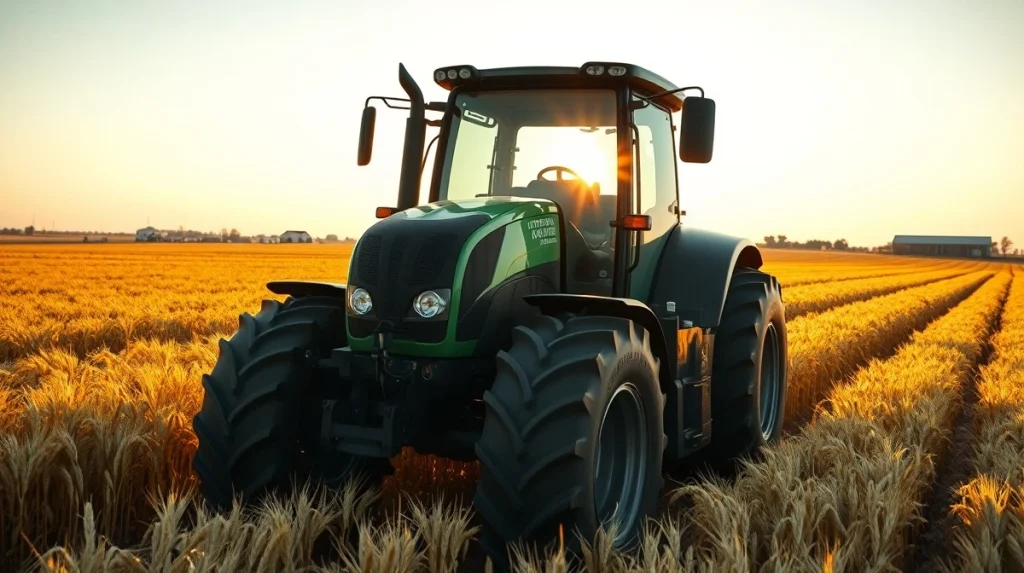
The global agricultural tractors market is on a significant growth trajectory, with industry analysis from Mordor Intelligence projecting its value to reach USD 89.43 billion by 2031. This expansion, detailed in a recent market report, reflects a fundamental transformation in farming practices worldwide. Driven by the urgent need for enhanced food security and operational efficiency, farmers are increasingly adopting advanced machinery. Consequently, this shift is reshaping agricultural landscapes from North America to Asia-Pacific.
Agricultural Tractors Market: Core Drivers and Current Valuation
Several interconnected factors are fueling demand for modern agricultural tractors. Primarily, the global push for food security amidst a growing population necessitates higher farm productivity. Simultaneously, labor shortages in rural areas are accelerating the adoption of automated solutions. Furthermore, government subsidies in key regions like India and the European Union are making advanced machinery more accessible to farmers. The integration of precision agriculture technologies, including GPS guidance and telematics, is also a major catalyst. These systems allow for precise planting, fertilizing, and harvesting, which optimizes resource use and boosts yields.
Also read: M Series ANC Token Presale Launches with Detailed Vesting
Market growth is not uniform, however. Regional disparities in economic development, farm size, and technological adoption create varied growth patterns. For instance, North America and Europe are currently leaders in adopting high-horsepower, connected tractors. In contrast, markets in Asia-Pacific and Africa show stronger growth in the utility and compact tractor segments. This segmentation is crucial for understanding the overall market dynamics.
Key Growth Segments and Power Ratings
The market is broadly segmented by engine power, which dictates capability and price. The demand surge is particularly notable in certain categories.
Also read: Pepeto Presale Attracts Investor Interest Amid Meme Coin Rally
- High-Power Tractors (Above 100 HP): This segment dominates in large-scale commercial farming operations, especially in North America and Eastern Europe. These machines are essential for covering vast acreages efficiently.
- Medium-Power Tractors (40-100 HP): Representing a versatile segment, these tractors are popular among mid-sized farms for multi-purpose tasks like plowing, hauling, and operating implements.
- Low-Power Tractors (Below 40 HP): Experiencing rapid growth in Asia and parts of Africa, these compact and utility tractors are suited for smallholder farms and specialized tasks like horticulture.
Technological Innovation as a Primary Catalyst
Technological integration is the most transformative force in the tractor industry. Modern tractors are increasingly evolving into connected data hubs on wheels. The proliferation of Internet of Things (IoT) sensors enables real-time monitoring of engine performance, fuel consumption, and implement status. Moreover, the adoption of autonomous and semi-autonomous driving systems is beginning to move from concept to limited commercial reality. These systems promise to alleviate driver fatigue and allow for 24/7 operation during critical windows like harvest.
Another significant trend is the development of alternative fuel sources. With sustainability becoming a core concern, manufacturers are investing in electric and hybrid-electric tractor prototypes. While still a nascent segment, these developments signal a long-term shift toward reducing the carbon footprint of farm operations. Additionally, data analytics platforms that interpret information collected by tractors are becoming valuable tools for farm management decisions.
The Competitive Landscape and Major Players
The market remains competitive, with several established global corporations and strong regional players. Companies like Deere & Company, CNH Industrial, and AGCO Corporation maintain significant market share through extensive dealer networks and continuous R&D investment. Their competition focuses on reliability, after-sales service, and the integration of proprietary precision farming ecosystems. Meanwhile, Asian manufacturers, such as Mahindra & Mahindra and Kubota, compete effectively on value, durability, and suitability for local conditions. This competition drives innovation and helps expand market access.
Regional Analysis and Growth Hotspots
Market growth exhibits strong regional characteristics influenced by local agriculture, policy, and economic conditions.
Asia-Pacific: This region is anticipated to be the fastest-growing market through 2031. Government support programs, like India’s subsidy scheme, and the mechanization of small farms are primary drivers. China’s focus on modernizing its agricultural sector also contributes substantially to regional demand.
North America: As a mature market, growth here is driven by replacement cycles and the adoption of cutting-edge technology. Large farm consolidations favor high-horsepower, technologically sophisticated equipment. The United States and Canada are central to this trend.
Europe: Stringent emissions regulations, such as the Stage V standards, are pushing the replacement of older machinery. Furthermore, the Common Agricultural Policy (CAP) provides funding that indirectly supports machinery investment. Precision farming adoption is exceptionally high in Western Europe.
Latin America and Africa: These regions present long-term growth opportunities tied to economic development and the expansion of commercial farming. However, growth can be volatile, influenced by commodity prices and foreign exchange rates.
Challenges and Market Constraints
Despite the optimistic outlook, the agricultural tractor market faces notable headwinds. The high capital cost of advanced tractors remains a significant barrier, particularly for small-scale farmers in developing economies. Fluctuating commodity prices directly affect farm incomes and, consequently, machinery purchasing decisions. Additionally, the complexity of new technologies requires specialized skills for operation and maintenance, creating a training gap in some regions. Supply chain vulnerabilities for critical components like semiconductors can also lead to production delays and increased costs.
Conclusion
The projected growth of the agricultural tractors market to USD 89.43 billion by 2031 underscores its critical role in the future of global agriculture. This expansion is fundamentally linked to the broader adoption of precision farming and automation technologies. While regional variations and economic challenges persist, the overarching trend points toward smarter, more efficient, and more connected farm machinery. The evolution of the agricultural tractor from a simple pulling machine to an intelligent, data-generating asset will continue to redefine productivity and sustainability in farming for years to come.
FAQs
Q1: What is the main driver for the growth of the agricultural tractors market?
The primary driver is the global need for increased food production efficiency, leading to higher adoption of mechanization and precision farming technologies like GPS and IoT-enabled equipment.
Q2: Which region is expected to see the fastest growth in tractor sales?
The Asia-Pacific region, fueled by government subsidies and the mechanization of smallholder farms in countries like India and China, is projected to be the fastest-growing market.
Q3: How is technology changing modern agricultural tractors?
Modern tractors are becoming connected data hubs, integrating telematics for remote monitoring, GPS for auto-guidance, and advanced sensors. Developments in autonomous operation and alternative fuels like electricity are also emerging.
Q4: What are the major challenges facing the tractor market?
Key challenges include the high initial cost of advanced machinery, volatility in farm commodity incomes, the need for operator training on complex systems, and supply chain disruptions for essential components.
Q5: Who are the leading companies in the global agricultural tractor industry?
The market is led by global corporations such as Deere & Company, CNH Industrial (brands: Case IH, New Holland), and AGCO (brands: Massey Ferguson, Fendt). Strong regional players like Mahindra & Mahindra and Kubota also hold significant market share.

This article was produced with AI assistance and reviewed by our editorial team for accuracy and quality.