Address Poisoning Attack: Devastating $600K USDT Theft Exposes Critical Crypto Vulnerability
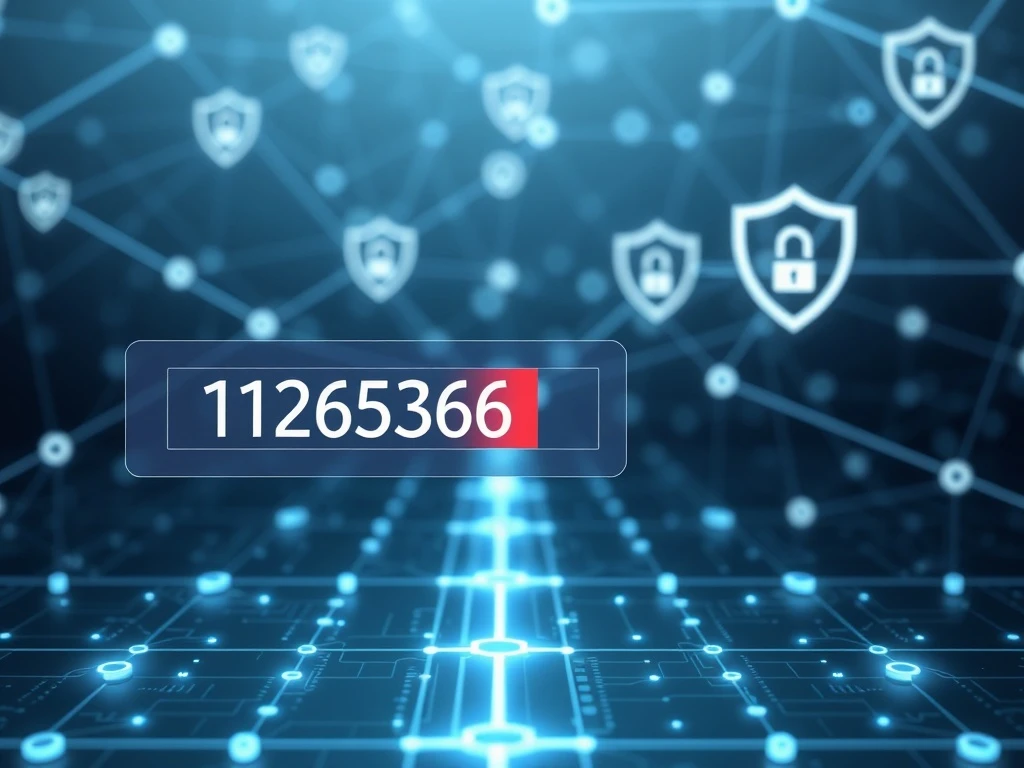
On-chain investigators revealed a devastating $600,000 USDT theft this week, exposing the sophisticated mechanics of an address poisoning attack that continues to threaten cryptocurrency users globally. The victim, identified by wallet address “0xce3…1b89b,” lost 599,496.93 USDT in a meticulously executed scam that highlights critical vulnerabilities in current blockchain security practices. This incident represents one of the most significant address poisoning losses recorded in 2025, according to blockchain forensic analysts.
Understanding the Address Poisoning Attack Mechanism
Address poisoning represents a particularly insidious form of cryptocurrency theft. Attackers generate wallet addresses that closely resemble a victim’s legitimate address. They then send tiny, worthless transactions to the victim’s wallet. Consequently, the fraudulent address appears in the victim’s transaction history. When users later attempt to send funds, they might accidentally copy the similar-looking fraudulent address from their history. This deception results in irreversible fund transfers to the attacker’s control.
Also read: Crypto Listing Scams: Binance CEO Changpeng Zhao Issues Critical Warning to Investors
The recent $600K USDT theft demonstrates this attack’s effectiveness. Blockchain data shows the attacker created an address with identical first and last characters to the victim’s legitimate address. The middle section contained subtle variations that most users would overlook during routine transactions. Security experts note that attackers often use automated tools to generate millions of address variations until they find convincing matches.
How Address Poisoning Differs from Other Crypto Scams
Unlike phishing attacks that rely on deceptive websites or social engineering, address poisoning exploits wallet interface design and user behavior patterns. The attack doesn’t require compromising private keys or smart contracts. Instead, it capitalizes on the human tendency to recognize patterns rather than verify complete strings. Blockchain analysts emphasize that this attack vector has grown more prevalent as cryptocurrency adoption increases among less technically experienced users.
The $600K USDT Theft: Timeline and Impact Analysis
Blockchain forensic examination reveals the attack unfolded over several days. Initially, the attacker sent 0.0001 USDT to the victim’s wallet from the poisoned address. This transaction created a historical record that would later appear when the victim checked their transaction history. Several days later, the victim initiated a legitimate 599,496.93 USDT transfer. Evidence suggests they copied what appeared to be their own receiving address from their transaction history, inadvertently selecting the attacker’s poisoned address instead.
The funds transferred instantly to the attacker’s wallet. Within hours, the attacker moved the stolen USDT through multiple addresses and decentralized exchanges. This rapid movement complicated recovery efforts significantly. The victim’s loss represents not just financial damage but also highlights systemic issues in current wallet security designs. Industry experts report that similar attacks have stolen approximately $47 million in various cryptocurrencies over the past twelve months.
Real-World Consequences and Industry Response
Major wallet providers have begun implementing additional verification measures following this high-profile incident. Several platforms now display warning messages when users attempt to send funds to addresses that closely resemble their own. Additionally, some services have introduced address book features with verified labels to reduce dependency on copying from transaction histories. Despite these improvements, security researchers caution that fundamental behavioral changes remain essential for comprehensive protection.
Technical Analysis of Address Generation Vulnerabilities
Ethereum and EVM-compatible addresses follow specific generation protocols that create potential vulnerabilities. These addresses consist of 42 hexadecimal characters (0-9, a-f) beginning with “0x.” The probability of generating two addresses with identical beginning and ending sequences increases as more addresses enter circulation. While mathematically improbable to generate exact duplicates, creating visually similar addresses requires substantially less computational effort.
Security researchers have identified several concerning patterns:
- Character substitution: Attackers replace similar-looking characters (0/O, 1/l/I)
- Position manipulation: Maintaining identical first 6 and last 4 characters while varying middle sections
- Case variation: Exploiting case-insensitive address displays in some wallet interfaces
The table below illustrates common address poisoning techniques:
| Technique | Example Variation | Detection Difficulty |
|---|---|---|
| Character substitution | 0xce3…1b89b → 0xce3…1b89B | High (casual glance) |
| Middle variation | 0xce3a7…1b89b → 0xce3b7…1b89b | Very High |
| Length manipulation | 0xce3…1b89b → 0xce3…1b89ba | Medium (requires counting) |
Protective Measures Against Address Poisoning Attacks
Cryptocurrency users can implement multiple strategies to prevent address poisoning incidents. First, always verify the complete address before confirming any transaction. Wallet applications should display addresses with proper formatting and verification features. Additionally, using address books or saved contacts for frequent transactions significantly reduces risk. Many security experts recommend implementing a “double-check” system where users verify both the first eight and last eight characters independently.
Advanced users might consider these additional precautions:
- Enable transaction preview features that highlight address differences
- Use wallet applications with address poisoning detection algorithms
- Implement multi-signature requirements for large transactions
- Regularly clear transaction histories of small, unfamiliar transactions
- Utilize ENS (Ethereum Name Service) domains for human-readable addresses
Industry-Wide Security Enhancements
Wallet developers and blockchain projects have accelerated security improvements following this incident. Several major platforms now incorporate visual indicators when addresses share significant character sequences. Some applications use color-coding or warning symbols for potentially suspicious addresses. Furthermore, educational initiatives have increased focus on address verification best practices. The cryptocurrency industry recognizes that user education remains as vital as technical solutions for comprehensive security.
Blockchain Forensic Investigation Methods
Specialized firms employ sophisticated techniques to trace address poisoning attacks. These methods include transaction pattern analysis, address clustering algorithms, and exchange coordination. Investigators first identify the initial poisoning transaction, typically involving minuscule amounts. They then track fund movement through the blockchain, identifying mixing services or decentralized exchanges used for obfuscation. While recovery remains challenging, these investigations help identify attacker patterns and prevent future incidents.
Recent advancements in blockchain analytics have improved detection capabilities. Machine learning algorithms now identify address generation patterns associated with poisoning attacks. These systems analyze millions of addresses to detect clusters engaged in suspicious activities. Additionally, improved coordination between exchanges has facilitated faster freezing of stolen assets in some cases. However, the pseudonymous nature of blockchain transactions continues to present significant challenges for complete asset recovery.
Regulatory and Legal Implications
The $600K USDT theft has prompted renewed discussions about cryptocurrency regulation. Law enforcement agencies increasingly treat address poisoning as a form of digital fraud rather than simple user error. Several jurisdictions have begun developing specific legal frameworks for blockchain-based crimes. Meanwhile, international cooperation has improved for cross-border investigations of significant cryptocurrency thefts. Legal experts anticipate more stringent requirements for wallet providers and exchanges regarding user education and security features.
Insurance and Recovery Considerations
Cryptocurrency insurance products have evolved to address address poisoning risks. Some policies now offer partial coverage for such incidents, particularly for institutional holders. However, individual users typically lack insurance options for these attacks. Recovery services specializing in cryptocurrency theft have emerged, though success rates remain relatively low for well-executed poisoning attacks. The industry continues to debate responsibility allocation between users, wallet providers, and blockchain protocols for such security incidents.
Conclusion
The devastating $600K USDT theft through an address poisoning attack underscores persistent vulnerabilities in cryptocurrency security practices. This incident highlights the critical need for improved wallet interfaces, user education, and industry-wide security standards. While technical solutions continue to evolve, user vigilance remains the most effective defense against such sophisticated attacks. The cryptocurrency community must prioritize address verification protocols and security awareness to prevent similar losses. As blockchain technology advances, comprehensive protection against address poisoning attacks will require both technological innovation and behavioral adaptation from all participants in the digital asset ecosystem.
FAQs
Q1: What exactly is an address poisoning attack?
An address poisoning attack occurs when scammers generate cryptocurrency wallet addresses that closely resemble a victim’s legitimate address. They send tiny transactions to the victim, making their fake address appear in the transaction history. When the victim later copies an address from their history, they might accidentally select the fraudulent address, sending funds directly to the attacker.
Q2: Can stolen funds be recovered from an address poisoning attack?
Recovery is extremely difficult because blockchain transactions are irreversible by design. Once funds transfer to the attacker’s wallet, they typically move quickly through multiple addresses and exchanges. While law enforcement and blockchain investigators can sometimes trace the funds, successful recovery remains rare without the attacker’s voluntary cooperation.
Q3: How can I check if an address in my history is poisoned?
Carefully compare the complete address character-by-character with your verified legitimate address. Pay particular attention to the middle sections, as attackers often keep the beginning and ending characters identical while changing the middle portion. Use wallet features that highlight address differences, and never rely solely on the first and last few characters for verification.
Q4: Are certain cryptocurrencies more vulnerable to address poisoning?
All cryptocurrencies using similar address formats face this risk, but Ethereum and EVM-compatible chains (like Polygon, BSC, Arbitrum) are particularly vulnerable due to their hexadecimal address structure. Bitcoin’s different address formats present different challenges, but similar social engineering attacks exist across all blockchain networks.
Q5: What should I do if I discover a suspicious address in my transaction history?
Immediately label or note the suspicious address as potentially malicious in your wallet application. Avoid interacting with it further, and do not send any transactions to that address. Consider using a new wallet address for future transactions, and report the suspicious address to your wallet provider’s security team if they have such a reporting mechanism.

This article was produced with AI assistance and reviewed by our editorial team for accuracy and quality.