Breaking: $27M Aave Liquidation Shock Triggered by Critical wstETH Oracle Glitch
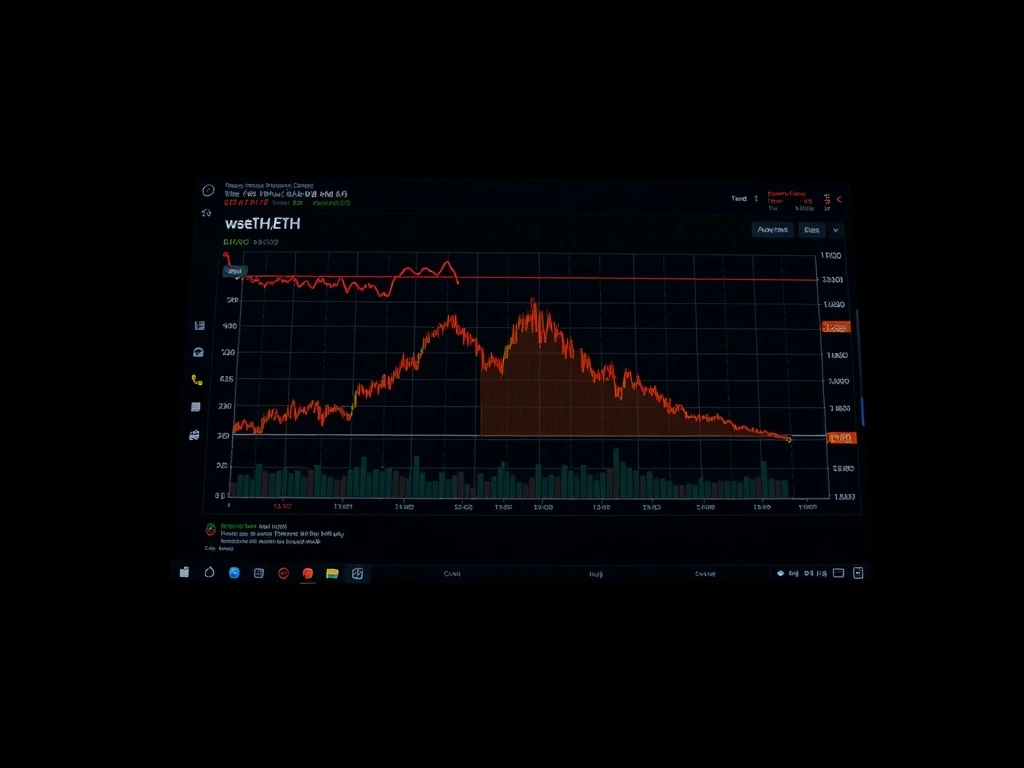
On March 15, 2026, the decentralized finance (DeFi) ecosystem experienced a significant shock when the Aave lending protocol suffered approximately $27 million in forced liquidations. The event originated from a critical malfunction in the wstETH price oracle, a core piece of infrastructure that supplies price data for the wrapped staked Ethereum token. Consequently, this technical failure triggered a cascade of automated liquidations across multiple blockchain networks where Aave operates, including Ethereum mainnet and layer-2 scaling solutions. The incident immediately raised urgent questions about the resilience of oracle systems, which are foundational to the multi-trillion-dollar DeFi sector’s stability.
The Aave Liquidation Cascade: A Technical Post-Mortem
The liquidation event began at approximately 08:47 UTC when the primary oracle feed for wstETH, supplied by a leading decentralized oracle network, reported a brief but severe price deviation. According to on-chain data analyzed by blockchain security firm CertiK, the oracle reported the wstETH/ETH exchange rate at a value roughly 30% below its true market price for a period of four minutes. This erroneous data was ingested by Aave’s smart contracts, which automatically flagged hundreds of user positions as undercollateralized. The protocol’s liquidation bots then executed the forced closure of these positions to protect the protocol’s solvency, resulting in the $27 million loss for affected users.
Also read: American Bitcoin Holdings Surge to 7,000 BTC as Trump Family Doubles Down on Crypto Strategy
Marc Zeller, Integration Lead at the Aave Chan Initiative, confirmed the sequence in a public statement on the Aave governance forum. “The incident stemmed from a temporary desynchronization in the wstETH price feed calculation on one oracle provider,” Zeller stated. “Our risk parameters and circuit breakers responded as designed to protect the protocol treasury, but the speed of the deviation led to user liquidations before manual intervention was possible.” The Aave team has since confirmed that the oracle feed has been stabilized and is reporting accurate prices.
Immediate Market Impact and User Consequences
The financial impact was immediate and severe for a concentrated group of DeFi users. The $27 million in liquidations represents one of the largest single-event losses on Aave not directly tied to a broader market crash. Analysis from data platform DeFiLlama shows the liquidations were not evenly distributed. Instead, they disproportionately affected high-tap into positions on the Ethereum mainnet that used wstETH as collateral to borrow other assets like USDC or DAI.
Also read: Binance Oil and Gas Futures Launch with 100x Utilize: A High-Stakes Gamble for Traders
- High-Tap into Positions Wiped Out: Users employing aggressive borrowing strategies against their wstETH collateral saw their entire positions liquidated, often with significant penalty fees absorbed by liquidation bots.
- Protocol Health Maintained: Despite user losses, Aave’s overall solvency was never at risk. The protocol’s total value locked (TVL) saw a minor dip of less than 0.5% following the event, indicating systemic resilience.
- Secondary Market Volatility: The event caused brief, localized volatility in the wstETH trading pair on several decentralized exchanges as arbitrage bots capitalized on the price discrepancy between the oracle and the market.
Expert Analysis on Oracle Reliability
Dr. Merav Ozair, a blockchain researcher and fintech professor at Rutgers Business School, contextualized the failure. “This event is a textbook example of the oracle problem in DeFi,” Ozair explained. “While decentralized oracle networks are strong, they are not infallible. A single point of failure in data sourcing or computation can propagate instantly through interconnected smart contracts. The 2024 upgrade to Ethereum’s consensus mechanism altered staking derivatives’ mechanics, introducing new complexities for oracles that price them.” Ozair’s research highlights that oracle-related incidents accounted for over $400 million in DeFi losses between 2021 and 2025, according to a Rekt Database report.
Historical Context: Oracle Failures in DeFi
The Aave wstETH incident is not an isolated event but part of a recurring pattern in decentralized finance. Oracle malfunctions have precipitated some of DeFi’s most costly exploits and operational failures. The sophistication of attacks and failures has evolved, moving from direct manipulation to more subtle flaws in data aggregation logic or dependencies on centralized components.
| Protocol/Incident | Year | Estimated Loss | Oracle Cause |
|---|---|---|---|
| Compound Finance (DAI Oracle) | 2021 | $89M (temporarily) | Erroneous price feed from Coinbase Pro | Mango Markets Exploit | 2022 | $114M | Oracle price manipulation via low-liquidity market |
| Euler Finance Flash Loan Attack | 2023 | $197M | Donation attack exploiting price update latency |
| Aave wstETH Glitch | 2026 | $27M | Oracle calculation desynchronization |
What Happens Next: Governance Response and Risk Mitigation
The Aave community is now actively discussing risk parameter adjustments and technical safeguards. A formal Arbitrary Execution (AE) proposal is expected on the Aave governance forum within days. This proposal will likely seek to reimburse a portion of affected users from the Aave treasury’s safety module, a move with precedent following past incidents. Technically, developers are evaluating immediate upgrades, including implementing a time-weighted average price (TWAP) oracle for wstETH and introducing a circuit breaker with a shorter activation delay for specific, volatile collateral assets.
Industry-Wide Ripple Effects and Stakeholder Reaction
The reaction from the broader DeFi community has been a mix of concern and pragmatic analysis. Lido Finance, the entity behind the stETH token that wstETH represents, issued a statement emphasizing the stability of the underlying staking derivative and distinguishing its protocol from the oracle failure. Meanwhile, competing lending protocols like Compound and Morpho have seen increased governance discussions about proactively reviewing their own wstETH oracle implementations. On social platforms, affected users have organized to share transaction histories and discuss potential recourse, while commentators debate the balance between decentralization, security, and user protection in automated financial systems.
Conclusion
The Aave liquidation shock triggered by the wstETH oracle glitch underscores a persistent vulnerability at the heart of decentralized finance. While the Aave protocol’s automated systems functioned to preserve its solvency, the event resulted in a substantial $27 million loss for users and exposed critical dependencies on external data feeds. The incident will likely accelerate existing trends toward more strong, multi-source, and delay-hardened oracle designs. For DeFi participants, it serves as a stark reminder that technological risk, particularly in complex systems combining smart contracts and oracles, remains as significant as market risk. The community’s response, through governance and technical innovation, will be a key indicator of DeFi’s maturation as the sector moves deeper into 2026.
Frequently Asked Questions
Q1: What exactly caused the $27M in liquidations on Aave?
The liquidations were caused by a temporary glitch in the price oracle for wstETH (wrapped staked Ethereum). For approximately four minutes, the oracle reported an incorrect, significantly lower price, causing Aave’s smart contracts to automatically liquidate positions that appeared undercollateralized.
Q2: Will users who were liquidated get their funds back?
The Aave governance community is expected to vote on a reimbursement proposal using funds from the protocol’s treasury safety module. Historical precedent exists for such actions, but reimbursement is not automatic and requires a successful decentralized vote.
Q3: Is the Aave protocol safe to use now?
The specific oracle feed has been stabilized. The Aave protocol itself did not suffer any insolvency or hack. However, the incident highlights the inherent risks of using leveraged positions in DeFi, where dependencies on external data feeds (oracles) can introduce failure points.
Q4: What is an oracle in DeFi, and why is it important?
An oracle is a service that connects blockchains to external data, like asset prices. DeFi protocols like Aave rely on oracles to determine the value of user collateral in real-time. If the oracle provides wrong data, the smart contracts make decisions based on faulty information, leading to events like this.
Q5: How does this event compare to other major DeFi failures?
While significant, the $27M loss is smaller in scale than major exploits like the Euler Finance hack ($197M). Its importance lies in its cause—an operational oracle failure rather than a malicious exploit—highlighting a different category of systemic risk.
Q6: What should Aave users do to protect themselves from similar events?
Users can mitigate risk by avoiding maximum tap into, using a diverse mix of collateral types (not relying heavily on a single asset like wstETH), and staying informed about governance proposals that adjust protocol risk parameters.

This article was produced with AI assistance and reviewed by our editorial team for accuracy and quality.