AAVE Exchange Balances Surge to 2.23M, Signaling Intensifying Sell Pressure
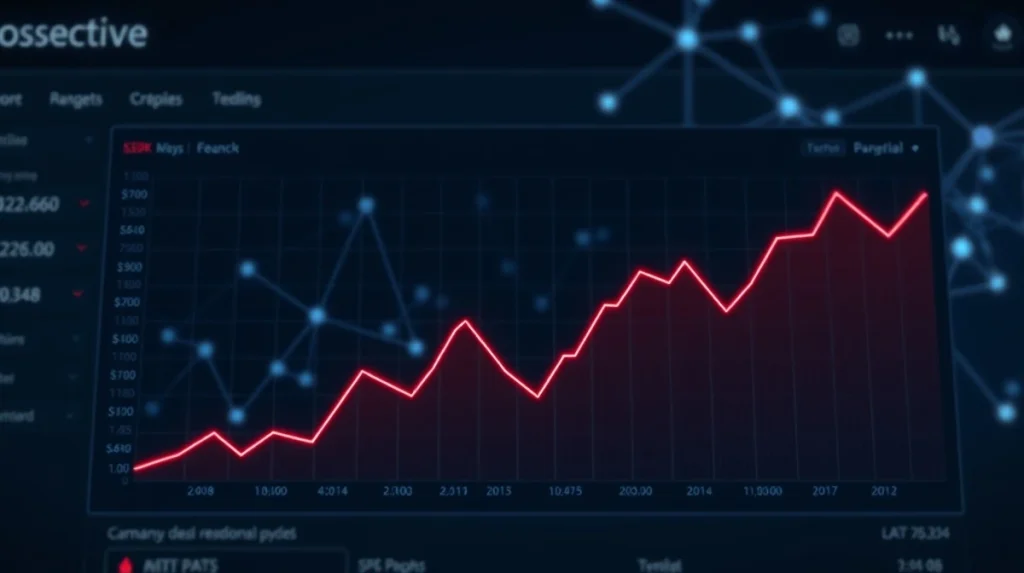
On-chain data reveals a significant shift for Aave, the decentralized finance lending protocol. For the first time in over a year, the supply of AAVE tokens on centralized exchanges has climbed, hitting 2.23 million. This reversal ends a sustained period of accumulation off exchanges and points to mounting sell pressure. The move coincides with a drop in the token’s price below the key $100 level in March 2026, reflecting a convergence of internal and market-driven stresses.
AAVE Exchange Balances Reverse a Key Trend
Data from blockchain analytics firm Glassnode shows the exchange balance for AAVE reached 2.23 million tokens in early April 2026. This marks a clear end to a declining trend that began in early 2025. For over twelve months, investors had been moving AAVE off trading platforms, a behavior typically associated with long-term holding intentions. The recent influx onto exchanges suggests a change in strategy. According to Glassnode’s metrics, this increase in readily tradable supply often precedes or accompanies selling activity. Market analysts view this on-chain movement as a direct indicator of rising immediate sell-side liquidity.
Also read: BYDFi Simplifies Crypto: How the Exchange Is Opening Trading to Everyone in 2026
“When tokens move to exchanges, it increases the available sell-side pressure,” noted a report from crypto research firm IntoTheBlock. “The end of this long accumulation phase is a notable shift in holder behavior.” This on-chain development provides a data-backed context for the token’s recent price weakness. It moves beyond simple price charts to show where the tokens are actually held.
Derivatives Market Reflects Weakening Demand
The story from spot markets is reinforced in the derivatives sector. Funding rates for AAVE perpetual swaps—the fees paid between long and short position holders—have turned neutral to slightly negative across major exchanges. This signals that leveraged demand for bullish bets has cooled considerably. Furthermore, open interest, which represents the total number of outstanding derivative contracts, has stagnated even as price volatility increased. This combination often points to a lack of conviction among traders. They are not committing new capital to large directional bets, either long or short.
Data from Coinglass shows that the aggregate funding rate for AAVE flipped negative on several days in late March. While not deeply negative, it contrasts with the persistently positive rates seen during stronger market phases. This derivatives data suggests that the speculative fervor that can drive prices higher is currently absent. The implication is that the market lacks a strong cohort of leveraged buyers to absorb the potential selling from the increased exchange supply.
Converging Pressures on Protocol and Token
Aave the protocol is facing its own set of challenges. The broader decentralized finance sector has seen total value locked (TVL) growth slow. Competition from newer lending platforms and evolving yield strategies has intensified. Within this context, Aave’s native token, used for governance and staking within its safety module, faces a complex value proposition. Confidence appears to have weakened alongside these ecosystem developments. The token’s performance is increasingly decoupled from simple protocol usage metrics.
Industry watchers note that the token’s utility is primarily governance-based. Its value is therefore heavily tied to speculative sentiment and the perceived future success of the protocol. When broader crypto market sentiment sours, as it has in early 2026, governance tokens like AAVE often face disproportionate selling pressure. This is because their value is less directly tied to immediate fee generation than some other crypto assets. The current environment tests this model.
The $100 Price Level Breach and Market Psychology
The loss of the $100 price point in March was more than a technical event. It was a psychological blow. Key round-number levels often act as support zones in trader psychology. A sustained break below can trigger automated selling and shift market sentiment. AAVE’s price struggled to reclaim this level throughout late March and early April. This price action reflects the underlying shift in on-chain and derivatives data. It creates a feedback loop: weak price action discourages new buyers, which leads to further price stagnation or decline.
Historical support and resistance analysis shows that the $90-$110 zone was a consolidation area for much of late 2025. The failure to hold the upper part of that range indicates a deterioration in the bullish thesis. What this means for investors is a need to watch for a reclaim of the $100 level as a potential first sign of sentiment recovery. Without that, the path of least resistance may remain downward or sideways.
Comparing On-Chain Stress to Previous Cycles
This is not the first period of stress for AAVE. The token experienced similar exchange balance increases and price declines during the market downturn of 2022. However, the context differs. In 2022, the entire crypto market was in a deep bear phase following the collapse of several major entities like Terra and FTX. The current pressure in early 2026 appears more isolated to specific sectors like DeFi governance tokens, amid a generally slower market. This suggests the selling may be more targeted.
A comparison of key metrics shows the scale:
- April 2026: Exchange balance ~2.23M AAVE. Price ~$92. Funding rate neutral/negative.
- June 2022: Exchange balance peaked near 2.8M AAVE. Price fell below $60. Funding deeply negative.
The current situation, while serious, has not yet reached the extreme panic levels of the previous cycle’s depths. This could signal a period of controlled distribution rather than a capitulation event. But the trend direction is clear.
What’s Next for AAVE Holders and the Protocol
The immediate future hinges on whether the increased exchange supply is absorbed by buyers. If selling materializes from these balances and the price continues to fall, it could test lower support levels around $80. Conversely, if the exchange balance stabilizes or begins to decline again, it would indicate selling pressure is abating. Protocol developments will also be critical. Upgrades to the Aave platform or expansions into new chains could renew investor interest and provide a fundamental counterweight to the negative technical signals.
The coming weeks will test the resilience of AAVE’s holder base. Market structure analysis suggests that a period of consolidation is likely needed to work through the increased available supply. For long-term believers in decentralized finance, this may present a stress test of their conviction. For the protocol itself, the focus will remain on maintaining its leading position in the lending sector, regardless of short-term token price fluctuations.
Conclusion
The rise in AAVE exchange balances to 2.23 million tokens is a concrete, data-driven warning sign. It ends a year-long trend of accumulation and points to increased near-term sell pressure. This on-chain shift is corroborated by weakening derivatives demand and a break below the key $100 price level. Together, these factors paint a picture of a token under structural stress. The path forward depends on whether new demand emerges to absorb the supply and whether the Aave protocol can continue to innovate and capture value in a competitive DeFi arena. For now, the data suggests caution is warranted.
FAQs
Q1: What does an increase in AAVE exchange balances mean?
It means more AAVE tokens are being deposited onto centralized trading platforms like Binance or Coinbase. This makes them readily available for sale, which typically increases potential selling pressure on the token’s price.
Q2: Why is the $100 price level important for AAVE?
Round-number prices like $100 often act as psychological support or resistance levels in trading. Many traders place orders around these levels. Losing $100 can trigger automated sell orders and damage market sentiment, making it harder for the price to recover.
Q3: How do negative funding rates affect AAVE?
Negative funding rates in perpetual swap markets mean traders holding short positions (betting on price drops) are paying those holding long positions. This indicates that bearish sentiment is dominant in the leveraged derivatives market, which can spill over into the spot market.
Q4: Is AAVE the only DeFi token seeing this kind of pressure?
No. Throughout early 2026, several major DeFi governance tokens have faced similar challenges, including selling pressure and declining prices. This suggests a sector-wide reevaluation is occurring, not just a problem specific to Aave.
Q5: Can the Aave protocol succeed even if the AAVE token price falls?
Technically, yes. The Aave lending protocol’s core function—facilitating crypto loans—can operate based on its usage and fees. However, a severely depressed token price can impact community governance participation and the security of its staking-based safety module, creating secondary challenges.

This article was produced with AI assistance and reviewed by our editorial team for accuracy and quality.