Uniswap Fee Switch Vote Sparks 15% UNI Surge, Targets $60M Annual Burn

March 15, 2026 — Global: The Uniswap decentralized exchange community ignited a significant market rally today by advancing a pivotal governance proposal. Delegates voted overwhelmingly to activate and expand the protocol’s long-debated fee switch mechanism across multiple blockchain networks. This technical upgrade, if fully implemented, could redirect nearly $60 million in annual protocol revenue toward systematic UNI token burns, fundamentally altering the token’s economic model. Traders reacted immediately to the governance momentum, propelling the UNI token price upward by approximately 15% in early trading on major cryptocurrency exchanges. The vote represents a critical juncture for the world’s largest decentralized exchange, shifting focus directly to token utility and value accrual after months of stagnant price action.
Uniswap Governance Activates Long-Dormant Fee Mechanism
The core of Proposal UNI-2026-011, which passed its initial temperature check with 72% support, involves a two-phase technical upgrade. First, it enables the collection of a 0.05% protocol fee on all swaps conducted through Uniswap’s official front-end on the Ethereum mainnet. Second, and more significantly, it authorizes the Uniswap Grants Program to develop and deploy the same fee-capture module across all major networks where Uniswap v3 operates, including Arbitrum, Polygon, and Base. Blockchain analytics firm Token Terminal provided the crucial data point driving the proposal: based on the last 90 days of stable trading volume averaging $45 billion, the expanded fee switch could generate roughly $5 million in monthly revenue, or $60 million annually, earmarked exclusively for buying and burning UNI from the open market.
The proposal’s architect, delegate Alex Kroeger of the GFX Labs research collective, framed the vote as a necessary evolution. “The fee switch discussion has persisted since UNI’s inception,” Kroeger stated in the governance forum. “This proposal moves beyond theoretical debate by implementing a sustainable, multi-chain model. It directly ties protocol success—measured by trading volume—to tangible value accrual for UNI holders through verifiable on-chain burns.” The governance process itself, involving over 4,000 unique delegate votes, has demonstrated renewed engagement from a community that many analysts considered passive.
Immediate Market Impact and Long-Term Token Economics
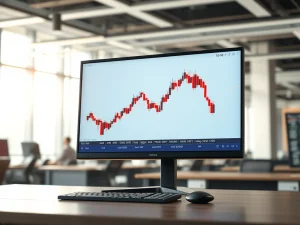
The market’s reaction was swift and decisive. Within hours of the temperature check passing, UNI’s price jumped from $9.40 to over $10.80, marking its highest level in four months. Trading volume spiked 300% on centralized exchanges like Coinbase and Binance. This price action reflects a fundamental repricing based on the proposed change to UNI’s supply dynamics. If the $60 million annual burn estimate holds, it would effectively remove over 5.5 million UNI tokens from circulation each year at current prices, applying consistent deflationary pressure. For context, the current annual inflation from UNI’s ongoing staking rewards is approximately 2%. The fee switch could neutralize this inflation and create net deflation.
- Supply Shock Potential: A sustained $60M annual burn represents a constant buy-side pressure equivalent to 0.5% of UNI’s total circulating supply each year, a figure that grows if trading volumes or token prices increase.
- Revenue Diversification: The multi-chain expansion mitigates risk. Fee revenue would not depend solely on Ethereum mainnet activity, which has declined as a percentage of total DeFi volume.
- Governance Precedent: Successfully implementing this upgrade could set a template for other decentralized autonomous organizations (DAOs) struggling with token value capture, influencing the entire DeFi sector’s approach to treasury management.
Expert Analysis on Protocol Sustainability
Industry analysts emphasize the proposal’s careful design to avoid user attrition. Christine Lee, a partner at crypto-focused venture firm Variant Fund, noted the strategic fee level. “The proposed 0.05% fee is intentionally set below the 0.25–0.30% fees charged by leading centralized exchanges,” Lee explained. “This maintains Uniswap’s competitive pricing advantage for end-users while finally monetizing the protocol’s immense liquidity. It’s a textbook case of capturing value without disrupting utility.” The proposal also includes a six-month trial period on Ethereum only, with a mandatory DAO vote required to activate fees on other chains, providing a circuit breaker if unintended consequences emerge. This staged approach received praise from risk analysts at Gauntlet, a firm specializing in DeFi economic modeling, which published a preliminary report supporting the proposal’s conservative parameters.
Broader Context in the Evolving DeFi Landscape
The Uniswap vote occurs during a pivotal period for decentralized finance. Competitors like PancakeSwap on BNB Chain and Trader Joe on Avalanche have implemented various token-burning and fee-sharing mechanisms for years, creating constant pressure on Uniswap to enhance UNI’s utility. Furthermore, the rise of “fee-less” aggregators and the gradual sunset of UNI’s initial liquidity mining rewards had left the token’s value proposition increasingly reliant on governance rights alone. The table below contrasts Uniswap’s new proposal with existing fee models at major DEXs.
| Decentralized Exchange | Primary Chain | Fee Capture Model | Token Utility |
|---|---|---|---|
| Uniswap (Proposed) | Ethereum, L2s | 0.05% protocol fee for token burns | Governance + Deflationary Burn |
| PancakeSwap | BNB Chain | 0.05% fee for treasury & burns | Governance, Lottery, NFTs |
| Curve Finance | Ethereum | 50% of admin fees to veCRV lockers | Fee Sharing + Voting Power |
| Trader Joe | Avalanche | 0.05% fee split between stakers & treasury | Staking Rewards + Governance |
This move also aligns with a broader regulatory trend. Securities regulators globally have increasingly scrutinized whether governance tokens constitute investment contracts. By creating a clear, revenue-linked value stream, the Uniswap DAO may be proactively building a stronger case for UNI as a utility token, a distinction with significant legal implications in jurisdictions like the United States.
The Road Ahead: From Vote to Implementation
The successful temperature check is only the first step. The proposal now moves to a formal on-chain snapshot vote, expected to commence on March 18, 2026, requiring a quorum of 40 million UNI votes to pass. Given the strong delegate support, passage appears likely. If approved, the Uniswap Labs engineering team has outlined a four-week development and audit timeline for the Ethereum mainnet fee module, targeting an early May activation. The subsequent modules for Layer 2 networks would follow in Q3 2026, pending separate DAO approvals. Market observers will closely monitor two key metrics post-implementation: any measurable shift in trading volume away from Uniswap’s front-end to avoid fees, and the on-chain verifiability of the UNI burn transactions, which will be publicly trackable on Etherscan and other block explorers.
Community and Developer Reactions
Reaction within the crypto community has been largely positive but measured. Prominent DeFi developer Adam Cochran tweeted that the proposal “finally cracks the code on sustainable DAO revenue,” while cautioning that the DAO must remain vigilant against potential forks that remove the fee. Some smaller liquidity providers expressed concern that fees might reduce arbitrage efficiency, slightly impacting their yields. However, most analysts concur that the fee’s minimal size makes a major behavioral shift unlikely. The most significant endorsement came from a16z Crypto, one of the largest UNI delegate holders, which publicly signaled its intent to vote in favor, citing the proposal’s “measured, data-driven approach to value accrual.”
Conclusion
The Uniswap fee switch vote marks a definitive turn from speculative governance toward tangible token economics. By potentially generating $60 million annually for UNI token burns, the proposal directly addresses long-standing criticisms about the token’s lack of utility. The immediate 15% price surge reflects market recognition of this fundamental shift. Success hinges on maintaining Uniswap’s dominant market share post-implementation and the DAO’s disciplined execution of the multi-chain rollout. If successful, this governance vote could not only establish a sustainable model for Uniswap but also serve as a blueprint for the entire DeFi industry, proving that decentralized collectives can implement complex economic upgrades that enhance value for all stakeholders. The on-chain snapshot vote in the coming days will be the next critical test.
Frequently Asked Questions
Q1: What exactly is the Uniswap fee switch proposal?
The proposal, UNI-2026-011, seeks to activate a 0.05% protocol fee on swaps through Uniswap’s interface and expand this mechanism across all networks it supports. The collected fees would be used exclusively to buy and burn UNI tokens from the open market.
Q2: How much revenue could this generate for UNI burns?
Based on current trading volumes, analysts from Token Terminal estimate the expanded, multi-chain fee switch could generate approximately $5 million per month, or nearly $60 million annually, for UNI token burns.
Q3: What are the next steps after the initial vote passed?
The proposal now proceeds to a formal on-chain snapshot vote around March 18, requiring 40 million UNI votes for quorum. If passed, development and audits will take approximately four weeks, targeting a mainnet activation in early May 2026.
Q4: Will this make using Uniswap more expensive for regular traders?
Yes, but marginally. A 0.05% fee adds $0.50 to a $1,000 swap. The fee is only applied to swaps through Uniswap’s official front-end; the underlying smart contracts remain free, and users could access them via alternative interfaces.
Q5: How does this compare to fees on other decentralized exchanges?
Many major DEXs already have similar fee mechanisms. PancakeSwap has a 0.05% burn fee, and Trader Joe uses a 0.05% fee for stakers. Uniswap’s proposal brings it in line with industry standards while focusing revenue solely on token burns.
Q6: How does this affect UNI token holders who don’t participate in governance?
All UNI holders benefit from the potential deflationary pressure of the burn mechanism, which aims to increase the scarcity and potentially the price of the token, regardless of whether they vote.