Breaking: Geopolitical Shock Triggers $1.8B Crypto Futures Liquidation
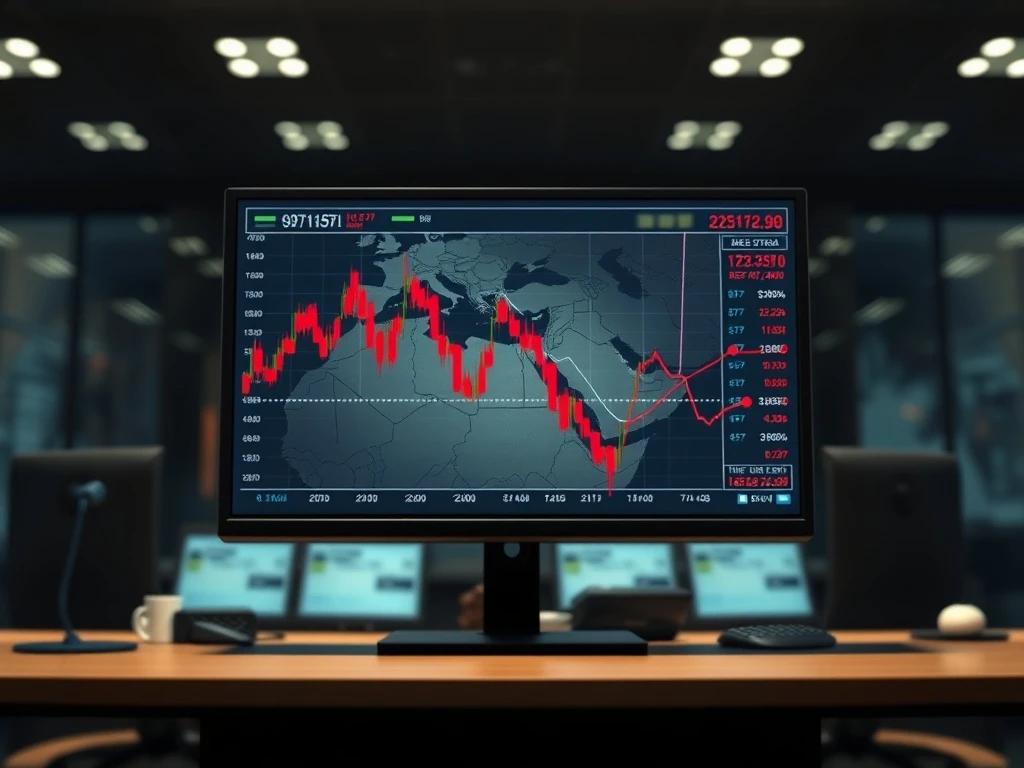
LONDON, April 15, 2026 — A sudden escalation of military conflict in the Middle East triggered a violent, panicked sell-off in cryptocurrency derivatives markets late Tuesday, resulting in over $1.8 billion in long positions liquidated within a single hour. The crypto futures dump, one of the largest concentrated liquidations since the 2022 market collapse, sent Bitcoin’s price tumbling below critical support levels and pushed market sentiment into extreme bearish territory. The flash crash began minutes after confirmed reports that former United States President Donald Trump, in a public address, announced the commencement of “major combat operations” involving U.S. forces in Iran, following Israel’s confirmation of retaliatory missile strikes. Iran’s immediate response, targeting Israeli and U.S. assets, amplified the global risk-off sentiment, with digital assets bearing the initial brunt.
The $1.8B Hourly Crypto Futures Liquidation Event
Data from derivatives analytics platform Coinglass confirms the scale and velocity of the sell-off. Between 21:00 and 22:00 UTC, exchanges recorded $1.82 billion in total liquidations, with $1.51 billion of that sum being long positions—traders betting on price increases. Bitcoin futures accounted for approximately $1.1 billion of the carnage, while Ethereum and other major altcoins comprised the remainder. The liquidation cascade accelerated as Bitcoin broke below the psychologically significant $60,000 level, a support zone it had held for nearly three weeks. “This was a classic, high-velocity deleveraging event,” said Marcus Thielen, Head of Research at CryptoQuant. “The geopolitical news acted as a catalyst, but the market structure was primed for a flush. We had seen open interest in perpetual futures reach elevated levels, creating a tinderbox scenario.” The Fear & Greed Index, a popular sentiment gauge, plummeted from a neutral 52 to an “Extreme Fear” reading of 12 within the same hour.
The timeline of events shows a near-instantaneous market reaction. At 20:47 UTC, major news wires flashed alerts regarding President Trump’s statement. By 20:52 UTC, Bitcoin’s price began its precipitous drop from $61,400. The most intense selling pressure occurred between 21:15 and 21:30 UTC, coinciding with Iran’s official response. Order book data from Binance and Bybit showed liquidity vanishing on the buy-side, with sell walls rapidly overwhelming the market. This sequence underscores the cryptocurrency market’s acute sensitivity to macro-geopolitical shocks, a trait that has intensified with greater institutional participation.
Impact on Bitcoin Sentiment and Market Structure
The immediate consequence of the geopolitical shock extends beyond the price drop. It has fundamentally altered short-term market structure and trader psychology. Funding rates for perpetual futures—the fees traders pay to hold positions—turned sharply negative across all major exchanges, indicating overwhelming bearish bias. Furthermore, the put/call ratio for Bitcoin options spiked, showing a surge in demand for downside protection. “Sentiment is now decisively bearish for the first time this quarter,” noted Lauren Lin, a derivatives strategist at Amberdata. “The market is repricing tail risk. We’re seeing implied volatilities spike, particularly in short-dated options, which tells you traders are bracing for more turbulence.”
- Liquidity Crunch: The rapid deleveraging drained liquidity from the market, widening bid-ask spreads significantly and increasing transaction costs for all participants.
- Institutional Pause: Early reports from over-the-counter (OTC) desks suggest several planned institutional purchases were put on hold pending clarity on the geopolitical situation.
- Altcoin Underperformance: Higher-beta altcoins experienced even steeper declines than Bitcoin, with many falling 15-25% against BTC, indicating a classic flight to relative safety within the crypto asset class.
Expert Analysis and Institutional Response
Market analysts and institutional players were quick to contextualize the event. In a note to clients, JPMorgan’s blockchain and digital assets team framed the sell-off as a “liquidity test” rather than a fundamental repudiation of crypto. “While geopolitics is the proximate cause, the market was exhibiting signs of froth in leverage,” the note read. “This reset, while violent, may establish a healthier foundation for the next leg.” Conversely, the Crypto Council for Innovation issued a more cautious statement, highlighting the sector’s growing correlation with traditional risk assets during crises. “Today’s events demonstrate that digital assets are not a geopolitical hedge in the short term,” a spokesperson said. “Their maturation means they react to global risk-off flows, much like tech equities.”
Historical Context and Broader Market Comparisons
This event invites comparison to previous geopolitical shocks and their market impacts. The most direct analogue is the initial market reaction to Russia’s invasion of Ukraine in February 2022, which also saw a sharp, multi-billion dollar liquidation event. However, the recovery trajectory then was relatively swift. A more concerning comparison for some analysts is the COVID-19 market crash of March 2020, where liquidity vanished across all asset classes. The key differentiator in the current event is the presence of spot Bitcoin ETFs, which saw significant net inflows in the days preceding the crash, providing a potential cushion of institutional demand.
| Event | Date | Approx. Liquidation Volume (1H) | BTC Price Drop |
|---|---|---|---|
| Russia-Ukraine Invasion | Feb 24, 2022 | $1.3 Billion | -9.5% |
| FTX Collapse | Nov 8, 2022 | $2.1 Billion | -25% |
| Middle East Escalation (Current) | Apr 15, 2026 | $1.8 Billion | -11.2% (at time of writing) |
What Happens Next: Market Trajectory and Monitoring Points
The immediate focus for traders is on whether the $58,000 support level for Bitcoin holds. A sustained break below could trigger another wave of liquidations from over-leveraged positions. Market participants are also closely watching the CME’s Bitcoin futures basis and the Grayscale Bitcoin Trust (GBTC) premium/discount for signs of institutional stress or opportunity. On-chain data will be critical; analysts at Glassnode have indicated they are monitoring exchange inflows and the behavior of long-term holders (LTHs) to gauge whether this event triggers a distribution phase or is merely a shakeout of weak hands. Scheduled macroeconomic data, including U.S. CPI figures later this week, will now be viewed through the dual lens of inflation and geopolitical instability.
Community and Trader Reactions
Across social media and trading forums, reactions ranged from panic to opportunistic glee. Retail traders on platforms like Reddit and X reported significant losses on leveraged positions, with many sharing screenshots of liquidated accounts. Conversely, well-known crypto traders who had been publicly advocating for caution in recent weeks highlighted the event as a validation of their risk management stance. The decentralized finance (DeFi) sector also felt ripple effects, with several lending protocols experiencing a spike in loan-to-value ratios, prompting automated liquidations within their systems and testing their resilience under stress.
Conclusion
The $1.8 billion crypto futures dump triggered by Middle East hostilities serves as a stark reminder of the digital asset market’s vulnerability to sudden geopolitical shocks. While the fundamental long-term thesis for cryptocurrencies remains unchanged for many investors, the event has forcefully reset excessive leverage and bullish sentiment. The key takeaways are the market’s continued high-beta nature relative to global risk, the critical importance of robust risk management in leveraged trading, and the evolving but still potent role of macro news flows. In the coming days, the market’s ability to stabilize and absorb selling pressure will be more telling than the initial crash itself. Investors should monitor on-chain holder behavior, ETF flows, and derivatives data for signals of either capitulation or accumulation at these lower price levels.
Frequently Asked Questions
Q1: What exactly caused the $1.8B crypto futures liquidation?
The immediate trigger was the escalation of military conflict in the Middle East, specifically announcements of U.S. combat operations in Iran and subsequent Iranian retaliation. This created a global “risk-off” sentiment, leading traders to rapidly exit leveraged long positions in cryptocurrency futures, causing a cascading liquidation event.
Q2: How does this impact the average Bitcoin investor not using leverage?
Non-leveraged spot holders still experience portfolio value depreciation due to the price drop. However, they avoid forced liquidation. Such events can create buying opportunities for long-term investors if prices fall below perceived fundamental value, but also increase short-term volatility and uncertainty.
Q3: Is this a repeat of the 2022 crypto market crash?
Not directly. The 2022 crash was driven by catastrophic failures of specific entities (Terra/Luna, FTX) and a broader monetary tightening cycle. This event is primarily a reaction to an external geopolitical shock, though it exposes similar vulnerabilities related to excessive leverage in the system.
Q4: Should I sell my cryptocurrencies after this news?
Investment decisions should be based on individual financial goals, risk tolerance, and time horizon, not reactive panic to a single news event. Many analysts suggest having a pre-defined strategy for volatility rather than making impulsive decisions during market stress.
Q5: How are Bitcoin ETFs affected by this kind of event?
Spot Bitcoin ETFs will track the underlying asset’s price, so their net asset value (NAV) falls with Bitcoin’s price. Critical metrics to watch are the funds’ daily net inflows or outflows, which indicate whether institutional investors are using the dip to buy or are joining the sell-off.
Q6: Could this geopolitical situation actually benefit cryptocurrencies long-term?
Some proponents argue that geopolitical instability highlights Bitcoin’s properties as a decentralized, borderless asset. However, in the immediate term, as seen here, crypto markets tend to correlate negatively with such shocks as capital flees risk assets broadly. The long-term “digital gold” narrative is tested during these periods of acute stress.