Bitcoin Surge Faces Critical Test: Schiff’s Stark Warning Ahead of Trump’s Pivotal Speech
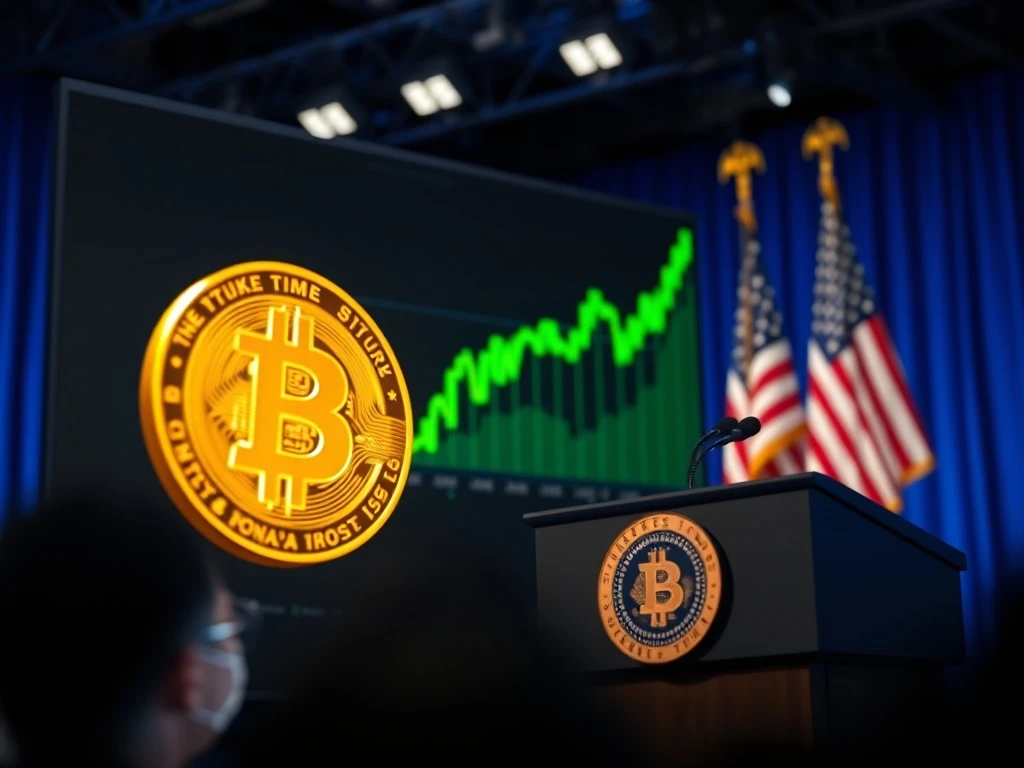
On March 4, 2025, the cryptocurrency market witnessed a sharp, $2,000 Bitcoin price surge in the hours preceding a scheduled national address by former President Donald Trump, immediately triggering intense scrutiny from analysts and prominent critics like economist Peter Schiff, who warned of a potential dramatic reversal fueled by a classic ‘sell-the-news’ market reaction.
Analyzing the Bitcoin Surge and Political Catalysts
Bitcoin’s price action demonstrated significant volatility, climbing from approximately $67,500 to over $69,500 within a condensed timeframe. This movement coincided directly with heightened media coverage and trader anticipation surrounding the political event. Market data from major exchanges showed a notable increase in trading volume, particularly in perpetual swap markets, suggesting leveraged positioning was a key driver. Historically, digital asset markets have shown sensitivity to macroeconomic policy statements and regulatory sentiments often discussed in major political speeches. Consequently, this pre-speech rally fits a recognizable pattern where traders position for potential positive commentary, regardless of the eventual content.
Several technical and on-chain factors provided context for the move’s intensity. Firstly, funding rates across derivatives platforms turned moderately positive, indicating rising bullish sentiment. Secondly, large Bitcoin withdrawals from exchanges suggested some investors were moving holdings into cold storage, potentially reducing immediate sell-side pressure. However, analysts cautioned that these signals alone do not guarantee sustained upward momentum, especially when driven by event speculation.
Peter Schiff’s Sell-the-News Warning and Market Psychology
Peter Schiff, a long-standing cryptocurrency skeptic and gold advocate, quickly contextualized the surge within a classic behavioral finance framework. The ‘sell-the-news’ phenomenon describes a situation where an asset’s price rises in anticipation of a specific event, only to decline once the event occurs, as traders who bought the rumor take profits. Schiff argued that the Bitcoin surge represented a speculative bet on Trump making supportive comments about cryptocurrency or digital asset innovation, a bet that could unwind rapidly post-address.
Historical Precedents and Expert Perspectives
Financial historians often cite similar patterns in traditional markets around earnings reports or Federal Reserve announcements. In crypto, events like major protocol upgrades or exchange-traded fund (ETF) approvals have sometimes triggered volatile ‘buy the rumor, sell the news’ cycles. Other market commentators offered nuanced views. Some acknowledged Schiff’s warning as a valid risk consideration, especially for short-term traders. However, they also noted that sustained trends depend on deeper fundamentals like institutional adoption flows, hash rate security, and broader macroeconomic liquidity conditions, not single events.
The table below contrasts typical market reactions in event-driven scenarios:
| Event Type | Typical Pre-Event Action | Common Post-Event Reaction |
|---|---|---|
| Major Political Speech | Speculative positioning based on expected tone | Volatility; reversal if expectations unmet |
| Macroeconomic Data Release | Price moves aligning with consensus forecasts | Sharp adjustment to actual data vs. forecast |
| Regulatory Announcement | Heightened uncertainty and muted trading | Sustained directional move based on clarity |
Key factors that could influence whether a sell-off materializes include:
- The Specificity of Comments: Vague supportive statements may have less impact than detailed policy proposals.
- Overall Market Sentiment: A bullish macro backdrop could dampen any post-speech selling pressure.
- Leverage Levels: High leverage in the system can exacerbate both upswings and corrections.
The Broader Context of Crypto and Political Discourse
The incident underscores the growing intersection between digital asset markets and political narratives. In recent years, cryptocurrency policy has evolved into a more prominent campaign and legislative issue. Market participants now routinely parse statements from political figures for implications on regulation, central bank digital currencies (CBDCs), and monetary policy. This environment creates fertile ground for event-driven volatility. Furthermore, the role of influential critics like Schiff highlights the market’s continuous dialogue between bullish and bearish theses. His warnings serve as a counter-narrative, reminding investors of risks like volatility and the speculative nature of short-term price moves detached from long-term utility metrics.
Impact on Trader Strategies and Risk Management
For portfolio managers and active traders, such events necessitate disciplined risk frameworks. Many institutional desks reportedly implemented or tightened stop-loss orders ahead of the speech to manage downside exposure. Others diversified into stablecoins or options strategies to hedge against a sudden downturn. This professional approach contrasts with more speculative retail behavior, illustrating the market’s maturation. Ultimately, the episode reinforces a core principle of asset management: distinguishing between noise-driven price action and fundamental value changes is crucial for long-term performance.
Conclusion
The $2,000 Bitcoin surge ahead of a key political speech and Peter Schiff’s subsequent warning encapsulate the dynamic and often sentiment-driven nature of cryptocurrency markets. While event-based volatility presents both opportunities and risks, informed market participants focus on separating short-term noise from long-term structural trends. The critical test for any Bitcoin surge is its sustainability beyond the immediate news cycle, dependent on underlying adoption, technological development, and regulatory clarity. This analysis provides a factual framework for understanding such market movements without speculative prediction, emphasizing the importance of context, historical pattern recognition, and measured risk assessment in digital asset investment.
FAQs
Q1: What is a ‘sell-the-news’ reaction?
A ‘sell-the-news’ reaction is a market phenomenon where the price of an asset increases in anticipation of a specific event or announcement, then declines after the event occurs as traders who bought earlier take profits.
Q2: Who is Peter Schiff and why is his opinion on Bitcoin notable?
Peter Schiff is a well-known economist, financial commentator, and gold advocate. He is notable for his long-standing, publicly skeptical stance on Bitcoin, often contrasting it with gold as a store of value, making his warnings a consistent part of the crypto market discourse.
Q3: How have cryptocurrency markets reacted to major political events in the past?
Historically, crypto markets have experienced volatility around major political events, especially those involving discussions of regulation or monetary policy. Reactions are often swift but can be short-lived unless the event leads to concrete policy changes.
Q4: What factors besides a political speech can cause a sudden Bitcoin price surge?
Sudden Bitcoin price surges can be caused by large institutional buy orders, positive regulatory developments in a major economy, technical breakout patterns, broader macroeconomic shifts (like falling interest rate expectations), or significant advancements in network adoption and utility.
Q5: What is the difference between event-driven volatility and fundamental market trends?
Event-driven volatility is a short-term price movement caused by a specific news item or occurrence. Fundamental trends are longer-term price directions supported by underlying factors like adoption rates, technological upgrades, hash rate security, and macroeconomic integration.