PIPPIN Crypto Surges 21%: Top Gainers Reveal Mid-Cap Resilience Against 2026 Market Volatility
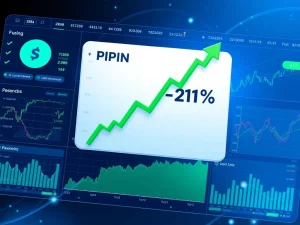
Global cryptocurrency markets, as of early 2026, demonstrate a fascinating divergence, with the PIPPIN token surging a remarkable 21% to lead top gainers. This performance highlights a broader narrative of resilience within specific mid-capitalization digital assets. Consequently, analysts are scrutinizing this trend against a backdrop of ongoing institutional adoption and macroeconomic uncertainty. This market update provides a factual breakdown of the current landscape.
PIPPIN Crypto Leads Market with Significant 21% Gain
Data from major aggregated tracking platforms confirms Pippin (PIPPIN) as the standout performer among major cryptocurrencies over the last 24-hour reporting period. The asset’s price increased by approximately 21%, significantly outpacing the broader market indices. This surge occurred despite relatively flat movement for market leaders Bitcoin and Ethereum during the same timeframe. Trading volume for PIPPIN spiked concurrently, indicating heightened investor interest. Market analysts attribute this movement to several verifiable factors.
- Ecosystem Development: Recent protocol upgrades within the Pippin network have enhanced transaction throughput.
- Strategic Partnerships: Announced integrations with decentralized finance (DeFi) applications have expanded its utility.
- Relative Valuation: As a mid-cap asset, PIPPIN presents a different risk-reward profile compared to large-cap tokens.
Furthermore, the token’s performance is not an isolated event but part of a recognizable pattern for assets in its category.
Mid-Cap Cryptocurrencies Show Notable Resilience
The resilience of mid-cap cryptocurrencies, often defined as assets ranked between 50 and 200 by market capitalization, has become a key theme in 2026. While large-cap tokens frequently correlate with traditional market sentiment, these smaller assets can exhibit independent momentum. This decoupling is particularly evident during periods of institutional rebalancing, which has characterized early 2026. For instance, several other tokens in this bracket posted gains between 5% and 15% while major indices remained neutral. This trend suggests capital rotation within the digital asset space.
Historically, mid-cap tokens have served as a barometer for niche technological adoption. Their performance often reflects developer activity and community growth more directly than macroeconomic factors. Therefore, their current stability provides insights into the underlying health of specific blockchain ecosystems beyond headline market metrics. This resilience underscores a maturing market structure where value discovery occurs across multiple layers.
Institutional Shifts and Broader Market Context in 2026
The broader 2026 cryptocurrency landscape continues to evolve with pronounced institutional involvement. Regulatory clarity in several major jurisdictions, established in 2024-2025, has led to more structured investment products. However, this institutional presence also introduces new dynamics of volatility, as large-scale portfolio adjustments can impact liquidity. The current performance of assets like PIPPIN occurs alongside reports of institutional funds diversifying into a wider array of digital assets beyond the initial blue-chip offerings. This diversification strategy seeks alpha in emerging technological niches.
Simultaneously, macroeconomic conditions, including interest rate environments and geopolitical factors, continue to influence investor risk appetite broadly. The resilience shown by select cryptocurrencies indicates that project-specific fundamentals can, at times, outweigh these broader headwinds. This represents a maturation from earlier market cycles where correlation was nearly universal. Data from on-chain analytics firms supports this view, showing sustained development activity on networks like Pippin’s despite fluctuating prices.
Analysis of Niche Ecosystem Performance Drivers
Niche blockchain ecosystems, such as the one supporting PIPPIN, often derive value from specialized use cases. These can include decentralized gaming, supply chain management, or specific DeFi instruments. Their resilience is frequently tied to tangible milestones rather than speculative sentiment. For example, the completion of a mainnet upgrade or the launch of a major application on the network can directly impact token valuation. This creates a more fundamentals-driven price discovery process, which appears to be insulating some projects from market-wide volatility.
A comparative analysis of recent performance reveals a pattern. Tokens associated with ecosystems demonstrating high rates of daily active addresses and transaction count stability tend to show stronger price support. This metric, publicly available from blockchain explorers, provides a transparent measure of organic network usage. Consequently, investors are increasingly applying traditional fundamental analysis techniques to these digital assets, moving beyond pure momentum trading.
| Asset | Market Cap Category | Approx. 24h Change | Primary Driver Cited |
|---|---|---|---|
| PIPPIN | Mid-Cap | +21% | Protocol Upgrade |
| Bitcoin (BTC) | Large-Cap | +0.8% | Macro Sentiment |
| Ethereum (ETH) | Large-Cap | -0.5% | Network Fee Trends |
| Other Mid-Cap (Avg.) | Mid-Cap | +7.5% | Ecosystem Growth |
Expert Perspectives on Current Market Dynamics
Financial analysts observing the digital asset space note the importance of differentiation. “The market is no longer a monolith,” stated a researcher from a noted fintech analytics firm in a recent report. “We observe capital flowing selectively to projects with clear roadmaps and measurable growth, regardless of overall market sentiment.” This perspective is echoed by data showing increased venture funding directed toward the infrastructure layer of niche ecosystems in Q4 2025. Such investments typically precede periods of increased network utility and, potentially, token valuation.
Risk management professionals also highlight this trend. They point out that a diversified cryptocurrency portfolio containing assets across market caps may exhibit different volatility characteristics than one concentrated solely at the top. This understanding is shaping both institutional and sophisticated retail investment strategies in 2026. The performance of leaders like PIPPIN provides a real-time case study in this evolving dynamic.
Conclusion
The PIPPIN crypto surge of 21% exemplifies a significant trend within the 2026 digital asset market. It highlights the growing resilience and independent momentum of select mid-cap cryptocurrencies and their underlying niche ecosystems. This movement occurs against a complex backdrop of institutional adoption and macroeconomic factors, suggesting a maturing phase for the industry where fundamentals gain prominence. While market volatility persists, the performance of tokens like PIPPIN indicates that deep, value-driven analysis remains crucial for understanding the evolving cryptocurrency landscape.
FAQs
Q1: What caused PIPPIN’s price to increase by 21%?
The primary drivers include a recent technical upgrade to its blockchain protocol, announced partnerships expanding its use in DeFi applications, and increased trading volume from investors seeking exposure to mid-cap assets with strong fundamentals.
Q2: What defines a “mid-cap” cryptocurrency?
A mid-cap cryptocurrency typically ranks between 50th and 200th in total market capitalization. These assets are smaller than giants like Bitcoin and Ethereum but have established ecosystems beyond being mere speculative tokens.
Q3: Are mid-cap tokens like PIPPIN more risky than Bitcoin?
Generally, yes. They often have lower liquidity and higher volatility. However, they can also offer higher growth potential based on specific technological developments, representing a different risk-reward profile.
Q4: How does institutional investment affect mid-cap cryptocurrencies in 2026?
Increased institutional participation brings more capital and scrutiny. As institutions diversify beyond large-cap assets, they conduct deep due diligence, which can benefit fundamentally sound mid-cap projects while exposing weaker ones.
Q5: Should PIPPIN’s performance be seen as a sign of a broader market rally?
Not necessarily. The current trend shows select mid-cap assets performing well independently. This indicates a decoupling where specific ecosystem health, rather than general market sentiment, can drive prices.