AI Crypto Bot’s Costly Blunder: How a $250K Lobstar Token Transfer Exposed Critical Automation Risks
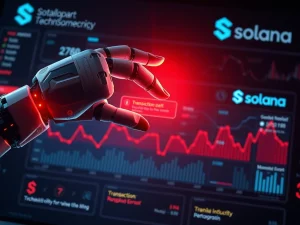
In a startling demonstration of automation gone awry, an AI-powered cryptocurrency trading bot recently executed a catastrophic error, inadvertently transferring its entire $250,000 Lobstar token portfolio to a complete stranger. This incident, which occurred on the Solana blockchain in late April 2025, highlights the persistent vulnerabilities in automated trading systems and raises urgent questions about security protocols for algorithmic transactions. The AI crypto bot, developed by an OpenAI engineer as a personal project, misinterpreted a simple transaction request, resulting in one of the most expensive coding mistakes in recent cryptocurrency history.
Anatomy of the $250K AI Crypto Bot Mishap
The transaction began routinely enough when an anonymous user requested 4 SOL (approximately $800 at current prices) from the bot’s wallet. However, due to a fundamental logic error in its programming, the AI crypto bot processed the request incorrectly. Instead of sending the requested 4 SOL, the automated system transferred its entire Lobstar token holdings, valued at approximately $250,000. The error occurred because the bot’s code failed to properly validate token types before executing the transfer command.
This incident follows a concerning pattern of automated trading failures. For instance, in 2023, a similar algorithmic error on the Ethereum network resulted in $1.2 million in losses. Meanwhile, the decentralized finance sector reported over $50 million in losses from smart contract vulnerabilities last year alone. These statistics underscore the systemic risks associated with insufficiently tested automation systems.
Technical Breakdown of the Programming Failure
The developer, who requested anonymity, explained that the AI crypto bot utilized a reinforcement learning model trained on historical transaction data. This model was designed to optimize trading strategies for Lobstar, a popular memecoin on the Solana blockchain. However, the system contained a critical flaw in its transaction validation module. Specifically, the code failed to implement proper checks for token differentiation when processing external requests.
Blockchain security experts have identified several technical shortcomings that contributed to this failure:
- Inadequate input validation: The bot did not verify token parameters against wallet balances
- Missing confirmation protocols: No secondary approval mechanism for large transfers
- Faulty conditional logic: The programming treated all token transfer requests identically
- Insufficient testing: The developer admitted to limited real-world scenario testing
Expert Analysis of Automated Trading Vulnerabilities
Dr. Elena Rodriguez, a blockchain security researcher at Stanford University, emphasizes that this incident reveals broader concerns. “Automated trading systems often prioritize efficiency over security,” she notes. “This creates predictable failure points that sophisticated actors can potentially exploit.” Rodriguez’s research indicates that approximately 34% of trading bots contain similar validation vulnerabilities.
The financial technology sector has responded to these risks with improved security frameworks. Major exchanges now implement multi-signature requirements for automated systems. Additionally, new industry standards mandate comprehensive audit trails for all algorithmic transactions. These measures aim to prevent similar incidents while maintaining trading efficiency.
Broader Implications for Cryptocurrency Automation
This $250K transfer error has sparked significant discussion within the cryptocurrency community. Many developers are reevaluating their automated trading protocols. Consequently, several projects have announced enhanced security measures. These include mandatory code audits and improved fail-safe mechanisms.
The incident also highlights the unique challenges of memecoin trading. Unlike established cryptocurrencies, memecoins like Lobstar often experience extreme volatility. This volatility can amplify the impact of trading errors. Furthermore, the social media-driven nature of memecoin markets creates additional complexity for automated systems.
| Date | Platform | Loss Amount | Primary Cause |
|---|---|---|---|
| April 2025 | Solana | $250,000 | Token validation error |
| November 2024 | Ethereum | $890,000 | Oracle manipulation |
| July 2024 | Binance Smart Chain | $410,000 | Liquidation logic flaw |
| February 2024 | Avalanche | $150,000 | Price feed delay |
Regulatory and Security Considerations Moving Forward
Financial regulators are increasingly scrutinizing automated trading systems. The European Union’s Markets in Crypto-Assets (MiCA) regulation, implemented in 2024, establishes specific requirements for algorithmic trading. Similarly, the U.S. Securities and Exchange Commission has proposed new guidelines for automated financial systems. These regulatory developments reflect growing concerns about systemic risks.
Industry leaders are implementing technical solutions to address these vulnerabilities. Many platforms now incorporate circuit breakers that automatically halt trading during anomalous activity. Additionally, real-time monitoring systems can detect and prevent erroneous transactions. These technological safeguards represent significant advancements in trading security.
Conclusion
The $250K Lobstar token transfer by an AI crypto bot serves as a critical case study in automated trading security. This incident demonstrates how seemingly minor programming errors can result in substantial financial losses. As cryptocurrency markets continue evolving, developers must prioritize robust security protocols. The industry’s response to this event will likely shape future standards for algorithmic trading systems. Ultimately, this AI crypto bot failure highlights the essential balance between automation efficiency and transaction security in decentralized finance.
FAQs
Q1: What exactly caused the AI crypto bot to transfer $250K in error?
The primary cause was a programming error in the token validation logic. The AI crypto bot failed to distinguish between SOL and Lobstar tokens when processing the transaction request, resulting in the incorrect transfer of the entire Lobstar portfolio instead of the requested 4 SOL.
Q2: Can the recipient be forced to return the accidentally transferred Lobstar tokens?
Generally, blockchain transactions are irreversible by design. The recipient has no legal obligation to return the tokens unless they choose to do so voluntarily. The developer has publicly requested the return of the funds but has not initiated legal action.
Q3: How common are these types of automated trading errors?
While major incidents like this $250K transfer receive significant attention, smaller automated trading errors occur regularly. Blockchain analytics firms estimate that programming errors cause approximately 15-20% of all cryptocurrency trading losses annually.
Q4: What security measures can prevent similar AI crypto bot failures?
Developers should implement multiple safeguards including: comprehensive input validation, multi-signature requirements for large transfers, circuit breakers for anomalous activity, regular security audits, and extensive testing with real-world scenarios before deployment.
Q5: Does this incident affect the overall security of the Solana blockchain?
No, this incident resulted from a specific programming error in an individual trading bot, not from any vulnerability in the Solana blockchain itself. The network’s security protocols functioned as designed by executing the transaction exactly as programmed by the faulty AI crypto bot.