Top Crypto to Buy: Uncovering the Fundamental Strengths of BlockDAG, Arbitrum, Chainlink, and Avalanche
As cryptocurrency markets evolve through 2025, institutional and retail investors alike are scrutinizing blockchain fundamentals more than ever before. Consequently, four distinct projects—BlockDAG, Arbitrum, Chainlink, and Avalanche—are generating significant analytical interest due to their technological approaches and current market positioning. This analysis examines their core architectures, adoption metrics, and potential catalysts within the broader digital asset ecosystem.
Evaluating Top Crypto Assets for 2025 Market Cycles
The cryptocurrency landscape in 2025 continues to mature beyond speculative trading. Market participants now prioritize projects with demonstrable utility, robust ecosystems, and sustainable tokenomics. BlockDAG, Arbitrum, Chainlink, and Avalanche each represent different but crucial layers of blockchain infrastructure. Their current valuations, relative to network activity and development roadmaps, present a compelling case for fundamental analysis. Market data from Q1 2025 indicates increased developer activity across these networks compared to broader industry trends.
Architectural Innovation and Market Positioning
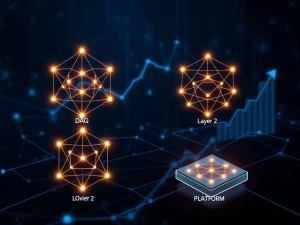
Each project addresses specific blockchain trilemma challenges—scalability, security, and decentralization. BlockDAG employs a Directed Acyclic Graph structure to enable parallel transaction processing. Arbitrum operates as an Ethereum Layer 2 scaling solution using optimistic rollups. Chainlink provides decentralized oracle services connecting smart contracts to real-world data. Avalanche offers a platform for custom blockchain networks with sub-second finality. Their complementary roles create a diversified exposure to blockchain infrastructure development.
| Project | Primary Function | Key Metric | Development Activity |
|---|---|---|---|
| BlockDAG | Scalable Settlement Layer | Transactions Per Second (TPS) | High |
| Arbitrum | Ethereum Scaling | Total Value Locked (TVL) | Very High |
| Chainlink | Decentralized Oracles | Data Feeds & Secure Nodes | Consistent |
| Avalanche | Custom Blockchain Platform | Subnet Deployments | Moderate Growth |
BlockDAG: A Novel Approach to Transaction Throughput
BlockDAG represents an architectural departure from traditional linear blockchains. Its Directed Acyclic Graph structure allows multiple blocks to coexist and be confirmed simultaneously. This design theoretically enables significantly higher transaction throughput compared to sequential block production. The project’s mainnet launched in late 2024 after extensive testing phases. Network metrics from early 2025 show:
- Parallel Processing: Transactions validate concurrently across network nodes
- Finality Speed: Confirmation times reportedly under two seconds
- Energy Efficiency: Consensus mechanism requires less computational power than Proof-of-Work
Adoption indicators include partnerships with payment processors and growing validator participation. However, the technology remains relatively novel within production environments. Consequently, long-term security and decentralization trade-offs require continued observation.
Arbitrum: Dominating Ethereum’s Layer 2 Ecosystem
Arbitrum has established itself as the leading Optimistic Rollup solution for Ethereum scaling. By processing transactions off-chain and posting compressed data to Ethereum, it reduces costs and increases throughput. The network’s Total Value Locked consistently leads all Layer 2 solutions throughout 2024 and into 2025. Several factors contribute to this dominance:
- EVM Compatibility: Developers can port Ethereum applications with minimal changes
- Established Ecosystem: Hundreds of DeFi protocols and NFT marketplaces operate on Arbitrum
- Roadmap Execution: Successful implementation of Nitro upgrade improved performance
Recent governance proposals focus on further decentralization of sequencer operations. Additionally, ongoing research into permissionless validation could enhance network security. The project benefits directly from Ethereum’s continued development and brand recognition.
Chainlink: The Critical Infrastructure for Smart Contract Connectivity
Chainlink’s decentralized oracle network has become indispensable blockchain infrastructure. Smart contracts across multiple chains rely on its data feeds for price information, weather data, sports outcomes, and verification proofs. The network’s value proposition centers on reliability and security. Key developments in 2025 include:
- CCIP Expansion: Cross-Chain Interoperability Protocol enables secure cross-blockchain messaging
- Staking v0.2: Enhanced staking mechanism with slashing for improved node operator accountability
- Data Product Growth: New feeds for traditional finance assets and real-world events
Adoption metrics show consistent growth in data requests and active node operators. The project’s business model generates actual revenue through user fees, creating a fundamental valuation metric distinct from purely speculative assets.
Avalanche: Enabling Custom Blockchain Networks Through Subnets
Avalanche’s primary innovation is its subnet architecture, allowing organizations to launch application-specific blockchains. These subnets benefit from the security of the primary network while maintaining customization. The platform’s consensus protocol achieves sub-second transaction finality, a significant advantage for certain use cases. Notable developments include:
- Institutional Adoption: Several financial institutions have launched permissioned subnets for asset tokenization
- GameFi Growth: Multiple gaming projects utilize Avalanche for its throughput capabilities
- Technical Upgrades: Continuous improvements to the Core platform and developer tools
The network faces competition from other app-chain platforms but maintains differentiation through its consensus speed and established developer community. Partnership announcements in early 2025 suggest growing enterprise interest.
Market Context and Adoption Signals
Analysis of these four projects must consider broader market conditions. The cryptocurrency sector in 2025 shows increased regulatory clarity in several jurisdictions. This environment favors projects with clear utility and compliant operations. On-chain data reveals specific adoption patterns:
- Developer Activity: All four networks show positive year-over-year growth in monthly active developers
- Institutional Interest: Regulatory filings indicate growing institutional product offerings tied to these assets
- Network Usage: Transaction volumes and unique active addresses demonstrate organic growth beyond speculative trading
Technological roadmaps for 2025-2026 include significant upgrades that could further differentiate these networks. However, investors must consider risks including technological hurdles, competitive pressures, and macroeconomic factors affecting digital asset valuations.
Conclusion
BlockDAG, Arbitrum, Chainlink, and Avalanche represent fundamentally distinct approaches within the blockchain ecosystem. Their current technological developments and adoption metrics warrant analytical consideration for those evaluating top crypto assets. BlockDAG offers architectural innovation for scalability, Arbitrum provides essential Ethereum scaling, Chainlink delivers critical oracle services, and Avalanche enables custom blockchain deployment. Continued monitoring of network growth, technological execution, and market integration remains essential for informed assessment of their long-term potential within the evolving digital economy.
FAQs
Q1: What makes BlockDAG different from traditional blockchains?
BlockDAG uses a Directed Acyclic Graph structure enabling parallel transaction processing instead of linear block production, potentially offering higher throughput and faster confirmations.
Q2: How does Arbitrum improve upon Ethereum’s limitations?
Arbitrum processes transactions off-chain using optimistic rollups, then posts compressed data to Ethereum, significantly reducing gas fees and increasing transaction capacity while maintaining Ethereum’s security.
Q3: Why is Chainlink considered critical blockchain infrastructure?
Chainlink provides reliable, decentralized data feeds (oracles) that allow smart contracts to securely interact with real-world information, a fundamental requirement for most advanced blockchain applications.
Q4: What are Avalanche subnets and why are they significant?
Avalanche subnets are customizable, application-specific blockchains that benefit from the main network’s security while allowing tailored parameters, enabling enterprises and projects to deploy optimized networks.
Q5: What are the primary risks associated with these cryptocurrency projects?
Key risks include technological execution challenges, intense competition within each sector, regulatory developments, network security vulnerabilities, and broader cryptocurrency market volatility affecting all digital assets.