Dogecoin’s Critical Test: DOGE Holds Trendline Support as Momentum and Volume Weaken
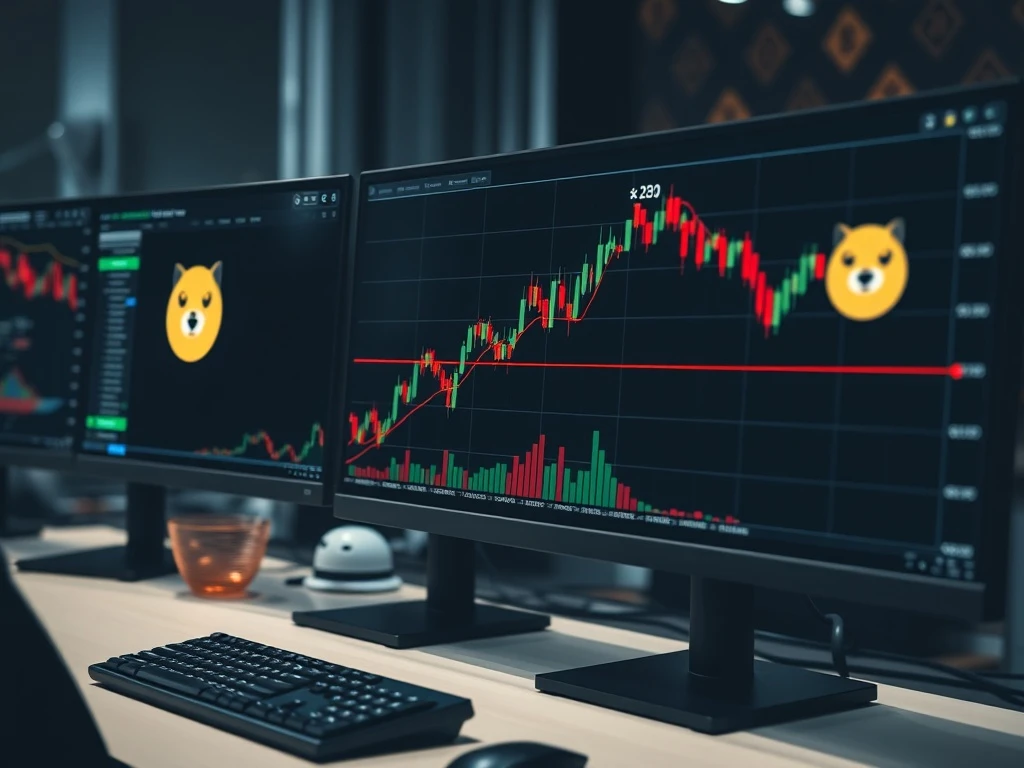
Dogecoin faces a crucial technical examination as the cryptocurrency maintains a key trendline support level despite concerning declines in both momentum and trading volume. This development, observed globally on cryptocurrency exchanges as of March 2025, presents a complex picture for traders and analysts monitoring DOGE’s price action. The digital asset recently broke above a significant descending trendline that had constrained its movement for several weeks, only to retrace and test that same level as support. This retest occurs amid broader market conditions characterized by cautious investor sentiment and fluctuating liquidity across major trading pairs.
Dogecoin Technical Analysis: The Trendline Support Battle
Technical analysts closely monitor Dogecoin’s interaction with a descending trendline that originated from its recent price peak. According to market data from multiple exchanges including Binance, Coinbase, and Kraken, DOGE successfully breached this resistance level approximately seven trading sessions ago. The subsequent pullback represents a classic technical pattern where former resistance transforms into potential support. However, the sustainability of this support remains uncertain due to concurrent weakening in several key indicators.
Market participants note that successful support tests typically require confirmation through increased buying pressure and expanding volume. Currently, neither condition appears fully met. The relative strength index (RSI), a momentum oscillator measuring the magnitude of recent price changes, shows declining values across multiple timeframes. Similarly, trading volume data reveals diminished activity compared to the breakout period, suggesting reduced conviction among both buyers and sellers.
Volume Analysis and Market Context
Trading volume serves as a critical confirmation tool in technical analysis, providing insight into the strength behind price movements. Recent data indicates that Dogecoin’s 24-hour trading volume has decreased by approximately 35% compared to levels observed during the initial breakout. This volume contraction occurs alongside reduced leverage activity in derivatives markets, as evidenced by declining open interest across major cryptocurrency futures exchanges.
The following table illustrates key technical metrics for Dogecoin across different timeframes:
| Timeframe | Price Position vs Trendline | Volume Change | RSI Reading |
|---|---|---|---|
| Daily | Testing as Support | -35% | 48 (Neutral) |
| 4-Hour | Below Breakout Level | -42% | 44 (Bearish Bias) |
| Weekly | Above Long-term Average | -28% | 52 (Slightly Bullish) |
Analyst Trader Tardigrade, whose technical observations were referenced in the original report, emphasizes the importance of volume confirmation. “Breakouts without volume support often fail,” the analyst noted in recent market commentary. “The current retest of the trendline represents a make-or-break moment for Dogecoin’s short-term trajectory.”
Momentum Indicators and Market Psychology
Momentum indicators provide valuable insights into market psychology and the strength of price movements. For Dogecoin, several momentum-based tools show concerning divergences:
- Moving Average Convergence Divergence (MACD): Shows declining histogram values on daily charts
- Average Directional Index (ADX): Indicates weakening trend strength despite the breakout
- On-Balance Volume (OBV): Reflects distribution patterns rather than accumulation
- Money Flow Index (MFI): Suggests reduced buying pressure at current levels
These technical readings align with broader cryptocurrency market conditions in early 2025. Many altcoins experience similar momentum challenges as capital rotates between different asset classes. Regulatory developments, macroeconomic factors, and shifting investor preferences all contribute to the current environment of cautious trading.
Historical Context and Pattern Recognition
Dogecoin’s current technical setup bears resemblance to several historical patterns observed throughout its trading history. Previous instances where DOGE broke significant trendlines without volume confirmation typically resulted in one of two outcomes:
- Extended consolidation periods ranging from 2-4 weeks
- False breakouts followed by sharp reversals to previous trading ranges
The cryptocurrency’s meme-origin status adds unique volatility characteristics to its price action. Unlike fundamentally-driven assets, Dogecoin often experiences amplified reactions to social sentiment and influencer commentary. This psychological dimension creates additional layers of complexity for technical analysts attempting to interpret pure price and volume data.
Broader Cryptocurrency Market Implications
Dogecoin’s technical struggle occurs within a larger cryptocurrency ecosystem facing multiple challenges. Bitcoin dominance remains elevated, suggesting capital concentration in the market leader rather than distribution to altcoins. Ethereum’s recent network upgrades have attracted significant attention and investment, potentially diverting funds from other digital assets including DOGE.
Several factors contribute to the current market environment:
- Institutional Adoption: Increasing but focused primarily on Bitcoin and Ethereum
- Regulatory Clarity: Evolving but creating uncertainty for meme-based cryptocurrencies
- Technological Development: Dogecoin’s development pace compared to competing Layer-1 solutions
- Market Sentiment: Measured by fear and greed indices showing cautious optimism
These macro factors influence trading decisions and capital allocation across the cryptocurrency space. Consequently, Dogecoin’s technical patterns cannot be analyzed in isolation but must be considered within this broader context.
Expert Perspectives on Sustainability
Financial analysts specializing in cryptocurrency markets emphasize the importance of multiple confirmations for sustainable breakouts. According to data from CryptoCompare and CoinMetrics, successful trendline breaks typically exhibit three characteristics:
- Volume expansion exceeding 50% above 20-day averages
- Momentum indicator confirmation across multiple timeframes
- Successful retests with immediate bullish reactions
Currently, Dogecoin meets only the third criterion partially, with the retest still in progress. The absence of strong volume and momentum confirmation raises legitimate questions about the breakout’s durability. Market participants await either a decisive rejection from the trendline support or a convincing rally with accompanying volume expansion.
Conclusion
Dogecoin stands at a technical crossroads as it tests critical trendline support amid weakening momentum and volume indicators. The cryptocurrency’s ability to maintain this level will likely determine its short-to-medium-term trajectory. While the initial breakout above the descending trendline represented a positive development, the subsequent lack of confirmation through volume and momentum raises sustainability concerns. Market participants should monitor several key factors including volume patterns, broader cryptocurrency market conditions, and regulatory developments. Ultimately, Dogecoin’s technical analysis presents a classic case study in breakout validation, emphasizing the importance of multiple confirming signals rather than relying solely on price action.
FAQs
Q1: What does “trendline support” mean in Dogecoin trading?
Trendline support refers to a diagonal price level where buying interest historically emerges to prevent further declines. For Dogecoin, this represents a technical level where the cryptocurrency’s price finds temporary stability after breaking above a previous resistance trendline.
Q2: Why is trading volume important for breakout sustainability?
Trading volume indicates market participation and conviction. Sustainable breakouts typically occur with above-average volume, confirming genuine interest rather than temporary price movements. Low volume during breakouts suggests weak commitment from market participants.
Q3: How do momentum indicators affect Dogecoin’s price analysis?
Momentum indicators measure the rate of price change rather than just direction. Weakening momentum during a breakout suggests declining buying pressure, potentially signaling an unsustainable move. These indicators help traders gauge the strength behind price movements.
Q4: What timeframes do analysts use for Dogecoin technical analysis?
Technical analysts typically examine multiple timeframes including daily, 4-hour, and weekly charts. This multi-timeframe analysis provides perspective on both short-term trading opportunities and longer-term trend direction for Dogecoin.
Q5: How does Dogecoin’s technical analysis differ from fundamental analysis?
Technical analysis focuses on price patterns, volume, and historical data, while fundamental analysis examines underlying value drivers like adoption, development activity, and network metrics. Many traders use both approaches for comprehensive Dogecoin market assessment.