Tokenized U.S. Treasuries Shatter $10B Barrier: Wall Street’s Stunning Blockchain Revolution
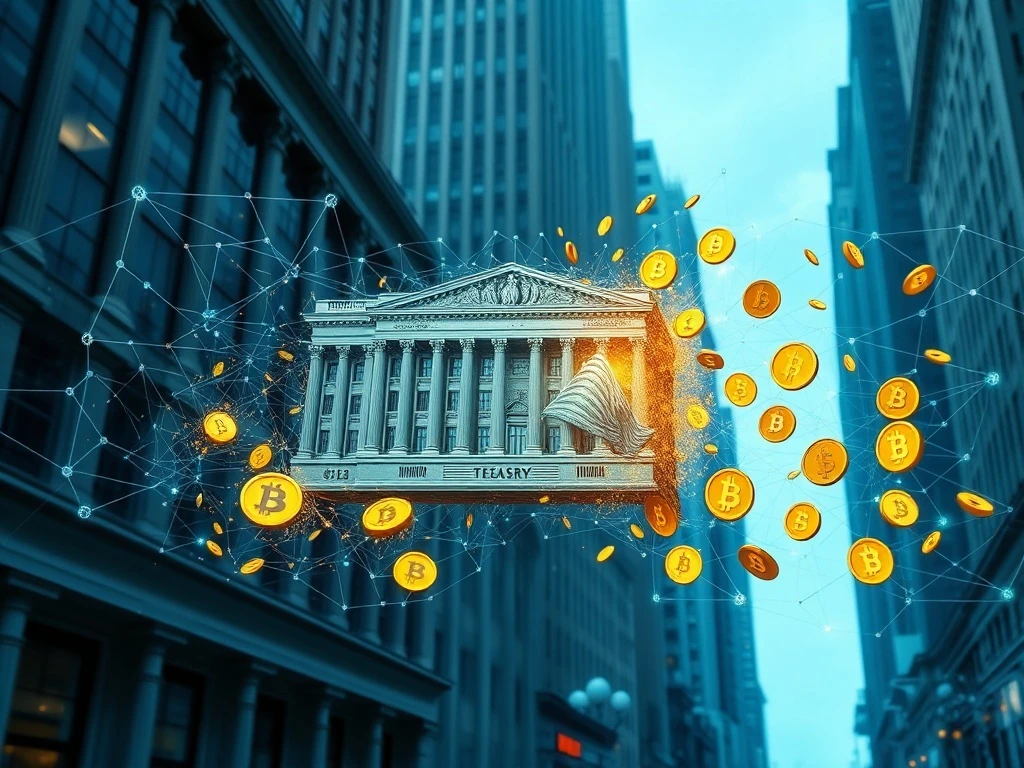
NEW YORK, March 2025 – The financial world witnessed a seismic shift this week as tokenized U.S. Treasury securities officially surpassed the $10 billion threshold, marking what analysts now call Wall Street’s definitive embrace of blockchain infrastructure. This milestone represents more than just digital adoption; it signals a fundamental restructuring of how the world’s safest assets move through global markets.
Tokenized U.S. Treasuries Reach Critical Mass
Institutional participation has transformed tokenization from experimental concept to operational reality. Major financial institutions including the New York Stock Exchange, JPMorgan Chase, and the Depository Trust & Clearing Corporation (DTCC) have deployed production-grade systems for issuing, settling, and managing digital Treasury securities. Consequently, the market has achieved exponential growth that surprised even optimistic forecasts.
Industry data reveals the broader tokenized real-world asset market now exceeds $25 billion when excluding stablecoins. This figure encompasses various asset classes from real estate to commodities. However, U.S. Treasuries dominate this emerging sector due to their unparalleled liquidity and global demand. The $10 billion Treasury milestone therefore serves as the cornerstone for the entire digital asset ecosystem.
The Infrastructure Behind the Numbers
Several technological and regulatory developments enabled this acceleration. First, major blockchain platforms like Ethereum, Polygon, and private consortium chains established institutional-grade security protocols. Second, regulatory clarity from the SEC and Treasury Department provided necessary frameworks for compliance. Finally, traditional financial infrastructure providers built bridges between legacy systems and distributed ledgers.
Key advantages driving adoption include:
- 24/7 Settlement: Transactions now occur around the clock rather than traditional market hours
- Fractional Ownership: Investors can purchase smaller Treasury portions previously inaccessible
- Reduced Counterparty Risk: Smart contracts automate settlement without intermediary delays
- Enhanced Transparency: All transactions record on immutable ledgers for audit purposes
Wall Street’s Strategic Blockchain Pivot
Traditional financial institutions initially approached blockchain technology with cautious skepticism. However, competitive pressures and client demands forced rapid adaptation. JPMorgan’s Onyx Digital Assets platform, launched in 2020, now processes billions in daily transactions. Similarly, BlackRock’s digital asset initiatives have gained substantial traction among institutional clients.
The New York Stock Exchange’s involvement proves particularly significant. As America’s premier trading venue, its participation legitimizes tokenization for conservative investors. NYSE President Lynn Martin recently stated, “We’re not experimenting with technology for its own sake. We’re solving real problems in settlement efficiency and global access.”
| Platform | Assets Under Management | Primary Blockchain |
|---|---|---|
| Onyx Digital Assets (JPMorgan) | $3.2B | Private Ethereum |
| BlackRock USD Institutional Digital | $2.1B | Multiple |
| Franklin Templeton OnChain | $1.8B | Stellar & Polygon |
| WisdomTree Prime | $1.2B | Ethereum |
| Other Platforms | $1.7B | Various |
Global Implications and Market Effects
International investors particularly benefit from tokenized Treasuries. Previously, foreign access required complex custodial arrangements and faced timezone limitations. Now, investors in Asia or Europe can trade U.S. government debt during their local business hours. This development potentially increases global demand for American debt instruments.
Market analysts observe secondary effects across related sectors. For instance, decentralized finance protocols now integrate Treasury tokens as collateral. Additionally, traditional bond ETFs face competition from their digital counterparts. Meanwhile, custody solutions have evolved to meet institutional security requirements.
The Path to $100 Billion by 2026
Industry projections suggest the $10 billion milestone merely represents the beginning. Major financial institutions publicly target $100 billion in tokenized Treasuries by 2026. Several factors support this ambitious forecast. First, pension funds and insurance companies increasingly allocate to digital Treasury products. Second, technological improvements continue reducing transaction costs. Third, regulatory frameworks mature across major jurisdictions.
Goldman Sachs research indicates three primary growth drivers:
- Corporate treasury departments adopting digital solutions for cash management
- Emerging market central banks diversifying reserves through blockchain channels
- Retail accessibility through regulated platforms expanding investor base
However, challenges remain regarding standardization and interoperability. Different blockchain networks sometimes struggle communicating effectively. Regulatory harmonization across countries also requires further development. Nevertheless, industry participants express confidence in overcoming these hurdles.
Expert Perspectives on the Transformation
Financial technology experts emphasize this transition’s historical significance. Dr. Sarah Chen, blockchain researcher at MIT, explains, “We’re witnessing the digitization of the global risk-free rate. This isn’t about cryptocurrency speculation; it’s about rebuilding financial plumbing for the digital age.”
Meanwhile, traditional bond market veterans acknowledge inevitable changes. Former Treasury trader Michael Rodriguez notes, “The bond market always adapted to technological shifts. Electronic trading replaced phone orders. Now blockchain replaces certain settlement layers. The underlying asset remains the same U.S. government credit.”
Conclusion
The $10 billion milestone for tokenized U.S. Treasuries represents a watershed moment for both traditional finance and blockchain technology. Wall Street institutions have moved beyond pilot programs to full-scale implementation. As adoption accelerates toward the $100 billion target, global financial infrastructure undergoes permanent transformation. Tokenized U.S. Treasuries now serve as the bridge between legacy systems and decentralized networks, creating new efficiencies while maintaining the credit quality that defines these instruments.
FAQs
Q1: What exactly are tokenized U.S. Treasuries?
Tokenized U.S. Treasuries are digital representations of U.S. government debt securities on blockchain networks. Each token corresponds to ownership rights in actual Treasury bills, notes, or bonds, combining traditional credit quality with blockchain efficiency.
Q2: How do tokenized Treasuries differ from cryptocurrency investments?
Unlike speculative cryptocurrencies, tokenized Treasuries represent ownership in actual U.S. government debt with defined interest payments and maturity dates. They utilize blockchain technology for settlement and transfer but derive value from traditional financial instruments.
Q3: Are tokenized Treasury investments safe and regulated?
Major platforms operate under existing securities regulations and often use permissioned blockchain networks with institutional-grade security. However, investors should verify specific platform compliance with SEC and FINRA requirements before participating.
Q4: What advantages do tokenized Treasuries offer over traditional bonds?
Primary advantages include 24/7 trading availability, fractional ownership possibilities, reduced settlement times from days to minutes, enhanced transparency through distributed ledgers, and potential integration with decentralized finance applications.
Q5: Can individual investors access tokenized Treasury markets?
Access varies by platform, with some requiring institutional status while others offer retail participation through regulated interfaces. Investors should research minimum investment requirements and platform accessibility for their specific situation.