Claude Code Security Devastates Cybersecurity Stocks, Erasing $15 Billion in Single Session
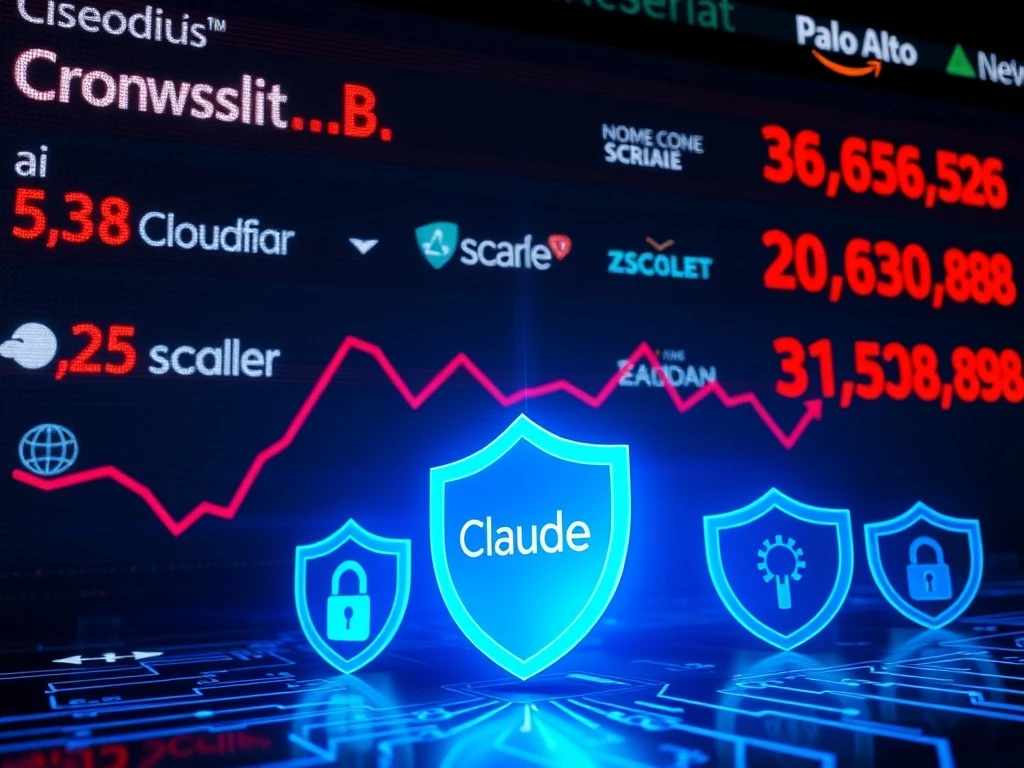
In a stunning market development on March 18, 2025, Anthropic’s launch of Claude Code Security triggered immediate and severe repercussions across the cybersecurity sector, wiping over $15 billion from leading security companies’ market valuations in just one trading session. The dramatic selloff affected industry giants including CrowdStrike, Cloudflare, Zscaler, and Palo Alto Networks, signaling a potential paradigm shift in how enterprises approach code security and vulnerability management. This seismic market reaction underscores the growing influence of advanced AI systems on traditional technology markets and investor sentiment.
Claude Code Security Triggers Immediate Market Reaction
Anthropic officially launched Claude Code Security this week, introducing what industry analysts describe as a transformative approach to automated code analysis and vulnerability detection. The market’s response proved both immediate and brutal for established cybersecurity players. According to data aggregated by financial analytics platform BullTheory on X, the single announcement erased approximately $15.3 billion in combined market capitalization from four major cybersecurity firms during Tuesday’s trading session.
Market data reveals the specific impacts across key players. CrowdStrike Holdings experienced a 7.2% decline, representing approximately $6.8 billion in lost market value. Cloudflare shares dropped 5.8%, wiping out $4.1 billion. Zscaler declined 6.5%, losing $2.9 billion, while Palo Alto Networks fell 4.7%, representing a $1.5 billion reduction. These substantial declines occurred despite generally positive broader market conditions, highlighting the announcement’s specific and targeted impact on the cybersecurity sector.
Technical Capabilities Driving Market Concerns
Claude Code Security represents a significant advancement in AI-powered security tools, offering capabilities that directly compete with established security platforms. The system utilizes Anthropic’s Constitutional AI framework to provide real-time code analysis, vulnerability detection, and remediation suggestions. Unlike traditional security tools that primarily identify known vulnerabilities, Claude Code Security employs advanced reasoning to predict potential security flaws before they manifest.
The platform’s key differentiators include:
- Proactive vulnerability prediction using pattern recognition across codebases
- Natural language explanations of security risks and remediation steps
- Integration capabilities with existing development workflows
- Continuous learning from new security threats and patterns
Historical Context of AI Disruption in Security Markets
The cybersecurity sector has experienced previous disruptions from technological advancements, though none with such immediate market impact. The 2025 reaction to Claude Code Security mirrors historical patterns observed when disruptive technologies enter established markets. In 2017, the emergence of endpoint detection and response (EDR) platforms similarly affected traditional antivirus providers. However, the speed and magnitude of the Claude Code Security market reaction exceeds previous technological shifts.
Financial analysts note several factors contributing to the dramatic response. First, investor concerns about AI displacement in security functions have been building throughout 2024. Second, the cybersecurity sector has traded at premium valuations based on recurring revenue models and perceived moats against competition. Third, enterprise spending on AI security tools has grown 47% year-over-year, according to Gartner’s 2024 security spending report, creating clear competitive pressure on traditional providers.
| Technology | Year | Market Impact | Timeframe |
|---|---|---|---|
| Cloud Security Adoption | 2015-2018 | Gradual shift over 3 years | Long-term transition |
| EDR Platform Emergence | 2017-2019 | 15-25% sector revaluation | 18-24 months |
| Zero Trust Architecture | 2020-2023 | Incremental adoption curve | Multi-year transition |
| Claude Code Security | 2025 | $15B single-day impact | Immediate reaction |
Expert Analysis of the Cybersecurity Landscape Shift
Industry experts provide crucial context for understanding this market movement. Dr. Elena Rodriguez, cybersecurity analyst at Stanford’s Digital Security Institute, explains the underlying dynamics. “The market reaction reflects genuine concern about AI’s capacity to automate functions previously requiring human expertise and specialized platforms,” she notes. “Claude Code Security doesn’t just detect vulnerabilities—it explains them in business terms and suggests specific fixes. This represents a fundamental expansion of AI’s role in security operations.”
Financial analysts emphasize the valuation implications. Michael Chen, senior technology analyst at Bernstein Research, states, “Cybersecurity companies have commanded premium multiples based on recurring revenue visibility and high switching costs. Claude Code Security challenges both assumptions by offering potentially superior capabilities at lower cost structures. The market is repricing this risk accordingly.”
The reaction also reflects broader trends in enterprise technology spending. According to IDC’s 2025 Enterprise Security Survey, 68% of organizations plan to increase AI security investments while maintaining or reducing traditional security tool spending. This budget reallocation creates direct competitive pressure on established security vendors whose growth projections now face downward revisions.
Technical Architecture and Competitive Advantages
Claude Code Security leverages Anthropic’s proprietary Constitutional AI framework, which emphasizes safety, transparency, and controlled behavior. The system analyzes code across multiple dimensions including security vulnerabilities, performance issues, and maintainability concerns. Unlike traditional static application security testing (SAST) tools, Claude Code Security provides contextual understanding of how vulnerabilities might be exploited in specific deployment environments.
The platform’s competitive advantages include:
- Reduced false positives through contextual analysis
- Integration with development environments like VS Code and JetBrains
- Compliance mapping for regulatory requirements
- Custom rule creation for organization-specific needs
Broader Implications for Technology Investment Trends
The market reaction to Claude Code Security extends beyond immediate stock price movements, signaling potential shifts in technology investment priorities. Venture capital funding patterns already show increasing allocation to AI-native security solutions. According to PitchBook data, AI security startups raised $4.2 billion in 2024, representing 28% of total cybersecurity venture funding. This trend likely accelerates following the Claude Code Security market validation.
Enterprise adoption patterns provide additional context. A 2024 Enterprise Technology Survey by Forrester Research indicates that 42% of organizations plan to evaluate AI-powered code security tools within the next 12 months. The primary drivers include developer productivity improvements (cited by 58% of respondents), reduced security team workload (52%), and faster vulnerability remediation (47%). These adoption intentions create substantial market opportunity for AI security providers while threatening incumbent vendors.
The financial markets’ reaction also reflects changing investor calculus regarding technology moats. Traditional cybersecurity companies have benefited from high switching costs and complex integration requirements. AI-native tools like Claude Code Security potentially reduce these barriers through superior user experience and rapid deployment capabilities. This dynamic challenges the sustainable competitive advantages that have supported premium valuations across the cybersecurity sector.
Conclusion
The dramatic $15 billion market value reduction triggered by Claude Code Security represents more than a temporary stock market fluctuation. This event signals a fundamental reassessment of competitive dynamics in the cybersecurity industry, driven by accelerating AI capabilities. The market reaction validates investor concerns about AI disruption in previously stable technology sectors while highlighting the transformative potential of advanced AI systems in critical business functions. As enterprises increasingly prioritize AI-powered security solutions, traditional cybersecurity providers must demonstrate meaningful adaptation to maintain their market positions and valuations. The Claude Code Security launch and its immediate market impact will likely accelerate innovation across the security technology landscape while reshaping investment priorities for years to come.
FAQs
Q1: What exactly is Claude Code Security and how does it work?
Claude Code Security is an AI-powered platform developed by Anthropic that analyzes source code for security vulnerabilities, performance issues, and maintainability concerns. The system uses Constitutional AI to provide contextual understanding of code, identify potential security flaws, and suggest specific remediation steps with natural language explanations.
Q2: Why did cybersecurity stocks drop so dramatically after the announcement?
The market reaction reflects investor concerns about AI disruption in the cybersecurity sector. Claude Code Security offers capabilities that compete directly with established security platforms, potentially reducing demand for traditional tools. The dramatic single-day decline signals a repricing of cybersecurity stocks based on perceived competitive threats from advanced AI systems.
Q3: Which companies were most affected by the market reaction?
CrowdStrike, Cloudflare, Zscaler, and Palo Alto Networks experienced the most significant declines, collectively losing approximately $15.3 billion in market capitalization. These companies provide security solutions that overlap with capabilities offered by Claude Code Security, particularly in code analysis and vulnerability management.
Q4: How does Claude Code Security differ from traditional security tools?
Traditional security tools typically focus on detecting known vulnerabilities using signature-based approaches. Claude Code Security employs advanced AI reasoning to predict potential security flaws before they manifest, provides natural language explanations of risks, and suggests specific remediation steps within development workflows.
Q5: What are the long-term implications for the cybersecurity industry?
The market reaction to Claude Code Security signals accelerating AI disruption in cybersecurity. Traditional providers will likely need to enhance their AI capabilities through development or acquisition. The event may accelerate consolidation in the security sector while driving increased investment in AI-native security solutions across both public and private markets.