Robert Kiyosaki’s Strategic Bitcoin Purchase at $67K Reveals Stark Warning on Dollar’s Future
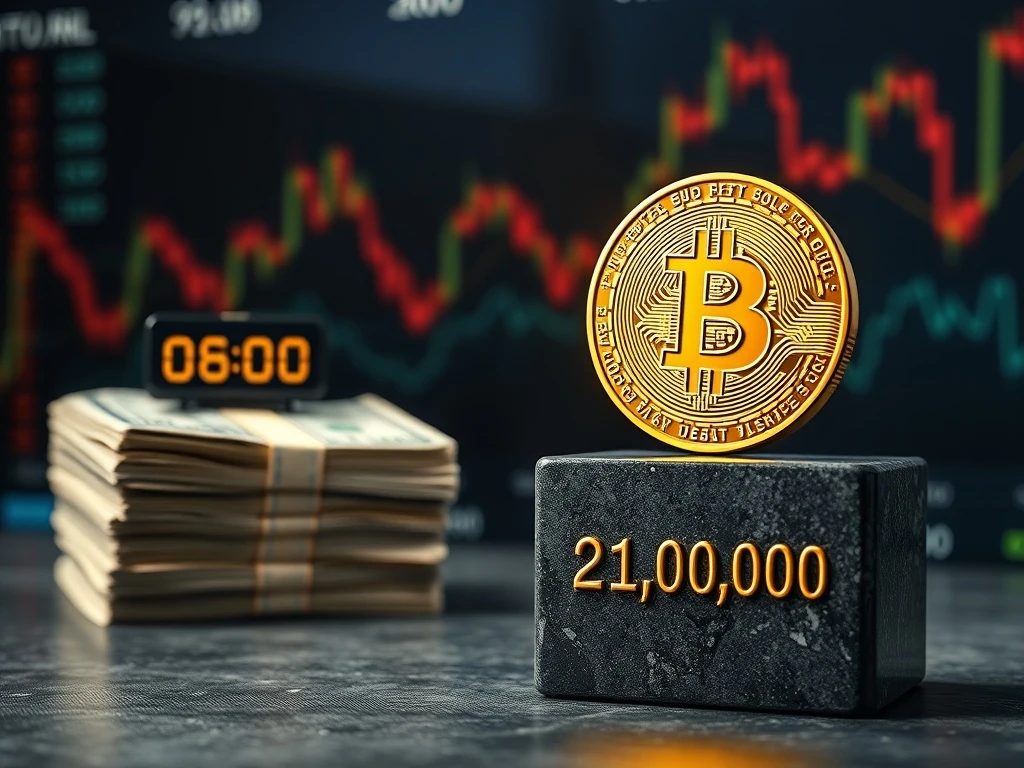
Prominent investor and author Robert Kiyosaki has executed a significant cryptocurrency transaction, acquiring one Bitcoin at approximately $67,000 during a recent market dip. This move, confirmed in late 2024, directly connects traditional macroeconomic fears with digital asset strategy. Kiyosaki explicitly cited escalating U.S. national debt, anticipated future dollar printing by the Federal Reserve, and Bitcoin’s immutable 21 million supply cap as the foundational reasons for his purchase. Consequently, this action provides a tangible case study in modern portfolio hedging.
Robert Kiyosaki’s Bitcoin Purchase and Macroeconomic Context
Robert Kiyosaki, author of the best-selling personal finance book “Rich Dad Poor Dad,” has long been a critic of fiat currency systems. His recent acquisition of Bitcoin is not an isolated event but part of a consistent, publicly stated philosophy. Historically, Kiyosaki has advocated for tangible assets like gold and silver as hedges against inflation. However, his pivot to include Bitcoin signifies a notable evolution in his asset allocation model, recognizing digital scarcity as a comparable store of value.
This purchase occurred against a backdrop of significant U.S. fiscal pressure. The national debt surpassed $34 trillion in early 2024, a figure that continues to grow. Furthermore, market analysts widely anticipate that the Federal Reserve may engage in renewed quantitative easing or similar monetary expansion policies in response to potential economic slowdowns. Kiyosaki’s investment, therefore, acts as a direct hedge against the potential devaluation of the U.S. dollar that such actions could cause.
The Scarcity Argument: Bitcoin vs. Fiat
The core of Kiyosaki’s thesis rests on a fundamental economic principle: scarcity. The U.S. dollar, like all fiat currencies, has no theoretical supply limit. Central banks can, and historically have, increased the money supply during crises. Conversely, Bitcoin’s protocol enforces a strict, verifiable limit of 21 million coins. This digital scarcity is programmed, transparent, and cannot be altered without overwhelming network consensus.
This creates a stark contrast. On one side, you have an expanding supply of dollars. On the other, you have a fixed supply of Bitcoin. Basic economic theory suggests that if demand for an asset remains constant or increases while its supply is fixed, its price should appreciate over time. Kiyosaki’s purchase is a bet on this dynamic, positioning Bitcoin not merely as a speculative tech asset but as a next-generation hard money.
Analyzing the $67,000 Bitcoin Dip Purchase
Kiyosaki’s timing at the $67,000 price point is analytically significant. Bitcoin’s price is notoriously volatile, often experiencing corrections of 20-30% even within long-term bull markets. A purchase during a dip demonstrates a strategy focused on long-term value rather than short-term price speculation. It adheres to the classic investment adage of “buying when there’s blood in the streets,” albeit applied to the digital asset space.
Market data shows that $67,000 represented a key psychological and technical support level during that period. For context, Bitcoin had previously reached an all-time high near $73,000 earlier in 2024 before undergoing a correction. Therefore, Kiyosaki’s entry point can be seen as a strategic accumulation below previous peaks, aiming to lower the average cost of acquisition for a long-term hold.
Key factors in his decision likely included:
- Long-Term Horizon: Viewing the purchase as a multi-year hedge, not a trade.
- Dollar-Cost Averaging: This may be part of a larger, ongoing accumulation strategy.
- Institutional Validation: The prior approval of U.S. Bitcoin ETFs provided regulatory clarity.
- Global Adoption: Increasing integration of Bitcoin by nation-states and corporations.
The Broader Impact on Investor Sentiment and Strategy
When a high-profile traditional finance figure like Robert Kiyosaki makes a public Bitcoin investment, it influences broader market sentiment. His audience, primarily retail investors interested in financial independence, may view this as validation for including digital assets in a diversified portfolio. This effect can accelerate the mainstream adoption of cryptocurrency as a legitimate asset class.
Moreover, his specific rationale—focusing on macro debt and currency devaluation—shifts the narrative. It moves discussion away from pure price speculation and towards Bitcoin’s fundamental properties as a non-sovereign, censorship-resistant, and scarce asset. This framing attracts a different cohort of investors: those concerned with wealth preservation in addition to growth.
Financial advisors now increasingly face questions about Bitcoin’s role in asset allocation. While still considered a high-risk component, its correlation with traditional markets is not perfect, offering potential diversification benefits. Kiyosaki’s move adds weight to the argument for a small, strategic allocation within a broader, balanced portfolio designed to withstand monetary inflation.
Historical Precedents and Expert Perspectives
Kiyosaki’s warnings about fiat currency are not without historical precedent. Hyperinflation events in Weimar Germany, Zimbabwe, and more recently Venezuela demonstrate the catastrophic effects of unchecked money printing. While the U.S. dollar’s status as the global reserve currency provides a buffer, economists debate the long-term sustainability of current debt trajectories.
Other financial experts have echoed similar concerns. For instance, investors like Paul Tudor Jones and Stanley Druckenmiller have also allocated portions of their portfolios to Bitcoin as an inflation hedge. This growing trend among seasoned macro investors suggests a paradigm shift. They are not betting on a specific company’s success but on a systemic flaw in the current global monetary system and Bitcoin’s potential role as a corrective technology.
Conclusion
Robert Kiyosaki’s purchase of Bitcoin at $67,000 is a strategically coherent action rooted in a deep-seated macroeconomic worldview. It directly links the tangible issue of U.S. debt and potential dollar devaluation to the digital solution of Bitcoin’s verifiable scarcity. This move provides a clear, experience-driven example of modern portfolio hedging for retail and institutional investors alike. Ultimately, it underscores Bitcoin’s evolving narrative from a niche digital token to a serious contender in global discussions about value preservation, monetary sovereignty, and long-term financial strategy in an era of unprecedented fiscal expansion.
FAQs
Q1: Why did Robert Kiyosaki buy Bitcoin specifically at $67,000?
He identified it as a strategic entry point during a market dip, aligning with his long-term investment horizon. The price represented a key support level, allowing accumulation below previous all-time highs as part of a wealth preservation strategy against dollar devaluation.
Q2: What is the main connection between U.S. debt and Bitcoin?
Kiyosaki argues that high national debt may lead to future money printing (inflation) by the Federal Reserve, devaluing the dollar. Bitcoin, with its fixed 21 million supply, is designed to be immune to such manipulation, making it a potential hedge against this form of currency debasement.
Q3: Has Robert Kiyosaki invested in cryptocurrency before?
Yes. Kiyosaki has publicly discussed Bitcoin and other cryptocurrencies like Ethereum for several years, often advocating for them as alternatives to what he calls “fake money” (fiat currencies). This purchase is a continuation of his publicly stated investment philosophy.
Q4: Is Bitcoin’s 21 million supply limit guaranteed?
The supply limit is a core rule of Bitcoin’s underlying protocol, enforced by its decentralized network of nodes and miners. Changing it would require overwhelming consensus from this globally distributed network, making alteration practically and politically infeasible, thus guaranteeing its scarcity.
Q5: How does this purchase fit into a traditional investment portfolio?
Financial analysts increasingly view a small allocation to Bitcoin (e.g., 1-5%) as a high-risk, high-potential-reward diversifier. Its price movements are not perfectly correlated with stocks or bonds, and it represents a bet on an alternative, decentralized financial system, as demonstrated by Kiyosaki’s macro-hedging approach.