Crypto Market Defies Extreme Fear: Bitcoin and Ethereum Show Resilient Gains Amid $2.33T Stability
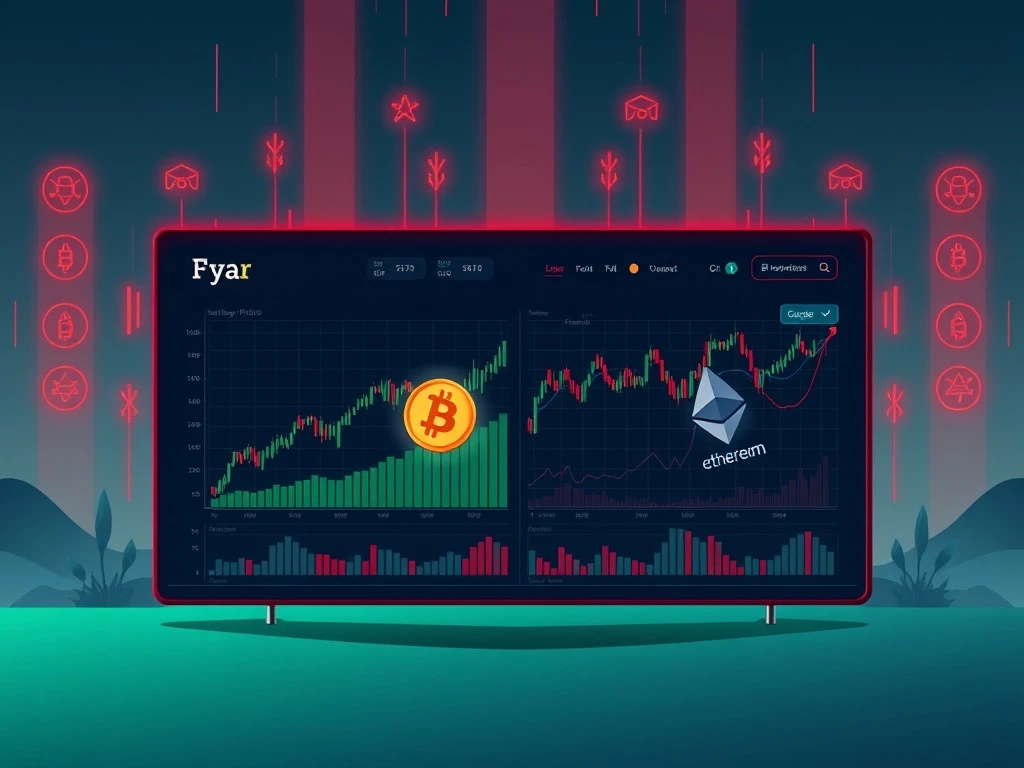
Global cryptocurrency markets demonstrate remarkable resilience this week, maintaining a $2.33 trillion valuation despite overwhelming fear sentiment gripping investors worldwide. Bitcoin and Ethereum post modest but significant gains, challenging conventional market psychology and suggesting underlying strength in blockchain fundamentals. This apparent contradiction between price action and sentiment indicators presents a fascinating case study in digital asset market dynamics for 2025.
Crypto Market Stability Amid Extreme Fear Conditions
The cryptocurrency market capitalization currently stands at $2.33 trillion, representing a marginal increase from previous weeks. This stability emerges against a backdrop of extreme fear, as measured by the Crypto Fear & Greed Index. Market analysts note this divergence between sentiment and price action often signals potential inflection points. Historical data reveals similar patterns preceding significant market movements in both 2018 and 2021. The current market structure suggests institutional participation provides underlying support despite retail investor anxiety.
Several factors contribute to this market stability. First, increased institutional adoption creates a more diversified investor base. Second, regulatory clarity in major jurisdictions reduces systemic uncertainty. Third, technological advancements in blockchain infrastructure enhance network security and efficiency. These fundamental improvements create a stronger foundation than previous market cycles exhibited. Consequently, price movements now reflect more sophisticated market dynamics.
Bitcoin and Ethereum Performance Analysis
Bitcoin (BTC) demonstrates particular resilience during this period of market anxiety. The leading cryptocurrency maintains its position above crucial support levels, showing modest gains that contradict prevailing sentiment. Technical analysis reveals Bitcoin trading within a defined range, with volume patterns suggesting accumulation by long-term holders. On-chain metrics indicate reduced exchange balances, signaling decreased selling pressure from major holders. This behavior typically precedes significant price movements when sentiment eventually shifts.
Ethereum (ETH) similarly exhibits strength despite market conditions. The second-largest cryptocurrency benefits from ongoing network upgrades and growing decentralized finance adoption. Ethereum’s transition to proof-of-stake continues to reduce selling pressure from miners, creating more sustainable market dynamics. Additionally, layer-2 scaling solutions enhance network utility without compromising security. These fundamental improvements provide structural support absent in previous market cycles.
Market Psychology and Behavioral Economics
Extreme fear sentiment often creates contrarian investment opportunities according to behavioral finance principles. The current Crypto Fear & Greed Index reading below 20 typically indicates oversold conditions. Historical analysis shows such extreme readings frequently precede substantial market recoveries. However, market participants must distinguish between temporary sentiment shifts and fundamental deterioration. The current situation appears driven more by macroeconomic concerns than cryptocurrency-specific issues.
Professional traders monitor several key indicators during fear-dominated markets. Trading volume patterns reveal whether fear-driven selling exhausts itself. Funding rates in derivatives markets show whether sentiment extremes create unsustainable positioning. Exchange net flows indicate whether investors move assets to cold storage or prepare for selling. Current data across these metrics suggests fear may be reaching peak intensity, potentially setting the stage for sentiment reversal.
Comparative Market Analysis and Historical Context
The following table illustrates how current market conditions compare to previous fear-dominated periods:
| Period | Fear & Greed Index | Market Cap Change | Subsequent 90-Day Performance |
|---|---|---|---|
| December 2018 | 8 (Extreme Fear) | -45% | +92% |
| March 2020 | 12 (Extreme Fear) | -50% | +150% |
| June 2022 | 10 (Extreme Fear) | -35% | +28% |
| Current (2025) | 18 (Extreme Fear) | +2% | TBD |
This historical perspective reveals several important patterns. First, extreme fear readings often mark market bottoms rather than beginnings of extended declines. Second, the current market shows unprecedented stability during fear conditions, suggesting structural changes in market composition. Third, recovery magnitude correlates with fundamental improvements during the fear period. The current cycle features substantial technological and institutional advancements that may support stronger recovery potential.
Expert Perspectives on Market Dynamics
Financial analysts emphasize several key factors influencing current market conditions. Macroeconomic uncertainty surrounding interest rates and inflation continues affecting all risk assets. However, cryptocurrency markets now demonstrate reduced correlation with traditional equities compared to previous cycles. This decoupling suggests growing recognition of blockchain technology’s unique value proposition. Industry experts note several developments supporting this interpretation:
- Institutional infrastructure maturation: Custody solutions and regulatory frameworks now support larger-scale participation
- Derivatives market sophistication: Options and futures markets provide better risk management tools
- Regulatory clarity progression: Major jurisdictions establish clearer digital asset frameworks
- Technological advancement acceleration: Layer-2 solutions and interoperability protocols enhance utility
These developments create a fundamentally different market environment than previous fear-dominated periods. The cryptocurrency ecosystem now possesses greater resilience against sentiment-driven volatility. This structural improvement explains the current stability despite extreme fear readings. Market participants increasingly recognize this changed landscape, though sentiment indicators lag in reflecting this understanding.
Technical Indicators and On-Chain Metrics
Advanced analytics provide deeper insight into current market conditions. Network activity metrics show sustained usage despite price uncertainty. Transaction volumes remain elevated across major blockchain networks. Active address counts demonstrate continued user engagement. These fundamental usage metrics suggest underlying strength not reflected in sentiment indicators alone. Additionally, several technical factors support the current stability:
- Realized price indicators: Show aggregate cost basis providing support
- MVRV ratios: Indicate whether assets trade above or below fair value
- Exchange reserves: Demonstrate outflow patterns suggesting accumulation
- Network hash rates: Show security investment continuing despite market conditions
These metrics collectively paint a more nuanced picture than sentiment indicators alone provide. While fear dominates market psychology, fundamental and technical factors suggest underlying strength. This divergence creates potential opportunity for informed market participants. However, prudent risk management remains essential given ongoing macroeconomic uncertainty.
Conclusion
The cryptocurrency market demonstrates remarkable resilience by holding steady at $2.33 trillion despite extreme fear sentiment prevailing among investors. Bitcoin and Ethereum’s modest gains during this period highlight growing market sophistication and structural improvements in blockchain ecosystems. While sentiment indicators suggest caution, fundamental metrics reveal underlying strength that may support future appreciation. Market participants should monitor both psychological and technical factors when navigating current conditions. The crypto market’s ability to maintain stability during extreme fear represents a significant maturation milestone for the digital asset class.
FAQs
Q1: What does “extreme fear” mean in cryptocurrency markets?
The term refers to readings on the Crypto Fear & Greed Index below 20, indicating overwhelming negative sentiment among market participants. This metric aggregates various data points including volatility, market momentum, social media sentiment, and surveys.
Q2: Why are Bitcoin and Ethereum gaining despite extreme fear?
Several factors contribute including institutional accumulation, reduced selling pressure from miners (for Ethereum), strong network fundamentals, and historical patterns where extreme fear often precedes market reversals.
Q3: How does the current market compare to previous fear periods?
The current market shows unprecedented stability during extreme fear conditions, with only modest declines compared to historical precedents. This suggests structural improvements in market composition and participant sophistication.
Q4: What indicators should investors monitor during fear-dominated markets?
Key metrics include trading volume patterns, exchange net flows, derivatives funding rates, on-chain activity metrics, and macroeconomic factors affecting all risk assets.
Q5: Does extreme fear always indicate a buying opportunity?
While extreme fear often marks potential inflection points, investors must conduct thorough fundamental analysis. Not all fear periods lead to immediate recoveries, particularly if driven by structural rather than psychological factors.