Kraken Tokenized Equities Platform Achieves Stunning $25 Billion Milestone in Just Eight Months
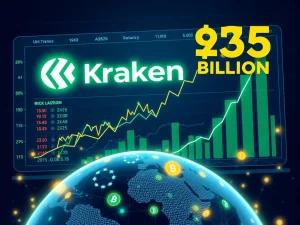
In a landmark achievement for the digital asset industry, Kraken’s pioneering tokenized equities platform, xStocks, has officially surpassed $25 billion in total transaction volume. This staggering milestone, reached within a mere eight months of operation, signals a seismic shift in how traditional financial instruments integrate with blockchain technology. The platform’s rapid ascent demonstrates accelerating institutional and retail adoption of tokenized securities, fundamentally reshaping liquidity and accessibility in global equity markets.
Kraken Tokenized Equities Platform Redefines Market Expectations
Kraken xStocks launched with the ambitious goal of bridging traditional finance and decentralized technology. Consequently, its journey to $25 billion in volume reflects more than just numerical growth. The platform facilitates the trading of tokenized versions of popular U.S. stocks, including giants like Tesla and Apple. Each token represents a real-world share held in custody, providing users with exposure to equity price movements directly on the blockchain. This model eliminates traditional settlement delays and operates 24/7, offering unprecedented flexibility.
Market analysts point to several key drivers behind this explosive growth. Firstly, increasing demand for on-chain financial products from both crypto-native investors and traditional finance entrants has created a perfect storm of liquidity. Secondly, the regulatory clarity emerging in certain jurisdictions has provided a more stable framework for such innovations. Finally, Kraken’s established reputation as a secure and compliant exchange has built essential trust in this novel asset class.
The Mechanics and Impact of Tokenized Securities
Tokenization involves creating a digital representation of a real-world asset on a blockchain. For equities, this process unlocks significant advantages. Transactions settle almost instantly compared to the traditional T+2 settlement cycle. Furthermore, fractional ownership becomes seamless, allowing investment with smaller capital outlays. The transparent and immutable nature of blockchain also provides a clear audit trail for all transactions.
Expert Analysis on Liquidity and Market Structure
Financial technology experts highlight the profound implications of this milestone. “The $25 billion volume is not just a number; it’s a validation of the tokenization thesis,” notes Dr. Anya Sharma, a fintech researcher at the Global Digital Finance Institute. “It proves there is substantial, real demand for composable, on-chain versions of traditional assets. This liquidity begets more liquidity, attracting market makers and reducing spreads, which in turn draws more users—a powerful network effect is now in motion.” This growth trajectory suggests tokenized equities could become a standard component of diversified investment portfolios by 2025.
The rise of platforms like xStocks also pressures traditional financial infrastructure to innovate. Legacy systems, built decades ago, struggle to match the efficiency and accessibility of blockchain-based solutions. As a result, many incumbent banks and brokerages are now accelerating their own digital asset and tokenization strategies to remain competitive.
Comparative Landscape and Future Trajectory
While Kraken’s xStocks is a leader, it operates within a growing ecosystem. Other crypto exchanges and financial technology firms have launched similar products, though few have reported volumes of this magnitude. The success underscores a broader trend of asset tokenization expanding beyond cryptocurrencies to include bonds, real estate, and commodities.
| Platform | Launch Date | Reported Volume (Approx.) | Key Features |
|---|---|---|---|
| Kraken xStocks | Mid-2024 | $25B+ | 24/7 trading, fractional shares, direct blockchain settlement |
| Competitor A | Early 2024 | $8B | Focus on European equities, regulatory partnership model |
| Competitor B | Late 2023 | $15B | Institutional-focused, integrated with DeFi protocols |
Looking ahead, the trajectory suggests several potential developments. Regulatory frameworks will continue to evolve, potentially enabling more assets and geographies. Interoperability between different blockchain networks could further enhance liquidity. Additionally, the integration of these tokenized assets into decentralized finance (DeFi) lending and yield protocols represents the next frontier, creating entirely new financial primitives.
Conclusion
Kraken’s tokenized equities platform hitting the $25 billion volume milestone marks a definitive inflection point for the fusion of traditional finance and blockchain. The achievement validates the market’s readiness for on-chain securities and highlights the critical role of trusted, compliant platforms in driving adoption. As tokenization continues to mature, its impact on market efficiency, accessibility, and global liquidity will likely expand, reshaping the financial landscape for years to come. The success of xStocks is a clear signal that the future of asset trading is increasingly digital, transparent, and on-chain.
FAQs
Q1: What are tokenized equities?
Tokenized equities are digital tokens on a blockchain that represent ownership of a real-world company’s stock. They track the price of the underlying equity and are backed by shares held in custody by a regulated entity.
Q2: How does Kraken’s xStocks platform work?
The platform allows users to buy and sell tokenized stocks. Kraken holds the corresponding physical shares. Users trade the tokens peer-to-peer on Kraken’s exchange, benefiting from instant settlement and 24/7 market access.
Q3: Is trading tokenized equities safe and regulated?
Platforms like Kraken operate under specific regulatory frameworks and licenses. They use robust custody solutions for the underlying assets. However, risks remain, including platform risk, regulatory changes, and the novel nature of the technology. Investors should conduct thorough due diligence.
Q4: What are the main advantages over traditional stock trading?
Key advantages include faster settlement (near-instant vs. T+2), 24/7 trading availability, potential for fractional ownership with smaller amounts, and the transparency of blockchain-recorded transactions.
Q5: What does this $25 billion milestone mean for the future of finance?
This volume demonstrates significant market demand and validates the tokenization model. It pressures traditional finance to modernize and suggests a future where a substantial portion of securities trading could occur on blockchain-based platforms, increasing market efficiency and accessibility globally.