Polymarket Election Bet Stuns Wall Street as NYSE President Reveals Market Surge Link
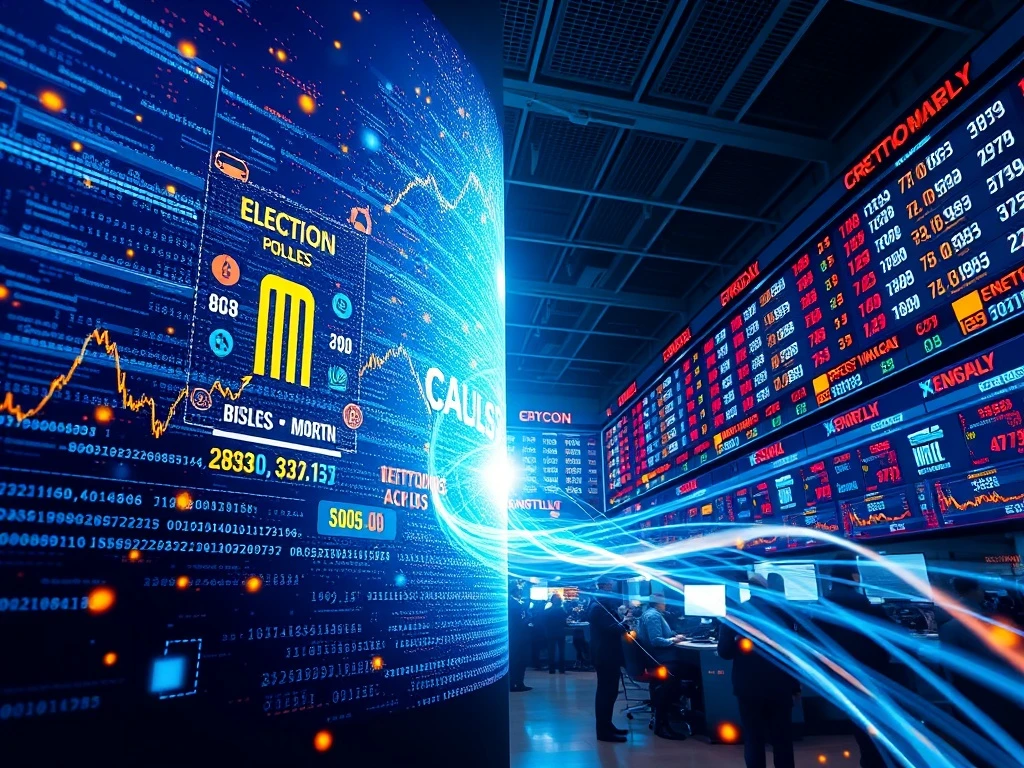
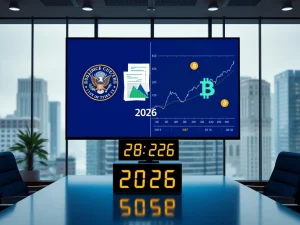
In a landmark statement that sent ripples through global financial circles, NYSE President Lynn Martin has directly linked a blockchain-based prediction market’s odds to a significant surge in traditional equity futures, signaling a profound shift in how market intelligence is gathered and interpreted. Speaking at a financial technology conference in New York on March 15, 2025, Martin pointed to Polymarket’s early 2024 election probability data on Donald Trump as a leading indicator that preceded observable movement in S&P 500 futures. This revelation, coupled with the Intercontinental Exchange’s (ICE) substantial $2 billion investment in the prediction market platform, underscores a rapidly evolving landscape where decentralized information aggregates are beginning to influence the world’s most established financial institutions.
Polymarket Election Bet Precedes Traditional Market Movement
Prediction markets, long considered niche platforms for speculative betting, are now drawing intense scrutiny from top-tier financial leaders. Essentially, these markets allow users to trade contracts based on the outcome of real-world events, with prices reflecting the crowd’s collective probability assessment. For instance, a contract paying $1 if “Donald Trump wins the 2024 election” might trade at $0.60, implying a 60% perceived chance of victory. NYSE President Lynn Martin’s analysis suggests that shifts in these blockchain-based probabilities provided an early signal that traditional asset managers and algorithms later acted upon.
Consequently, the flow of information appears to be accelerating. While traditional news cycles and analyst reports follow a structured timeline, prediction markets operate continuously, synthesizing global sentiment in real-time. Therefore, a sharp movement in political odds on Polymarket can now be viewed as a form of unstructured, high-frequency data. Market historians note a similar, though less direct, phenomenon during the 2016 U.S. election, when futures markets dipped sharply as results defied polls. However, Martin’s explicit connection marks a new era of acknowledgment from traditional finance’s highest echelons.
The ICE Investment: A Vote of Confidence from Traditional Finance
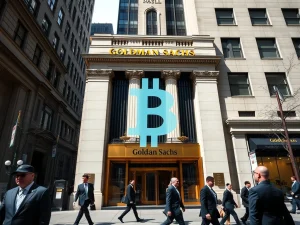
The credibility of Martin’s observation is heavily bolstered by the strategic financial commitment from her parent company. The Intercontinental Exchange (ICE), owner of the New York Stock Exchange, led a $2 billion funding round into Polymarket in late 2024. This move was not a speculative gamble but a calculated integration strategy. ICE, a behemoth in market infrastructure, clearly identified the value in prediction market data as a complementary asset class and intelligence tool.
Industry experts interpret this investment as a pivotal moment. “When a cornerstone institution like ICE allocates capital of that magnitude, it’s a definitive signal that prediction market data has graduated from curiosity to core utility,” explains Dr. Anya Sharma, a financial technology professor at Columbia University. “They are effectively monetizing the wisdom of a decentralized crowd and plumbing it directly into the heart of traditional market analysis.” This fusion creates a powerful feedback loop: traditional market movements validate prediction market signals, which in turn attract more capital and attention, further refining their predictive accuracy.
How Blockchain Prediction Markets Are Reshaping Financial Analysis
The mechanism behind this influence is rooted in the unique attributes of blockchain-based platforms like Polymarket. Firstly, they offer global, permissionless access, allowing a diverse set of participants—from political enthusiasts to quantitative hedge funds—to voice their expectations. Secondly, they are transparent and tamper-resistant. Every trade and contract settlement is recorded on a public ledger, reducing concerns about manipulation that plague some traditional polling or insider information. Finally, they feature real-time settlement and liquidity, enabling instant reaction to news events.
This stands in contrast to traditional forecasting methods:
- Opinion Polls: Often suffer from lag, sampling bias, and a lack of financial incentive for accurate responses.
- Expert Punditry: Can be subjective and influenced by narrative rather than probabilistic thinking.
- Derivatives Markets: While related, traditional political derivatives are less accessible and liquid than their blockchain counterparts.
As a result, the aggregated, money-backed beliefs on Polymarket can sometimes process complex geopolitical information faster than other systems. The 2024 election cycle served as a potent case study. According to data reviewed by financial analysts, Polymarket’s odds for a specific candidate began a sustained upward trajectory days before a correlative rise in S&P futures tied to that candidate’s perceived policies. This sequence suggests some institutional traders are using such data as a leading indicator for sector rotation and risk assessment.
Regulatory Landscape and Market Integrity Concerns
Despite the growing influence, significant questions regarding regulation and market integrity persist. The Commodity Futures Trading Commission (CFTC) has previously engaged with Polymarket regarding its legal status, as prediction markets can blur the lines between information aggregation and unregulated gambling or securities trading. The ICE investment, however, signals a potential path toward greater regulatory clarity and compliance frameworks.
Furthermore, skeptics highlight risks such as:
- Sybil Attacks & Manipulation: The potential for wealthy actors to create multiple accounts to sway odds.
- Liquidity Constraints: Smaller markets may be prone to sharp, inaccurate swings.
- Oracle Reliability: Dependence on centralized oracles to resolve event outcomes truthfully.
Proponents argue that the transparency of blockchain mitigates many of these issues, as suspicious trading patterns are publicly auditable. Moreover, the financial weight of players like ICE incentivizes the development of robust governance and anti-manipulation protocols to protect the data’s integrity—and their investment.
The Ripple Effect on Traditional Trading Desks and Hedge Funds
The practical impact on Wall Street is already materializing. Several major hedge funds and proprietary trading firms have quietly established teams to monitor prediction markets as part of their macro and political risk models. These teams don’t trade directly on Polymarket but use the probability data as a high-frequency sentiment gauge. For example, a sudden drop in the odds of a geopolitical resolution could trigger algorithms to hedge commodity exposures instantly.
This integration represents a broader trend of alternative data consumption. Just as firms now analyze satellite imagery for retail traffic or credit card transaction aggregates, prediction market odds have become a valuable, non-traditional dataset. The key advantage is its forward-looking, predictive nature. While most data describes what has happened, prediction markets explicitly quantify what the crowd believes will happen, priced in real dollars.
A senior quant analyst at a multinational bank, who spoke on condition of anonymity, confirmed the shift: “Our models have incorporated prediction market signals for the last 18 months. The correlation with subsequent volatility in related equity sectors is statistically significant, though not perfect. It’s another powerful lens, especially for event-driven strategies around elections, policy announcements, and even corporate events like mergers.”
Conclusion
The statement by NYSE President Lynn Martin linking the Polymarket election bet to a traditional market surge is far more than a passing observation; it is a formal recognition of a structural change in financial information flow. The concurrent $2 billion investment by ICE provides monumental validation for blockchain-based prediction markets as serious financial tools. As these decentralized information aggregates mature and their integration with traditional finance deepens, they promise to enhance market efficiency, provide new hedging instruments, and challenge conventional forecasting methods. The era where the wisdom of a global, incentivized crowd directly influences the S&P 500 has unequivocally begun.
FAQs
Q1: What exactly did NYSE President Lynn Martin say about Polymarket?
NYSE President Lynn Martin stated that odds on the blockchain-based prediction platform Polymarket regarding the 2024 U.S. election served as a leading indicator, preceding observable spikes in S&P 500 futures markets. She highlighted this as an example of how decentralized prediction markets are influencing traditional finance.
Q2: Why is ICE’s $2 billion investment in Polymarket significant?
The Intercontinental Exchange (ICE), which owns the NYSE, is a pillar of traditional financial infrastructure. Its massive investment signals a strategic belief in the long-term value and legitimacy of prediction market data. It represents a major bridge between decentralized finance (DeFi) concepts and established institutional finance.
Q3: How can a prediction market be more accurate than polls or experts?
Prediction markets aggregate beliefs from participants who back their views with real money, creating a strong incentive for accuracy. They also update in real-time, are global in scope, and are less susceptible to certain biases that affect traditional polling, such as social desirability bias or sampling errors.
Q4: Are prediction markets like Polymarket legal?
The regulatory status is evolving. Polymarket has engaged with the U.S. Commodity Futures Trading Commission (CFTC). The involvement of a heavily regulated entity like ICE suggests a move towards operating within established regulatory frameworks, potentially classifying contracts as informational tools rather than gambling instruments.
Q5: How are traditional financial firms using prediction market data?
Hedge funds, banks, and asset managers are increasingly incorporating prediction market probability data into their quantitative models as a form of alternative data. They use it to gauge real-time sentiment on geopolitical events, election outcomes, and policy changes to inform trading, hedging, and risk management decisions.