Coinbase Onchain Loans Unleash Major Altcoin Utility: XRP, DOGE, ADA, and LTC Now Accepted as Collateral
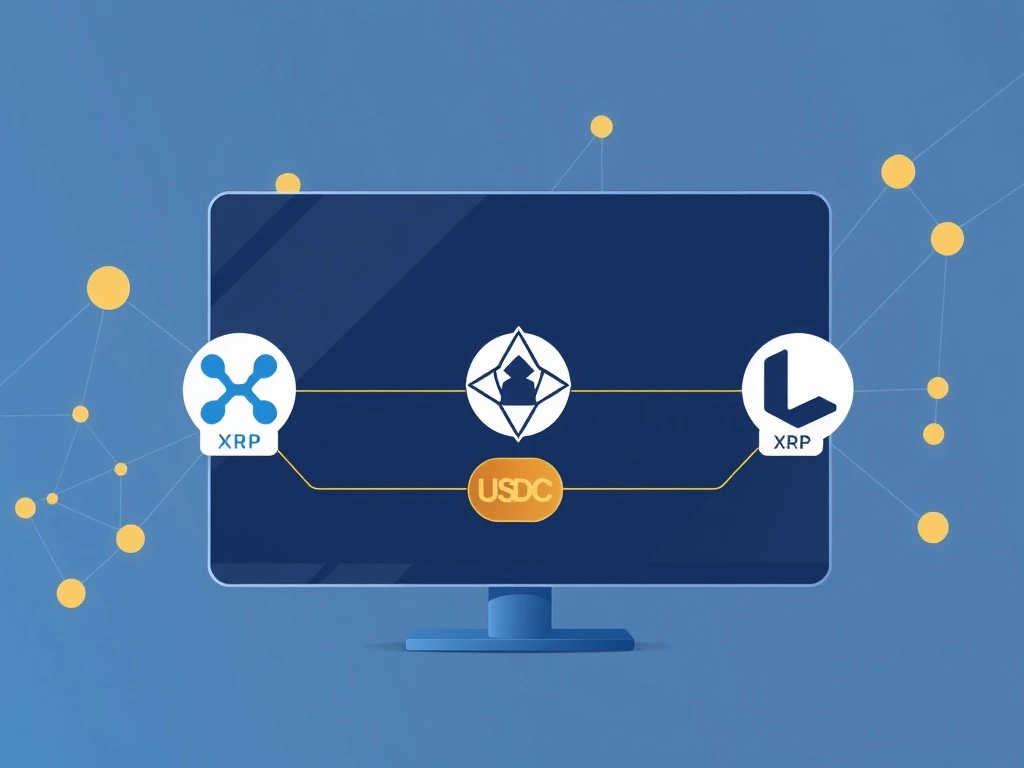
In a significant expansion of decentralized finance accessibility, Coinbase has strategically broadened its onchain lending services to include four major alternative cryptocurrencies. Consequently, eligible U.S. customers can now leverage their XRP, Dogecoin (DOGE), Cardano (ADA), and Litecoin (LTC) holdings as collateral. This move, announced in early 2025, represents a pivotal integration of traditional crypto exchange services with decentralized protocol functionality. Specifically, the expansion enables borrowers to access up to $100,000 in USDC stablecoin loans without selling their underlying assets. The development signals a maturing phase for both the exchange and the broader altcoin market.
Coinbase Onchain Loans Expand to Major Altcoins
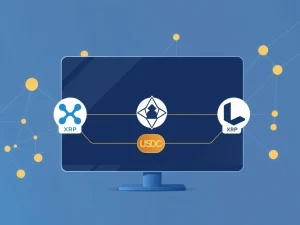
Coinbase’s latest product enhancement connects its massive user base directly with the Morpho decentralized finance protocol. This integration allows for non-custodial, onchain borrowing against cryptocurrency collateral. Previously, the service supported only Ethereum and a limited set of assets. However, the inclusion of XRP, DOGE, ADA, and LTC dramatically increases its reach and utility. These four assets collectively represent tens of billions in market capitalization and have millions of holders globally. Therefore, this expansion provides substantial new financial utility for long-term investors in these cryptocurrencies.
The technical implementation relies on Morpho Blue, a permissionless lending primitive that facilitates isolated lending markets. Each supported asset operates within its own dedicated market with specific risk parameters. For instance, loan-to-value ratios, interest rates, and liquidation thresholds are set independently for XRP, DOGE, ADA, and LTC. This architecture minimizes systemic risk while maximizing capital efficiency. Users interact with the protocol directly from their Coinbase Wallet, maintaining control of their private keys throughout the process. The entire transaction occurs onchain, providing transparency and verifiability that exceeds traditional financial systems.
Market Impact and Strategic Context
This expansion occurs against a backdrop of increasing institutional adoption of cryptocurrency lending products. Major financial platforms have gradually introduced collateralized lending services since 2020. However, Coinbase’s approach uniquely bridges centralized exchange trust with decentralized protocol efficiency. The timing aligns with renewed regulatory clarity for certain digital assets in the United States. Notably, XRP recently received favorable judicial determinations regarding its status. Similarly, established cryptocurrencies like Litecoin and Cardano have demonstrated network stability over multiple market cycles.
The table below illustrates key parameters for the newly supported assets:
| Cryptocurrency | Market Cap Rank | Primary Use Case | Network Age |
|---|---|---|---|
| XRP (Ripple) | 6 | Cross-border payments | 2012 |
| Dogecoin (DOGE) | 10 | Digital currency/meme | 2013 |
| Cardano (ADA) | 8 | Smart contracts | 2017 |
| Litecoin (LTC) | 20 | Digital silver/payments | 2011 |
These assets share characteristics that make them suitable for collateralization. First, they maintain high liquidity across numerous trading venues. Second, they exhibit established price histories with available oracle data. Third, their blockchain networks demonstrate proven security and uptime records. Consequently, their inclusion represents a logical progression in risk-managed product development. Market analysts view this expansion as validation of these cryptocurrencies’ enduring value propositions.
Technical Implementation Through Morpho Protocol
The Morpho protocol serves as the decentralized infrastructure powering these onchain loans. Unlike traditional peer-to-peer lending platforms, Morpho utilizes a peer-to-pool model that optimizes capital efficiency. Specifically, lenders provide liquidity to shared pools while borrowers access funds from these pools using their crypto assets as collateral. This architecture offers several distinct advantages:
- Transparency: All transactions and smart contracts are publicly verifiable on the blockchain
- Non-custodial nature: Users retain control of their assets through self-custody wallets
- Competitive rates: Algorithmic matching typically provides better rates than centralized alternatives
- Global accessibility: The protocol operates permissionlessly, though Coinbase restricts by jurisdiction
For the newly supported assets, Morpho creates isolated markets with customized risk parameters. These parameters include loan-to-value ratios, liquidation thresholds, and interest rate curves. Risk management teams at both Coinbase and Morpho continuously monitor these parameters. They adjust them based on market volatility, liquidity conditions, and network security factors. This dynamic approach helps protect both borrowers and lenders during periods of market stress.
User Experience and Practical Considerations
Eligible U.S. customers, excluding those in New York due to regulatory restrictions, can access this service through Coinbase Wallet. The process involves several straightforward steps. First, users connect their wallet containing XRP, DOGE, ADA, or LTC to the Morpho interface. Second, they select the amount of collateral to deposit into the protocol. Third, they specify the desired loan amount in USDC, up to the maximum allowed based on their collateral value. Finally, they confirm the transaction, which executes entirely onchain.
Several practical considerations merit attention. Borrowers must maintain adequate collateral ratios to avoid liquidation. They should monitor their positions regularly, especially during periods of high volatility. Interest accrues continuously on borrowed amounts, typically at variable rates determined by supply and demand. Users can repay loans partially or fully at any time without penalties. Upon repayment, they reclaim their collateral automatically through the smart contract execution.
Regulatory Landscape and Compliance Framework
Coinbase’s expansion carefully navigates the complex U.S. regulatory environment. The exchange has implemented geographic restrictions, excluding New York residents from participation. This exclusion reflects New York’s unique BitLicense requirements and stricter regulatory stance. For other states, the service operates under existing money transmitter licenses and financial regulations. The company emphasizes that borrowers retain full control of their assets throughout the process. This non-custodial aspect potentially places the service in a different regulatory category than traditional lending.
The legal status of the collateral assets themselves influences regulatory considerations. XRP’s partial regulatory clarity following the SEC vs. Ripple case likely facilitated its inclusion. Similarly, Litecoin’s long history and established use as a payment method contribute to its regulatory profile. Dogecoin and Cardano, while lacking specific regulatory determinations, benefit from their substantial market presence and recognition. Coinbase’s compliance team presumably conducted thorough analysis before selecting these particular assets for expansion.
Industry observers note that this product represents a hybrid approach to regulation. The centralized exchange provides user onboarding, identity verification, and customer support. Meanwhile, the decentralized protocol handles the actual financial transactions. This structure may establish a template for future regulated DeFi products. It balances innovation with consumer protection, addressing concerns that have previously limited institutional participation in decentralized finance.
Comparative Analysis with Competing Services
Several platforms offer cryptocurrency collateralized lending, but Coinbase’s approach distinguishes itself through specific features. Traditional centralized lenders like BlockFi and Celsius previously offered similar services but faced regulatory challenges and, in some cases, bankruptcy. Their fully custodial model created single points of failure. In contrast, Coinbase’s integration with Morpho maintains decentralization at the transaction layer while providing centralized convenience at the interface layer.
Pure DeFi protocols like Aave and Compound offer broader asset support but require greater technical sophistication from users. They also lack integrated customer support and streamlined fiat on-ramps. Coinbase’s solution bridges this gap, making sophisticated DeFi products accessible to mainstream cryptocurrency holders. The $100,000 maximum loan amount positions the service for both retail and sophisticated individual investors. This threshold exceeds many competing retail offerings while remaining below institutional-grade services.
Potential Implications for Cryptocurrency Markets
The expansion of collateral options could influence the markets for XRP, DOGE, ADA, and LTC in several ways. First, it creates additional utility beyond simple speculation or payments. Holders can now generate yield or access liquidity without selling their positions. This utility may increase long-term holding behavior, potentially reducing circulating supply on exchanges. Second, the integration validates these assets as sufficiently stable and liquid for financial product development. This validation may encourage other platforms to develop similar products, creating network effects.
From a macroeconomic perspective, cryptocurrency collateralized lending represents a form of shadow banking within digital asset ecosystems. It enables credit creation without traditional financial intermediaries. As these markets mature, they may begin to influence broader financial conditions. However, the current scale remains modest compared to traditional credit markets. The $100,000 per user limit and eligibility restrictions ensure controlled, measured growth during this developmental phase.
Market data suggests increasing demand for cryptocurrency-backed loans. Borrowers typically seek liquidity for various purposes:
- Tax obligations without triggering taxable events from sales
- Business capital while maintaining cryptocurrency investment exposure
- Leveraged trading positions across different cryptocurrency pairs
- Personal expenses during periods of illiquid traditional assets
The availability of USDC as the loan currency provides particular advantages. As a regulated stablecoin, USDC offers price stability relative to volatile cryptocurrencies. Borrowers can convert USDC to U.S. dollars or use it directly within cryptocurrency ecosystems. This flexibility enhances the product’s practical utility for diverse financial needs.
Conclusion
Coinbase’s expansion of onchain loans to include XRP, DOGE, ADA, and LTC represents a significant milestone in cryptocurrency financialization. The integration with Morpho protocol combines centralized convenience with decentralized security. Eligible U.S. users gain flexible access to liquidity while maintaining ownership of their digital assets. This development validates the maturity and utility of major alternative cryptocurrencies beyond Bitcoin and Ethereum. Furthermore, it establishes a potential template for regulated DeFi products that balance innovation with consumer protection. As cryptocurrency markets evolve, such hybrid solutions will likely play increasingly important roles in bridging traditional and decentralized finance.
FAQs
Q1: Which cryptocurrencies can I use as collateral for Coinbase onchain loans?
You can currently use XRP (Ripple), Dogecoin (DOGE), Cardano (ADA), and Litecoin (LTC) as collateral through the Morpho integration. Previously supported assets like Ethereum also remain available.
Q2: What is the maximum loan amount available through this service?
Eligible borrowers can access up to $100,000 in USDC stablecoin loans, depending on the value of their collateral and the specific loan-to-value ratios for each cryptocurrency.
Q3: Are there any geographic restrictions for using Coinbase onchain loans?
Yes, the service is available to U.S. customers except those residing in New York state. International availability varies based on local regulations and may expand over time.
Q4: How does the interest rate work for these onchain loans?
Interest rates are variable and determined algorithmically based on supply and demand within each cryptocurrency’s isolated lending market on the Morpho protocol. Rates typically adjust dynamically.
Q5: What happens if the value of my collateral decreases significantly?
If your collateral value falls below required thresholds, your position may face liquidation. The protocol automatically liquidates sufficient collateral to repay the loan, protecting lenders. Users receive notifications and should monitor positions regularly.