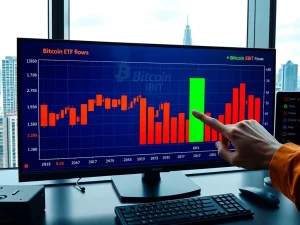
Crypto Sell Pressure Surges to Alarming 5-Year High as Retail Investors Flee Market

Global cryptocurrency markets are experiencing unprecedented sell pressure, reaching levels not seen in five years as retail investors execute a significant market exit. According to the latest data from blockchain analytics firm CryptoQuant, the total buy-sell volume contrast for assets excluding Bitcoin (BTC) and Ethereum (ETH) has plummeted to a staggering negative 209 billion units over a 13-month period. This dramatic shift signals a profound change in market structure and investor behavior, potentially reshaping the crypto landscape for years to come.
Crypto Sell Pressure Reaches Critical Levels
The current crypto sell pressure represents the most sustained negative volume imbalance since the 2018-2019 bear market. Market analysts are closely monitoring this development because it reflects fundamental changes in investor participation. Furthermore, the data reveals that retail investors, traditionally the backbone of cryptocurrency markets, are leading this exodus. Consequently, institutional players now dominate trading activity more than ever before.
CryptoQuant’s comprehensive analysis tracks net volume flows across major exchanges worldwide. The firm’s methodology distinguishes between different investor cohorts through sophisticated on-chain analysis. Specifically, the -209B volume contrast represents the difference between total sell volume and total buy volume for all cryptocurrencies except Bitcoin and Ethereum. This metric provides crucial insight into market sentiment and capital flows.
Understanding the Volume Contrast Metric
The buy-sell volume contrast serves as a key indicator of market health. A positive number indicates more buying than selling, while a negative value signals dominant selling pressure. The current -209B reading over 13 consecutive months demonstrates persistent selling that has overwhelmed buying activity. This sustained negative pressure has several important implications for market structure and price discovery mechanisms.
Retail Investor Exodus Reshapes Market Dynamics
Retail investors are exiting cryptocurrency markets at an accelerated pace, according to multiple data sources. Exchange outflow metrics, wallet size distributions, and trading pattern analyses all confirm this trend. Several factors contribute to this significant shift in participation. Regulatory uncertainty in major markets has created hesitation among smaller investors. Additionally, the memory of recent market volatility has prompted more conservative approaches to crypto investments.
The changing composition of market participants affects liquidity and volatility patterns. Retail investors typically provide consistent liquidity through regular, smaller transactions. Their departure leaves markets more vulnerable to large institutional trades that can create sudden price movements. This structural change may lead to increased volatility during periods of market stress or major news events.
| Participant Type | 2023 Market Share | 2025 Market Share | Change |
|---|---|---|---|
| Retail Investors | 42% | 28% | -14% |
| Institutional Investors | 35% | 48% | +13% |
| Market Makers | 15% | 16% | +1% |
| Other Participants | 8% | 8% | 0% |
Historical Context and Market Cycles
Current market conditions show similarities to previous cryptocurrency cycles but with important distinctions. The 2018 bear market featured significant retail exits following the initial coin offering boom. However, the current situation differs because institutional infrastructure has matured substantially. Major financial institutions now offer cryptocurrency products and services that were unavailable during previous market cycles.
The five-year timeframe referenced in the data corresponds roughly to the period since the last major market bottom. Market analysts note that retail participation typically increases during bull markets and decreases during bearish periods. The extended nature of the current sell pressure suggests either a prolonged market correction or a fundamental shift in how retail investors perceive cryptocurrency assets.
Bitcoin and Ethereum Show Relative Resilience
Bitcoin and Ethereum demonstrate notable resilience despite broader market sell pressure. Their exclusion from the -209B volume contrast metric highlights their unique market positions. Both assets benefit from stronger institutional support and clearer regulatory frameworks in many jurisdictions. Moreover, their established track records provide investors with greater confidence during turbulent market conditions.
The divergence between major cryptocurrencies and smaller assets raises important questions about market maturation. Bitcoin’s status as digital gold and Ethereum’s position as the leading smart contract platform create fundamental value propositions that smaller projects often lack. This differentiation becomes increasingly important during periods of market stress when investors prioritize established assets with proven utility.
- Bitcoin dominance has increased during the sell pressure period
- Ethereum’s transition to proof-of-stake has improved its investment profile
- Smaller assets face greater challenges attracting and retaining investors
- Market liquidity has concentrated around major cryptocurrencies
Institutional Response to Changing Conditions
Institutional investors have adjusted their strategies in response to changing market dynamics. Many have increased allocations to Bitcoin and Ethereum while reducing exposure to smaller cryptocurrencies. This reallocation reflects both risk management considerations and regulatory compliance requirements. Additionally, institutional trading desks have developed more sophisticated tools for navigating volatile market conditions.
The growth of regulated cryptocurrency products has created new pathways for institutional participation. Exchange-traded funds, futures contracts, and other structured products provide familiar investment vehicles for traditional finance participants. These developments have helped offset some of the liquidity reduction caused by retail investor exits, though not completely.
Market Implications and Future Projections
Sustained sell pressure creates several important implications for cryptocurrency markets. Price discovery mechanisms may become less efficient with reduced retail participation. Additionally, market sentiment indicators that traditionally relied on retail behavior may require recalibration. The concentration of trading activity among fewer participants could also increase systemic risks during periods of market stress.
Future market development will likely depend on several key factors. Regulatory clarity in major jurisdictions could encourage renewed retail participation. Technological advancements that improve user experience and security may attract new investors. Furthermore, macroeconomic conditions that favor alternative assets could drive capital back into cryptocurrency markets.
Expert Analysis and Market Perspectives
Market analysts offer varied interpretations of the current situation. Some view the retail exit as a natural market correction following excessive speculation. Others see it as a concerning signal about cryptocurrency adoption rates. Most experts agree that the market is undergoing an important transition toward greater institutionalization and maturity.
The extended timeframe of the sell pressure suggests structural rather than temporary factors. Thirteen consecutive months of negative volume contrast indicates deep-seated changes in investor behavior and market structure. These changes will likely persist even if market conditions improve, representing a new phase in cryptocurrency market development.
Conclusion
Crypto sell pressure has reached a critical five-year peak as retail investors execute a significant market exit. The -209B volume contrast over 13 months highlights profound changes in market participation and structure. While Bitcoin and Ethereum show relative resilience, broader cryptocurrency markets face challenges from reduced retail liquidity. Market participants must adapt to these changing conditions as cryptocurrency markets continue their evolution toward greater institutionalization and maturity. The coming months will reveal whether current trends represent a temporary correction or a permanent shift in market dynamics.
FAQs
Q1: What does the -209B volume contrast mean for cryptocurrency markets?
The -209B volume contrast indicates that selling pressure has exceeded buying pressure by 209 billion units over 13 months. This sustained negative imbalance suggests persistent selling across cryptocurrency markets, particularly among retail investors.
Q2: Why are retail investors exiting cryptocurrency markets?
Retail investors are exiting due to multiple factors including regulatory uncertainty, market volatility, economic conditions, and competition from other investment opportunities. Some investors may also be taking profits or reducing risk exposure.
Q3: How does this sell pressure affect Bitcoin and Ethereum differently?
Bitcoin and Ethereum show relative resilience because they benefit from stronger institutional support, clearer regulatory frameworks, and established utility. The -209B volume contrast specifically excludes these two assets, highlighting their unique market positions.
Q4: What are the long-term implications of reduced retail participation?
Reduced retail participation may lead to increased volatility, less efficient price discovery, and greater institutional dominance. Markets may become more susceptible to large trades while losing some of the consistent liquidity that retail investors typically provide.
Q5: Could retail investors return to cryptocurrency markets?
Retail investors could return if conditions improve, including clearer regulations, reduced volatility, compelling new use cases, or favorable macroeconomic conditions. However, some market analysts believe the current shift toward institutional dominance may be permanent.