Bitcoin Fear Hits Critical Levels: Matrixport Reveals Shocking Market Inflection Point
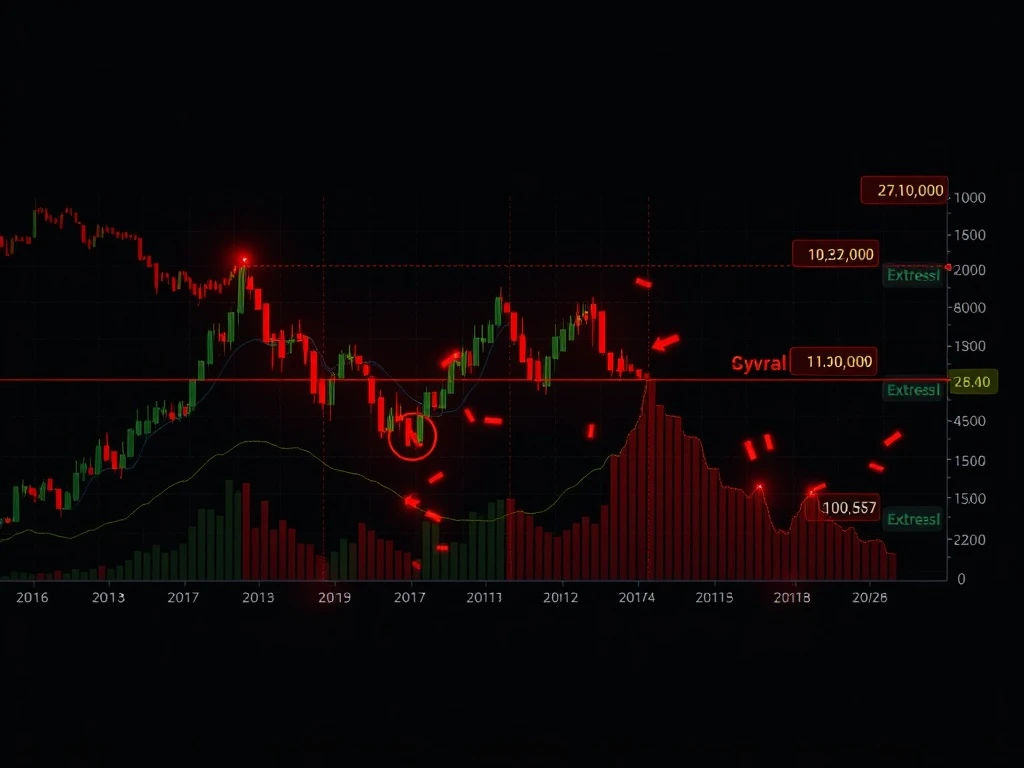
Singapore, March 2025 – Matrixport, the prominent digital asset financial services platform, has identified extreme Bitcoin fear and oversold market conditions that may signal a significant inflection point for the world’s largest cryptocurrency. The firm’s latest analysis reveals sentiment levels have plunged to their lowest point in four years, creating conditions that historically precede major market reversals. This development comes amid broader cryptocurrency market volatility and shifting global economic indicators that continue to influence digital asset valuations worldwide.
Bitcoin Fear Reaches Extreme Historical Levels
Matrixport’s research team has documented unprecedented fear readings across multiple sentiment indicators. The firm utilizes proprietary algorithms that analyze social media sentiment, trading volume patterns, and derivatives market positioning. Currently, these metrics collectively point toward extreme market pessimism not witnessed since the 2021-2022 cryptocurrency market correction. Market participants should note that such extreme readings often correlate with seller exhaustion and potential trend reversals.
The cryptocurrency fear and greed index, a widely followed sentiment gauge, recently registered values below 20, firmly placing Bitcoin in “extreme fear” territory. Historically, sustained periods in this range have frequently preceded significant price recoveries. For instance, similar conditions emerged in March 2020 before Bitcoin’s dramatic recovery from pandemic-induced lows. Furthermore, the current sentiment divergence from fundamental network metrics creates an intriguing market dynamic worth monitoring closely.
Understanding Market Inflection Points
Market inflection points represent critical junctures where prevailing trends potentially reverse direction. Matrixport’s analysis identifies several technical and psychological factors converging to create such conditions. The firm emphasizes that extreme sentiment readings alone don’t guarantee immediate reversals but rather indicate heightened probability of trend changes. Market technicians typically watch for confirmation through price action and volume patterns following such extreme readings.
Several key indicators currently suggest oversold conditions:
- Relative Strength Index (RSI): Bitcoin’s weekly RSI has approached levels last seen during major market bottoms
- MVRV Ratio: The market value to realized value ratio indicates Bitcoin trades below its realized price
- Exchange Flows: Recent data shows decreasing exchange balances, suggesting reduced selling pressure
- Options Positioning: Put-call skew indicates extreme bearish positioning among derivatives traders
Historical Context and Comparative Analysis
Matrixport’s research team has conducted extensive historical analysis comparing current conditions with previous market cycles. The firm examined sentiment patterns preceding major Bitcoin rallies in 2015, 2019, and 2020. Each period shared common characteristics with today’s market environment, including extreme fear readings, negative funding rates in perpetual swaps, and declining open interest. However, analysts caution that macroeconomic conditions differ significantly from previous cycles, introducing additional variables to consider.
The table below illustrates key sentiment indicators during previous market inflection points:
| Period | Fear & Greed Index | RSI Level | Price Action Following |
|---|---|---|---|
| December 2018 | 14 (Extreme Fear) | 28 | +300% over 12 months |
| March 2020 | 12 (Extreme Fear) | 25 | +600% over 15 months |
| June 2022 | 18 (Extreme Fear) | 32 | +100% over 8 months |
| Current (March 2025) | 16 (Extreme Fear) | 30 | To be determined |
Technical Indicators and Oversold Signals
Multiple technical indicators currently flash oversold signals across various timeframes. Bitcoin’s daily chart shows the cryptocurrency trading significantly below its 200-day moving average, a condition that has historically marked attractive long-term entry points. Additionally, the percentage of Bitcoin addresses in profit has declined to levels typically associated with market bottoms. These technical factors, combined with extreme sentiment readings, create a compelling case for potential trend change.
Market structure analysis reveals interesting developments in derivatives markets. Funding rates have turned negative across major exchanges, indicating traders are paying to maintain short positions. Historically, sustained negative funding rates have often preceded sharp reversals as short positions become crowded trades. Open interest patterns also show decreasing leverage in the system, potentially reducing volatility and creating conditions for more sustainable moves.
Institutional Perspective and Market Impact
Matrixport’s institutional clients have reportedly increased their monitoring of these extreme sentiment conditions. The firm services numerous hedge funds, family offices, and corporate treasuries with cryptocurrency exposure. According to internal communications, several institutional players have begun scaling into Bitcoin positions during this fear period, viewing current levels as attractive risk-reward opportunities. This institutional activity contrasts with retail sentiment, creating an interesting market dichotomy.
The broader cryptocurrency market typically follows Bitcoin’s lead during sentiment extremes. Currently, altcoins demonstrate even more extreme fear readings, with many trading at significant discounts to their all-time highs. However, Matrixport analysts note that Bitcoin dominance remains elevated, suggesting capital preservation remains the primary concern for market participants. This dynamic could shift rapidly if Bitcoin establishes a clear reversal pattern.
Psychological Factors in Market Cycles
Market psychology plays a crucial role in creating and resolving extreme sentiment conditions. The current fear environment reflects several psychological phenomena documented in behavioral finance literature. Loss aversion bias has likely intensified as investors focus on recent declines rather than long-term fundamentals. Additionally, recency bias may cause market participants to extrapolate recent negative performance indefinitely, despite historical patterns suggesting otherwise.
Matrixport’s analysis incorporates psychological indicators beyond traditional sentiment metrics. Social media analysis reveals unprecedented levels of negative commentary and capitulation language. Search trends show increased queries for “Bitcoin crash” and “crypto bear market” while interest in buying opportunities has declined significantly. These psychological extremes often mark turning points as the last hesitant sellers exit positions.
Macroeconomic Context and External Factors
The current sentiment extreme occurs within a complex macroeconomic environment. Global central banks continue navigating inflation challenges while managing economic growth concerns. Interest rate policies, geopolitical tensions, and regulatory developments all influence cryptocurrency markets alongside internal sentiment dynamics. Matrixport’s analysis acknowledges these external factors while focusing primarily on market structure and sentiment indicators.
Regulatory clarity has improved in several major jurisdictions during 2024-2025, potentially providing fundamental support that contrasts with current sentiment. Institutional adoption continues progressing despite price volatility, with traditional financial institutions expanding cryptocurrency services. These fundamental developments create an interesting divergence from sentiment indicators, potentially amplifying the significance of current extreme readings.
Risk Management Considerations
While extreme fear readings suggest potential inflection points, Matrixport emphasizes the importance of proper risk management. The firm notes that sentiment indicators provide probabilistic guidance rather than certain predictions. Market participants should implement appropriate position sizing, diversification, and risk controls regardless of sentiment extremes. Historical analysis shows that even during clear inflection points, volatility often persists before sustained trends emerge.
Several risk factors could prolong or intensify current conditions:
- Macroeconomic shocks: Unexpected economic developments could override sentiment indicators
- Regulatory actions: Major regulatory changes could impact market structure
- Technical breakdowns: Failure to hold key support levels could trigger additional selling
- Market structure changes: Evolving derivatives markets may alter historical patterns
Conclusion
Matrixport’s identification of extreme Bitcoin fear as a potential market inflection point provides valuable insight for cryptocurrency market participants. The convergence of oversold technical indicators, extreme sentiment readings, and historical patterns creates conditions worthy of close monitoring. While no indicator guarantees specific outcomes, the current alignment of multiple factors suggests increased probability of trend change. Market participants should watch for confirmation through price action and volume patterns while maintaining disciplined risk management approaches. The Bitcoin fear environment has reached levels that historically preceded significant market movements, making this period particularly important for investors and analysts alike.
FAQs
Q1: What does Matrixport mean by “market inflection point”?
Matrixport defines a market inflection point as a critical juncture where prevailing trends potentially reverse direction. The firm identifies these points through converging technical indicators, extreme sentiment readings, and historical pattern analysis that collectively suggest increased probability of trend change.
Q2: How does Matrixport measure Bitcoin fear and sentiment?
Matrixport utilizes proprietary algorithms analyzing multiple data sources including social media sentiment, trading volume patterns, derivatives market positioning, on-chain metrics, and traditional technical indicators. The firm combines these inputs to create comprehensive sentiment assessments.
Q3: Have similar sentiment extremes occurred before in Bitcoin’s history?
Yes, similar extreme fear readings occurred in December 2018, March 2020, and June 2022. Each period preceded significant Bitcoin price recoveries, though the specific timing and magnitude varied based on accompanying market conditions.
Q4: What time horizon does Matrixport consider for potential inflection points?
Matrixport’s analysis typically focuses on intermediate-term time horizons ranging from several weeks to multiple months. The firm emphasizes that sentiment extremes indicate increased probability of trend changes but don’t provide precise timing predictions.
Q5: How should investors approach markets during extreme fear periods?
Matrixport suggests investors maintain disciplined risk management, avoid emotional decision-making, consider dollar-cost averaging strategies, and watch for confirmation signals through price action and volume patterns before making significant allocation changes.