Bitcoin Derivatives Market Plummets as Open Interest Crashes to Multi-Month Lows

Global cryptocurrency markets witnessed a dramatic contraction in Bitcoin derivatives trading during the week of March 15-22, 2025, as open interest metrics plunged to their lowest levels in multiple months across all major exchanges. This substantial decline in Bitcoin futures and options positions represents a significant shift in market sentiment, occurring despite a 21% price recovery for the world’s leading cryptocurrency. Market analysts interpret this divergence between price action and derivatives activity as a clear signal of risk reduction rather than renewed bullish momentum.
Bitcoin Derivatives Market Faces Unprecedented Contraction
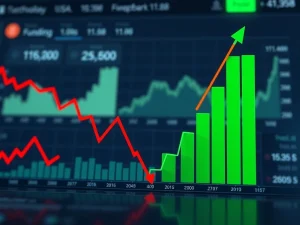
The Bitcoin derivatives market experienced a substantial decline in open interest, dropping from approximately 381,000 BTC at the recent cycle peak to multi-month lows across all major trading platforms. This 22% reduction in open positions coincided with a 21% Bitcoin price rebound, creating a notable divergence that market participants must carefully analyze. Typically, rising prices alongside increasing open interest suggest new capital entering the market, but the current scenario indicates a different dynamic entirely.
Major cryptocurrency exchanges including Binance, Bybit, and BitMEX all reported sustained declines in their Bitcoin derivatives open interest throughout this period. This broad-based reduction across multiple platforms suggests a market-wide phenomenon rather than exchange-specific issues. The simultaneous contraction across diverse trading venues indicates a fundamental shift in how institutional and retail traders approach Bitcoin exposure through derivatives instruments.
Understanding Open Interest and Market Implications
Open interest represents the total number of outstanding derivative contracts that have not been settled, providing crucial insight into market participation and capital flow. When open interest declines alongside price increases, market analysts generally interpret this as short positions being closed rather than new long positions being established. This specific pattern suggests that traders who previously bet against Bitcoin are exiting their positions, creating upward price pressure without corresponding new bullish sentiment.
The derivatives market serves as a critical barometer for institutional participation and sophisticated trading strategies in cryptocurrency markets. Significant changes in open interest often precede broader market movements, making current declines particularly noteworthy for forward-looking analysis. Market structure experts emphasize that sustained reductions in derivatives activity typically indicate decreased leverage utilization and reduced speculative positioning across the ecosystem.
Exchange-Specific Analysis Reveals Consistent Patterns
Detailed examination of exchange data reveals consistent patterns across platforms. Binance, as the world’s largest cryptocurrency exchange by trading volume, reported a 24% reduction in Bitcoin futures open interest during the measured period. Bybit, known for its derivatives-focused platform, showed similar declines of approximately 23%. BitMEX, historically significant in Bitcoin derivatives trading, demonstrated comparable contraction metrics despite its different user base and product offerings.
This consistency across exchanges with varying characteristics suggests the current derivatives contraction represents a fundamental market shift rather than platform-specific developments. The simultaneous reduction across diverse trading venues indicates changing risk appetites among both retail and institutional participants, potentially influenced by macroeconomic factors, regulatory developments, or internal cryptocurrency market dynamics.
Historical Context and Market Cycle Analysis
Current derivatives market conditions bear similarities to previous cryptocurrency market cycles, particularly during transitional phases between bull and bear markets. Historical data from 2018 and 2022 shows comparable patterns where declining open interest accompanied price stabilization or modest recovery periods. Market analysts reference these historical parallels while cautioning against direct comparisons due to the cryptocurrency market’s evolving maturity and increased institutional participation.
The cryptocurrency derivatives market has undergone significant transformation since Bitcoin futures first launched on regulated exchanges in 2017. Current market structures include:
- Perpetual contracts without expiration dates
- Quarterly and monthly futures with set settlement dates
- Options contracts providing more complex risk management tools
- Inverse contracts settled in cryptocurrency rather than fiat
This diversification of derivatives products creates more complex market dynamics than earlier cryptocurrency cycles, requiring sophisticated analysis to interpret current open interest declines accurately.
Risk-Off Behavior and Market Sentiment Indicators
The broad reduction in Bitcoin derivatives open interest across multiple exchanges clearly indicates risk-off behavior within cryptocurrency markets. This sentiment shift manifests through several observable market behaviors:
- Reduced leverage utilization across trading positions
- Decreased speculative positioning in both directions
- Capital preservation strategies becoming more prominent
- Increased focus on spot market accumulation rather than derivatives exposure
Market participants appear to be reducing their derivatives exposure despite Bitcoin’s price recovery, suggesting concerns about sustainability or broader market conditions. This cautious approach contrasts with previous periods where price increases typically attracted additional derivatives participation and increased leverage throughout the ecosystem.
Macroeconomic Factors Influencing Derivatives Activity
Several macroeconomic developments likely contributed to the current derivatives market contraction. Global interest rate environments, inflation concerns, and traditional financial market volatility all influence cryptocurrency derivatives trading activity. Additionally, regulatory developments in major jurisdictions including the United States, European Union, and United Kingdom create uncertainty that often reduces derivatives participation until regulatory clarity emerges.
The relationship between traditional financial markets and cryptocurrency derivatives has strengthened significantly in recent years. Institutional participants now consider correlations with equity markets, bond yields, and currency fluctuations when establishing cryptocurrency derivatives positions. This increased integration with traditional finance means cryptocurrency derivatives markets now respond to broader financial conditions more directly than in earlier market cycles.
Technical Analysis and Market Structure Implications
From a technical analysis perspective, declining open interest alongside price recovery creates specific market structure implications. This divergence typically indicates:
| Market Condition | Price Action | Open Interest | Interpretation |
|---|---|---|---|
| Bullish | Increasing | Increasing | New buyers entering |
| Bearish | Decreasing | Increasing | New sellers entering |
| Short covering | Increasing | Decreasing | Shorts exiting positions |
| Long liquidation | Decreasing | Decreasing | Longs exiting positions |
The current market aligns with the short covering scenario, where traders who previously established bearish positions exit those positions, creating buying pressure without corresponding new bullish conviction. This technical interpretation suggests the price recovery may lack sustainable momentum unless accompanied by renewed derivatives participation in the coming weeks.
Institutional Perspective and Market Maturity
Institutional participants have become increasingly significant in Bitcoin derivatives markets since 2020, bringing different trading behaviors and risk management approaches. Current open interest declines likely reflect institutional risk reduction strategies amid uncertain market conditions. Major financial institutions and cryptocurrency-focused funds typically reduce derivatives exposure during periods of regulatory uncertainty or macroeconomic volatility, preferring to wait for clearer signals before re-establishing positions.
The cryptocurrency derivatives market has matured substantially since its early development phase. Current market features include:
- Sophisticated risk management tools previously unavailable
- Increased regulatory oversight in multiple jurisdictions
- Enhanced market surveillance and reporting requirements
- Improved liquidity provision from professional market makers
This maturation means current market behaviors reflect more considered decision-making compared to earlier cryptocurrency cycles, potentially making current derivatives contraction more significant for forward-looking analysis.
Conclusion
The Bitcoin derivatives market faces significant challenges as open interest declines to multi-month lows across all major exchanges. This substantial contraction in futures and options positions indicates broad risk-off behavior within cryptocurrency markets, despite Bitcoin’s recent price recovery. Market participants appear focused on reducing leverage and speculative positioning rather than establishing new directional bets through derivatives instruments. The consistent pattern across diverse trading platforms suggests fundamental market shifts rather than exchange-specific developments. Moving forward, market observers will monitor whether derivatives participation recovers alongside price action or whether the current divergence signals more cautious market conditions ahead. The Bitcoin derivatives market contraction provides crucial insight into evolving risk appetites and trading behaviors within the broader cryptocurrency ecosystem.
FAQs
Q1: What does declining open interest in Bitcoin derivatives indicate about market sentiment?
Declining open interest typically indicates reduced market participation and risk-off behavior. When this occurs alongside price increases, it often means traders are closing existing positions rather than establishing new ones, suggesting cautious sentiment despite positive price action.
Q2: How does open interest differ from trading volume in cryptocurrency derivatives?
Open interest represents the total number of outstanding contracts that haven’t been settled, while trading volume measures the number of contracts traded during a specific period. Open interest provides insight into market participation and capital commitment, while volume indicates trading activity levels.
Q3: Why is the simultaneous decline across multiple exchanges significant?
Consistent declines across exchanges with different characteristics suggest a market-wide phenomenon rather than platform-specific issues. This indicates fundamental shifts in trader behavior and risk appetite affecting the entire cryptocurrency derivatives ecosystem.
Q4: What historical patterns resemble current Bitcoin derivatives market conditions?
Similar patterns occurred during transitional market phases in 2018 and 2022, where declining open interest accompanied price stabilization periods. However, direct comparisons require caution due to the cryptocurrency market’s increased maturity and institutional participation since those periods.
Q5: How might current derivatives market conditions affect Bitcoin’s price trajectory?
Price increases supported by declining open interest often lack sustainable momentum, as they typically result from position closures rather than new capital entering. Sustained price appreciation generally requires increasing open interest alongside rising prices, indicating genuine new buying interest.