XRP Ledger Stuns Market: Surpasses Solana, Polygon in Explosive RWA Growth Surge
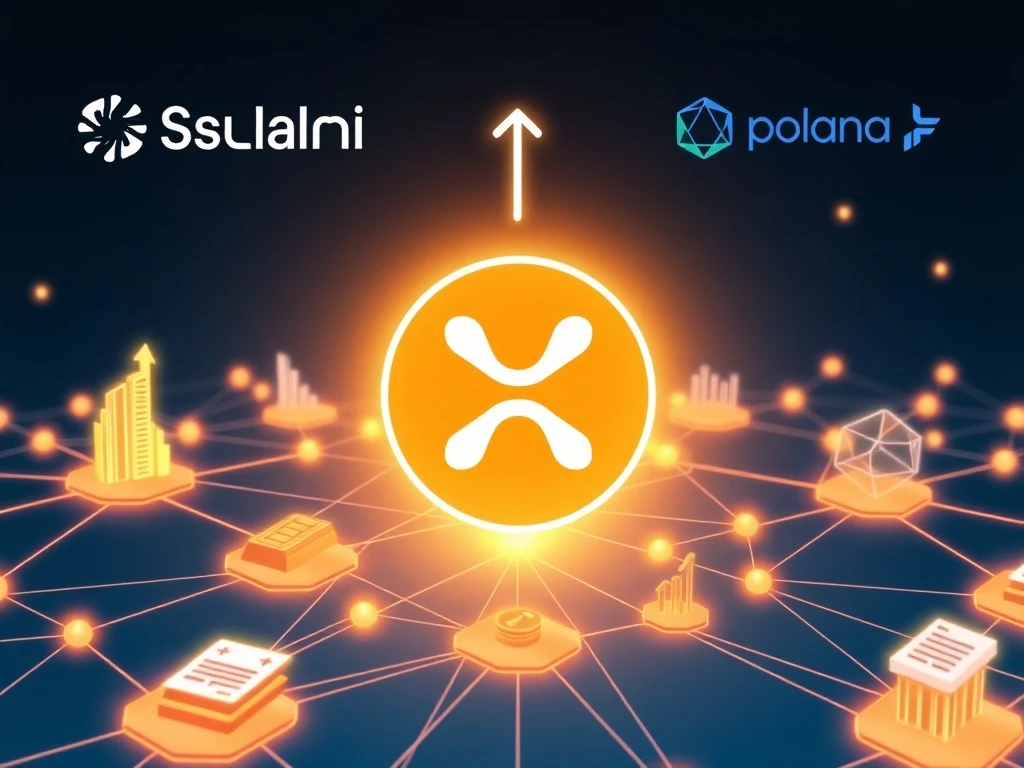
In a significant blockchain industry development this March 2025, the XRP Ledger has dramatically overtaken major competitors Solana and Polygon in real-world asset (RWA) tokenization growth, securing $1.5 billion in tokenized assets during a remarkable 30-day surge that signals shifting adoption patterns across decentralized networks.
XRP Ledger RWA Growth Analysis
Recent blockchain analytics data reveals the XRP Ledger now ranks second in 30-day real-world asset growth metrics. This development represents a substantial shift in the tokenization landscape. The network’s $1.5 billion in tokenized assets demonstrates accelerating institutional adoption. Furthermore, this growth positions XRPL ahead of several prominent blockchain platforms in this critical category.
Real-world asset tokenization involves converting physical or traditional financial assets into digital tokens on blockchain networks. Consequently, this process enables fractional ownership, enhanced liquidity, and transparent tracking. The XRP Ledger’s architecture, with its consensus protocol and native decentralized exchange, provides particular advantages for tokenized asset settlement.
Blockchain RWA Competitive Landscape
The tokenized asset sector has become increasingly competitive throughout 2024 and into 2025. Major blockchain platforms have aggressively pursued this market segment. However, the XRP Ledger’s recent performance indicates a notable shift in market dynamics. Several factors contribute to this changing landscape.
Technical and Regulatory Advantages
Industry analysts point to specific technical characteristics driving XRPL’s RWA growth. The network’s settlement speed of 3-5 seconds provides practical advantages for financial applications. Additionally, its energy-efficient consensus mechanism addresses environmental concerns that sometimes hinder traditional finance adoption. Regulatory clarity surrounding XRP has also improved institutional confidence according to recent financial reports.
Comparative data shows the following 30-day RWA growth rankings:
| Blockchain Platform | RWA Growth Ranking | Approximate Tokenized Assets |
|---|---|---|
| Ethereum | 1st | $4.2B |
| XRP Ledger | 2nd | $1.5B |
| Solana | 3rd | $1.3B |
| Polygon | 4th | $1.1B |
| Avalanche | 5th | $0.9B |
This ranking represents a significant change from previous quarters. Notably, the XRP Ledger has demonstrated consistent growth in several key areas:
- Institutional partnerships with traditional financial institutions
- Regulatory compliance features for asset tokenization
- Cross-border settlement capabilities for global assets
- Developer activity increasing around RWA standards
Market Impact and Future Projections
The XRP Ledger’s advancement in RWA tokenization carries substantial implications for the broader blockchain ecosystem. Financial technology experts observe several immediate effects from this development. First, institutional investors increasingly consider blockchain infrastructure when allocating digital asset strategies. Second, competing platforms may accelerate their own RWA development roadmaps in response.
Market data indicates growing diversification in real-world asset categories on the XRP Ledger. These currently include:
- Commercial real estate properties
- Government and corporate debt instruments
- Precious metals and commodities
- Intellectual property and royalties
- Supply chain financing assets
Expert Analysis and Industry Response
Blockchain analysts emphasize the strategic importance of this growth milestone. “The XRP Ledger’s performance in RWA tokenization reflects broader trends toward practical blockchain applications,” notes Dr. Elena Rodriguez, Director of Blockchain Research at Digital Finance Institute. “Networks that balance technical efficiency with regulatory compatibility are gaining traction for institutional adoption.”
Historical context further illuminates this development. Throughout 2023, RWA tokenization remained concentrated on Ethereum-based platforms. However, 2024 witnessed increasing diversification across alternative networks. The XRP Ledger’s current position results from sustained development efforts and strategic partnerships established over the preceding eighteen months.
Technical Infrastructure Supporting Growth
The XRP Ledger’s technical architecture provides specific advantages for real-world asset tokenization. Its native decentralized exchange facilitates seamless trading of tokenized assets. Additionally, the network’s consensus protocol ensures settlement finality within seconds. This characteristic proves particularly valuable for time-sensitive financial transactions.
Recent protocol upgrades have further enhanced XRPL’s RWA capabilities. The introduction of improved smart contract functionality through Hooks has expanded tokenization possibilities. Meanwhile, enhanced compliance features address regulatory requirements for traditional asset representation. These technical improvements collectively support the network’s growing RWA ecosystem.
Conclusion
The XRP Ledger’s surpassing of Solana and Polygon in real-world asset growth represents a significant blockchain industry development. With $1.5 billion in tokenized assets and second-place ranking in 30-day growth metrics, XRPL demonstrates accelerating institutional adoption. This advancement highlights the evolving competitive landscape for RWA tokenization. Furthermore, it signals increasing diversification in blockchain platforms supporting real-world asset representation. The XRP Ledger RWA surge reflects broader trends toward practical, regulated blockchain applications with tangible economic impact.
FAQs
Q1: What does RWA mean in blockchain context?
RWA stands for “real-world assets” – physical or traditional financial assets tokenized on blockchain networks, enabling fractional ownership and enhanced liquidity through digital representation.
Q2: How significant is $1.5 billion in tokenized assets?
This represents substantial growth, placing XRP Ledger as the second-largest platform by recent RWA expansion, indicating accelerating institutional adoption and network utility for asset tokenization.
Q3: Why is the XRP Ledger particularly suited for RWA tokenization?
The network offers fast settlement (3-5 seconds), energy-efficient consensus, built-in decentralized exchange, and regulatory compliance features that appeal to traditional financial institutions tokenizing assets.
Q4: What types of real-world assets are being tokenized on XRP Ledger?
Current tokenized assets include commercial real estate, government/corporate debt instruments, precious metals, commodities, intellectual property, royalties, and supply chain financing assets.
Q5: How does this development affect the broader blockchain industry?
The XRP Ledger’s RWA growth signals increasing platform diversification beyond Ethereum for institutional asset tokenization, potentially accelerating development across competing networks and expanding overall market adoption.