Hardware Wallet Security Alert: Shocking New Postal Scam Targets Ledger and Trezor Users
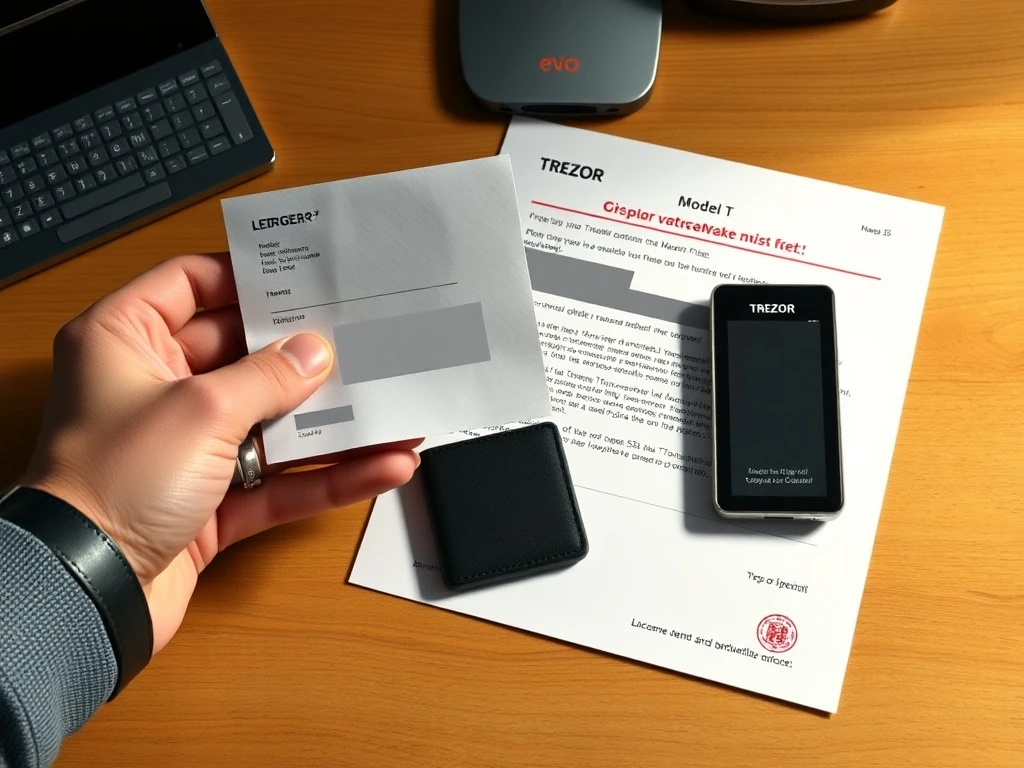
In a disturbing escalation of cryptocurrency theft tactics, security researchers worldwide reported in early 2025 that criminals now bypass digital defenses entirely, sending sophisticated fake postal letters directly to hardware wallet owners’ homes to steal their valuable seed phrases. This alarming new phishing vector specifically targets users of Ledger and Trezor devices, marking a dangerous shift from purely digital to physical-social engineering attacks that exploit trust in official-looking correspondence.
Hardware Wallet Security Faces New Physical Threat Vector
For years, cryptocurrency security education focused primarily on digital threats. Consequently, users learned to recognize phishing emails, malicious advertisements, and fake browser extensions. However, security experts now confirm that scammers have adapted their tactics dramatically. These criminals currently send professionally crafted letters that mimic official communications from Ledger SAS or SatoshiLabs, the manufacturers behind Trezor devices. The letters typically arrive in envelopes bearing logos and branding that appear authentic at first glance. Moreover, they often include urgent warnings about security breaches or mandatory device updates. This physical approach bypasses email filters and antivirus software completely, exploiting the psychological impact of receiving official-looking mail.
According to blockchain security firm Chainalysis, cryptocurrency phishing scams stole approximately $374 million in 2023 alone. While comprehensive 2024 figures remain pending, early 2025 data suggests a worrying trend toward more sophisticated, multi-vector attacks. The fake letters represent a particularly insidious development because they target the most security-conscious segment of crypto users: hardware wallet adopters. These individuals typically demonstrate above-average security awareness, making traditional digital phishing less effective against them. The shift to physical mail therefore represents a strategic adaptation by criminal groups seeking higher-value targets.
The Anatomy of a Fake Hardware Wallet Letter
Security analysts who have examined these fraudulent letters identify several consistent characteristics. First, the correspondence uses high-quality printing and official-sounding language. Second, it creates a false sense of urgency with phrases like “Immediate Action Required” or “Critical Security Update.” Third, the letters direct recipients to scan a QR code or visit a URL to “verify” their device or “secure” their assets. The provided QR codes lead to sophisticated clone websites that perfectly mimic the legitimate Ledger Live or Trezor Suite interfaces. Once there, users receive prompts to enter their 12, 18, or 24-word recovery seed phrase, which criminals immediately capture to drain wallets.
The table below outlines the key differences between legitimate communications and these scam letters:
| Aspect | Legitimate Communication | Fake Scam Letter |
|---|---|---|
| Contact Method | Primarily email from official domains; never asks for seed phrases | Unexpected physical mail; directly or indirectly requests seed phrases |
| Sense of Urgency | Provides information without panic-inducing deadlines | Creates artificial time pressure (e.g., “Act within 24 hours”) |
| Requested Action | May direct to official website for updates; never to enter seeds | Directs to QR code or URL that harvests seed phrases |
| Sender Address | Clear, verifiable return address matching company HQ | Often uses PO boxes or addresses that don’t match official locations |
Why Physical Seed Phrase Phishing Represents a Critical Escalation
This new attack methodology signifies a major evolution in crypto crime for several important reasons. Fundamentally, physical letters carry an inherent credibility that digital messages lack. Most people receive far fewer physical letters than emails, and official postal correspondence often relates to important legal, financial, or governmental matters. Criminals exploit this psychological association. Furthermore, these attacks demonstrate significant resource investment. Designing, printing, and mailing physical letters requires more effort and cost than sending bulk emails, indicating that attackers now pursue higher-value targets with greater determination.
Blockchain investigator and founder of Crypto Asset Recovery, David Jevans, commented on the trend: “We’re observing a professionalization of crypto theft. These aren’t random teenagers in basements. Organized groups now employ graphic designers, copywriters, and logistics planners. Their investment in physical mail scams shows they’re targeting holders with substantial assets, likely identified through blockchain analysis or data breaches.” This assessment aligns with law enforcement reports from the European Union Agency for Law Enforcement Cooperation (Europol), which noted increased collaboration between cybercriminal groups specializing in different attack vectors.
The impact extends beyond immediate financial loss. Successful attacks erode trust in hardware wallets, which remain the gold standard for personal cryptocurrency custody. If users begin to doubt the security of these devices due to sophisticated social engineering, they might revert to less secure storage methods, potentially creating larger systemic vulnerabilities. Additionally, the cross-jurisdictional nature of these crimes—where letters might be mailed from one country, websites hosted in another, and funds laundered through a third—complicates investigation and prosecution efforts significantly.
Protecting Yourself from Postal Crypto Scams
Security experts universally emphasize that hardware wallet manufacturers will never, under any circumstances, request your recovery seed phrase. This fundamental principle serves as the primary defense. If you receive any communication asking for these words, treat it as fraudulent immediately. For verified security updates, always navigate directly to the official Ledger or Trezor website by typing the URL yourself, never by clicking links or scanning QR codes from unsolicited messages. Additionally, consider using a dedicated post office box for cryptocurrency-related correspondence if you frequently order hardware or interact with crypto services, thereby separating this sensitive mail from your primary residential address.
Key protective measures include:
- Verify Through Official Channels: Contact Ledger or Trezor support directly using contact information from their official websites if you receive suspicious mail.
- Never Scan Unsolicited QR Codes: Treat QR codes in unexpected letters with extreme suspicion, as they can instantly redirect to malicious sites.
- Educate Household Members: Ensure everyone in your home understands that no one should ever read seed phrases aloud or enter them based on mail requests.
- Report the Scam: Forward details to the official hardware wallet companies and report to your national consumer protection or cybercrime agency.
The Broader Trend: Blending Digital and Physical Social Engineering
The fake Ledger and Trezor letters do not exist in isolation. They represent part of a broader criminal strategy known as “blended attacks” or “multi-vector social engineering.” In these schemes, criminals use multiple contact methods—such as a phishing email followed by a confirmation phone call, or now, a digital alert followed by physical mail—to increase perceived legitimacy. For instance, a victim might first receive a phishing email warning of suspicious activity on their wallet. Days later, a follow-up “official” letter arrives, seemingly confirming the email’s urgency. This layered approach overwhelms the target’s skepticism through repetition across different mediums.
Data from the Anti-Phishing Working Group (APWG) shows a steady increase in such blended attacks across all sectors, with financial and crypto services being prime targets. The success rate for multi-vector attacks is reportedly 3-5 times higher than for single-method phishing, according to their 2024 quarterly report. This effectiveness explains the criminal investment in more complex operations. Furthermore, the rise of generative AI tools has made it easier for scammers to create flawless copies of official documents, logos, and letterheads, lowering the technical barrier for executing convincing physical scams.
From a regulatory perspective, this trend presents new challenges. Postal services traditionally focus on preventing the shipment of illegal goods, not fraudulent information. Law enforcement agencies, meanwhile, often lack the specialized blockchain forensic skills needed to trace stolen cryptocurrencies quickly. Consequently, a multi-stakeholder approach involving wallet manufacturers, postal inspectors, cyber police units, and international cooperation bodies is emerging as the necessary response framework. Several countries have already established dedicated crypto crime units within their financial cyber task forces to address this growing threat landscape.
Conclusion
The emergence of physical seed phrase phishing letters targeting Ledger and Trezor users marks a dangerous new chapter in cryptocurrency security. This tactic exploits the inherent trust people place in postal communications and targets the most security-conscious segment of the crypto community. Protecting yourself requires unwavering adherence to the core principle: never share your recovery seed phrase with anyone, regardless of how official the request appears. Always verify communications through direct, independent contact with hardware wallet manufacturers. As criminals continue to innovate, user education and vigilance remain the most effective defenses. The security of your digital assets ultimately depends on recognizing that threats can now arrive not just in your inbox, but in your physical mailbox as well.
FAQs
Q1: How can I tell if a letter from Ledger or Trezor is real?
Legitimate letters from hardware wallet companies are extremely rare. They will never ask for your seed phrase or private keys. Official communications typically direct you to their public website for general announcements. If a letter creates urgency or asks you to scan a QR code to enter sensitive information, it is definitely a scam. Verify by contacting the company directly using the support email from their official website.
Q2: What should I do if I already scanned the QR code from a suspicious letter?
If you scanned the code but did not enter any information, you are likely safe, but run a malware scan on your device. If you entered your seed phrase, you must immediately move your funds to a new, secure wallet with a newly generated seed phrase. The old seed phrase is now compromised. Transfer all assets from the compromised wallet to the new one as quickly as possible, as criminals may monitor the address.
Q3: Are hardware wallets still safe to use despite these scams?
Yes, hardware wallets remain the most secure way for individuals to store cryptocurrency private keys. The security vulnerability lies in social engineering—tricking the user—not in the device’s technology itself. The devices are designed so that seeds never leave the secure chip. Continue using them, but maintain extreme caution with all communications, physical or digital, that reference your wallet.
Q4: How are scammers getting people’s physical addresses?
Addresses are likely obtained through several vectors: data breaches from online retailers where users purchased hardware wallets, leaked customer databases from compromised crypto services, or public records linked to blockchain addresses through sophisticated analysis. Sometimes, scammers send letters broadly to geographic areas known for high crypto adoption without knowing specific victims.
Q5: Has either Ledger or Trezor issued an official statement about these postal scams?
Yes, both companies have published security alerts on their official blogs and support pages. They reiterate that they will never contact users to request recovery phrases or lead them to websites via QR codes in unsolicited mail. They advise users to report any such letters to their security teams and to rely only on announcements made through their verified official channels.