Dogecoin Ignites Explosive Risk-On Frenzy as Memecoins Dramatically Outpace Bitcoin
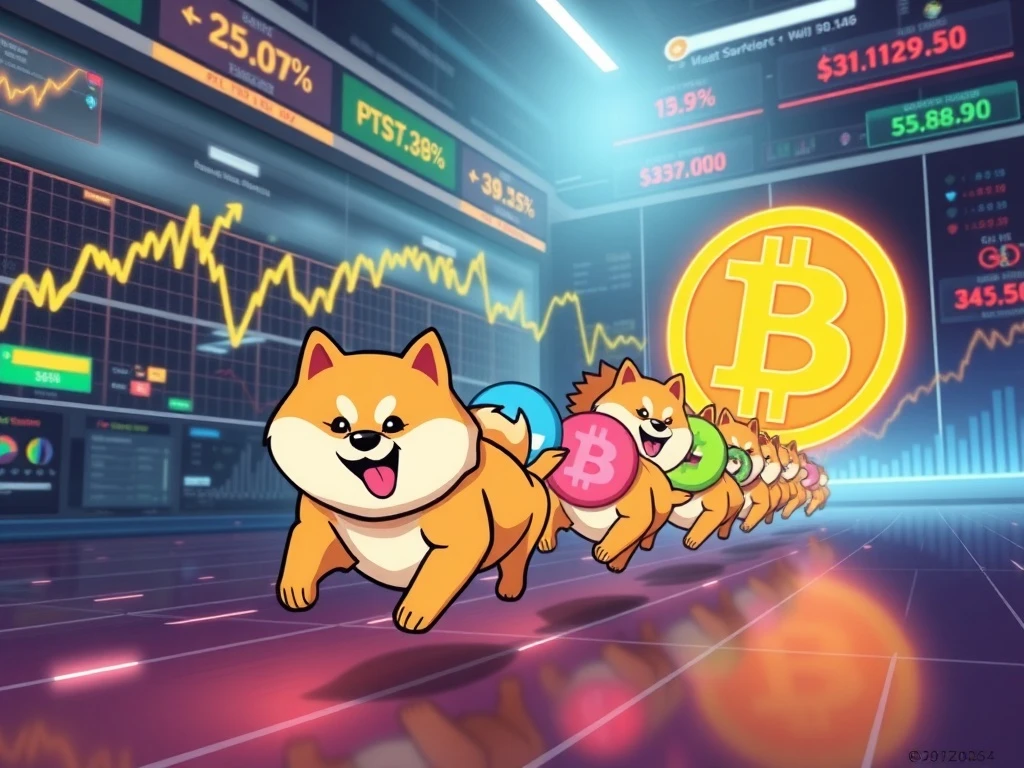
Global cryptocurrency markets witnessed a significant divergence in late-week trading, as Dogecoin spearheaded a dramatic risk-on frenzy that saw memecoins collectively outrun Bitcoin in both percentage gains and trading volume before experiencing corrections. This market behavior, observed across major exchanges on Sunday, highlights evolving investor sentiment and the distinct volatility profiles within the digital asset ecosystem. Analysts point to shifting capital flows and social sentiment as key drivers behind this short-term phenomenon.
Dogecoin Leads Memecoin Surge Against Bitcoin
During recent trading sessions, assets categorized as memecoins demonstrated remarkable outperformance against the benchmark cryptocurrency, Bitcoin. Dogecoin, the original and largest memecoin by market capitalization, recorded the highest trading volume within its category. Consequently, this activity propelled significant price appreciation for DOGE and similar tokens. Market data from several analytics platforms confirms that the aggregate trading volume for top memecoins temporarily eclipsed that of many major altcoins. This surge represents a clear shift toward higher-risk assets within the crypto market, a pattern historically associated with bullish sentiment among retail investors.
Several factors contributed to this memecoin rally. First, increased social media discussion and influencer mentions created heightened visibility. Second, a period of relative stability in Bitcoin’s price provided a backdrop where traders sought amplified returns elsewhere. Third, the inherent lower unit price of many memecoins presents a psychological appeal for new market entrants. However, this momentum proved unsustainable into the Sunday evening trading window.
The Late-Sunday Correction and Bitcoin’s Steadiness
By late Sunday, a broad corrective phase began for the memecoin sector. Tokens that had posted double-digit percentage gains earlier in the weekend retraced a portion of those increases. This correction followed a predictable profit-taking cycle, where early buyers capitalized on the rapid appreciation. In stark contrast, Bitcoin’s price action remained notably steadier during this period. BTC exhibited lower volatility, consolidating within a narrow range while the memecoin market experienced turbulence.
This divergence underscores a fundamental difference in market perception. Traders and analysts often view Bitcoin as a digital store of value or “blue-chip” crypto asset. Conversely, they typically classify memecoins as speculative, high-beta assets whose prices are more sensitive to sentiment shifts and trading flows. The following table illustrates the typical volatility relationship:
| Asset Type | Primary Market Driver | Typical Volatility Profile | Investor Base |
|---|---|---|---|
| Bitcoin (BTC) | Macro trends, institutional adoption, halving cycles | Lower relative to altcoins | Institutional & long-term retail |
| Memecoins (e.g., DOGE) | Social sentiment, celebrity endorsements, community hype | Very High | Predominantly retail & traders |
Expert Analysis on Market Structure
Financial analysts specializing in digital assets note that such memecoin frenzies are not uncommon. They often occur during specific market phases. “These risk-on surges typically manifest when broader market fear subsides and traders have excess liquidity to deploy into more speculative corners of the market,” explains a veteran crypto market strategist from a major financial data firm. “The key indicator is whether this activity pulls sustainable volume from Bitcoin or merely represents sidelined capital. The late-week correction suggests the latter, which is generally healthier for overall market structure.” Historical data from 2021 and 2023 shows similar patterns where memecoin rallies preceded or coincided with periods of altcoin season, though they often correct faster than more fundamentally-driven assets.
Understanding the Risk-On Frenzy Dynamics
The term ‘risk-on frenzy’ accurately describes the market behavior where investors rapidly increase their exposure to high-risk, high-reward assets. In cryptocurrency markets, this dynamic is particularly pronounced due to:
- 24/7 Market Operations: Unlike traditional markets, crypto trades continuously, allowing sentiment shifts to manifest instantly.
- Social Media Amplification: Platforms like X (formerly Twitter) and TikTok can accelerate hype cycles for community-driven assets.
- Leverage and Derivatives: The widespread availability of leveraged trading can magnify both gains and losses during such frenzies.
- Low Barrier to Entry: Global accessibility allows millions of retail traders to participate simultaneously.
This recent episode saw capital rotate quickly from stablecoins and some larger altcoins into the memecoin sector. On-chain data reveals increased movement of tokens from long-term holding wallets to exchange-connected addresses, signaling intent to trade. Furthermore, funding rates for memecoin perpetual swaps on derivatives exchanges turned significantly positive, indicating heavy demand for leveraged long positions before the correction reset these rates.
Implications for Broader Cryptocurrency Markets
The event provides critical insights into the current state of the cryptocurrency market. First, it demonstrates that latent speculative demand remains potent. Second, Bitcoin’s role as a stabilizing anchor is reaffirmed when it holds steady during altcoin volatility. For portfolio managers, these dynamics highlight the importance of asset allocation and risk management. Allocating a small portion of a portfolio to speculative assets requires understanding their correlated behavior during market stress.
Regulatory observers also note increased scrutiny on memecoin trading. Authorities often express concern about the potential for market manipulation and investor protection issues in these highly volatile segments. The sheer speed of the rally and correction underscores the risks for inexperienced participants who may enter at peak euphoria. Educational resources from major exchanges consistently warn that memecoins should be approached with extreme caution and only with capital one is prepared to lose entirely.
Conclusion
The trading session where Dogecoin led a risk-on frenzy as memecoins outran Bitcoin offers a textbook case study in cryptocurrency market psychology and structure. It highlights the ongoing tension between speculative trading and value investing within the digital asset space. While memecoins can provide outsized returns in short bursts, their volatility and sensitivity to sentiment make them precarious long-term holdings for most. Bitcoin’s comparative steadiness during the subsequent correction reinforces its differentiated role. Market participants should analyze such events not as isolated oddities but as integral features of a maturing yet still-evolving financial ecosystem where different asset classes serve vastly different purposes and attract distinct investor profiles.
FAQs
Q1: What does ‘risk-on frenzy’ mean in cryptocurrency markets?
A risk-on frenzy describes a market condition where investors exhibit high appetite for risk, rapidly moving capital into volatile, speculative assets like memecoins in search of high returns, often driven by social sentiment and hype rather than fundamental value.
Q2: Why did Bitcoin remain steady while memecoins corrected?
Bitcoin is perceived as a more established store of value with deeper liquidity and institutional holding. Its price is influenced by longer-term macro factors, making it less reactive to short-term retail trading frenzies that primarily affect more speculative altcoins and memecoins.
Q3: Is Dogecoin considered a good long-term investment compared to Bitcoin?
Most financial advisors and analysts categorize Dogecoin as a highly speculative asset due to its inflationary supply and price dependence on social trends. Bitcoin, with its fixed supply and growing institutional adoption, is generally viewed as having stronger long-term investment fundamentals, though both carry significant risk.
Q4: How can investors identify the start of a memecoin rally?
Key indicators include a spike in social media mentions and trending topics, a sudden increase in trading volume for memecoins relative to the total market, rising positive funding rates on derivatives exchanges, and capital flow data showing movement into these assets.
Q5: What usually happens after a memecoin frenzy corrects?
Capital often flows back into more stable assets like Bitcoin or stablecoins. The market typically enters a consolidation phase. Additionally, increased regulatory or media scrutiny may follow, and investors become more cautious, potentially leading to lower volatility until the next catalyst emerges.