Bitcoin Tax Bill Unveils Revolutionary 0% Capital Gains Rate and Federal Reserve Plan

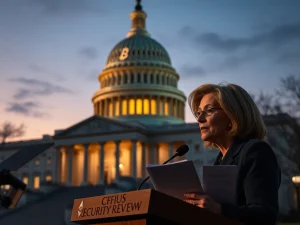
WASHINGTON, D.C. – A groundbreaking legislative proposal, formally introduced in the United States Congress this week, seeks to fundamentally alter the nation’s relationship with Bitcoin by establishing a federal Strategic Bitcoin Reserve and eliminating capital gains taxes on the premier cryptocurrency. The ‘Bitcoin for America Act’ represents one of the most pro-Bitcoin legislative frameworks ever proposed at the federal level, potentially catalyzing significant shifts in both fiscal policy and digital asset adoption. Consequently, the bill has ignited intense debate among policymakers, economists, and the global crypto community regarding the future of money and taxation.
Breaking Down the Bitcoin Tax Bill: Core Provisions
The proposed Bitcoin tax bill introduces three primary mechanisms designed to integrate Bitcoin into the U.S. financial and governmental infrastructure. First, it mandates the creation of a ‘Strategic Bitcoin Reserve’ overseen by the U.S. Treasury. This reserve would function similarly to strategic petroleum reserves, aiming to secure a portion of the nation’s monetary assets in a decentralized, globally recognized digital store of value. Secondly, the legislation provides a legal pathway for both individuals and corporations to settle their federal tax liabilities using Bitcoin directly. Finally, and most notably, it sets the long-term capital gains tax rate for Bitcoin held for more than one year to 0%, effectively treating it similarly to certain municipal bonds for tax purposes.
Proponents argue this framework recognizes Bitcoin’s unique properties as a non-sovereign, hard-capped asset. They contend that taxing its appreciation as income contradicts its role as a potential monetary base. Conversely, critics raise concerns about revenue loss and preferential treatment for a volatile asset class. The bill’s text explicitly defines Bitcoin separately from other digital assets, focusing solely on the cryptocurrency created by the original Satoshi Nakamoto protocol.
Historical Context and Legislative Precedents
This proposal does not emerge in a vacuum. It follows a growing trend of state-level initiatives aimed at attracting cryptocurrency innovation. For instance, states like Wyoming and Texas have already passed laws creating favorable regulatory environments for digital assets. Furthermore, the Internal Revenue Service (IRS) has, for nearly a decade, treated cryptocurrencies as property for tax purposes, subjecting transactions to capital gains rules. This existing classification has created a complex reporting burden for users, often cited as a barrier to everyday use.
The concept of a strategic reserve for a digital asset is unprecedented at the federal level. However, analysts draw parallels to national gold reserves held by central banks. The table below outlines a brief comparison of key asset reserves:
| Reserve Type | Typical Purpose | Management |
|---|---|---|
| Strategic Petroleum Reserve | Energy Security | Department of Energy |
| U.S. Gold Reserve | Monetary Security / Legacy | U.S. Treasury / Mint |
| Proposed Bitcoin Reserve | Monetary & Technological Hedge | U.S. Treasury (Proposed) |
Previous congressional efforts have focused more on consumer protection and anti-money laundering frameworks, such as the proposed Digital Asset Anti-Money Laundering Act. Therefore, the Bitcoin for America Act marks a distinct pivot towards proactive, innovation-friendly policy.
Expert Analysis on Economic and Market Impact
Financial and legal experts are carefully weighing the potential ramifications. Dr. Sarah Chen, a professor of financial technology at Stanford University, notes, ‘The 0% capital gains provision is the most radical element. It effectively reclassifies Bitcoin from a speculative investment to a protected savings technology in the eyes of the tax code. This could trigger massive capital reallocation and long-term holding, fundamentally reducing market volatility.’ However, she cautions, ‘The implementation logistics, especially for tax payments in BTC, are extraordinarily complex, involving real-time valuation and secure transaction handling at a massive scale.’
Market analysts suggest the mere proposal could have immediate effects. Historically, regulatory clarity and favorable tax treatment have been significant price catalysts for asset classes. If passed, the bill could:
- Increase Institutional Adoption: Remove a major accounting and tax liability hurdle for corporate and ETF holdings.
- Boost U.S. Competitiveness: Attract blockchain businesses and talent from jurisdictions with less clear or more hostile regulations.
- Alter Investment Behavior: Incentivize ‘HODLing’ over active trading, potentially decreasing sell-side pressure.
Nevertheless, skeptics like economist Mark Thomsen point to the federal budget deficit. ‘Eliminating a revenue stream from a growing asset class, without a clear alternative, seems fiscally risky, especially during periods of high national debt,’ Thomsen stated in a recent interview.
The Path Forward: Legislative Process and Political Realities
The bill must now navigate the standard legislative journey through committee assignments, hearings, markups, and votes in both the House and Senate. Its fate is deeply intertwined with the political composition of Congress and the administration’s stance. Key committees, such as the House Financial Services Committee and the Senate Finance Committee, will play pivotal roles in scrutinizing the details.
Public and industry advocacy will likely influence its progression. Major cryptocurrency advocacy groups have already begun mobilizing support, framing the bill as essential for American financial leadership in the digital age. Opposition is expected from factions concerned about tax equity, energy consumption narratives associated with Bitcoin mining, and the potential for reduced oversight. Ultimately, the proposal may serve as a starting point for negotiation, with certain provisions, like the strategic reserve, having a higher chance of bipartisan discussion than the full elimination of capital gains taxes.
Conclusion
The introduction of the Bitcoin for America Act, with its core proposal of a 0% capital gains tax and a Strategic Bitcoin Reserve, marks a watershed moment in U.S. cryptocurrency policy. It transcends mere regulation by proposing a foundational integration of Bitcoin into the nation’s fiscal architecture. While its passage remains uncertain amidst complex political and economic debates, the bill has successfully framed a bold vision for the future. It challenges lawmakers and citizens to consider Bitcoin not just as an asset, but as a potential pillar of long-term national economic strategy. The ongoing discussion around this Bitcoin tax bill will undoubtedly shape the regulatory landscape for digital assets for years to come.
FAQs
Q1: What is the ‘Bitcoin for America Act’?
The Bitcoin for America Act is a proposed U.S. federal bill that aims to create a Strategic Bitcoin Reserve, allow taxpayers to pay federal taxes using Bitcoin, and set the long-term capital gains tax rate for Bitcoin to 0%.
Q2: How would the 0% capital gains tax on Bitcoin work?
If passed, the bill would amend the Internal Revenue Code so that gains from the sale of Bitcoin held for more than one year are not subject to federal capital gains tax. Short-term gains would likely still be taxed as ordinary income.
Q3: What is a Strategic Bitcoin Reserve?
Modeled after other strategic reserves, it would be a stockpile of Bitcoin held by the U.S. Treasury. The stated goal is to safeguard national monetary assets in a decentralized digital form, diversifying away from purely fiat-based reserves.
Q4: Can I pay my taxes with Bitcoin if this passes?
The bill proposes to grant the U.S. Treasury the authority to accept Bitcoin as payment for federal taxes. However, implementing the technical and security infrastructure for this would be a significant undertaking following passage.
Q5: What are the chances this Bitcoin tax bill becomes law?
As with any major legislation, its path is challenging. It requires committee approval, votes in both chambers of Congress, and the President’s signature. It may face significant debate and modification, making its passage in its current form uncertain, though it sets a major policy marker.