Solana RWA Market Soars to $1.66B All-Time High, Signaling Unprecedented Institutional Adoption
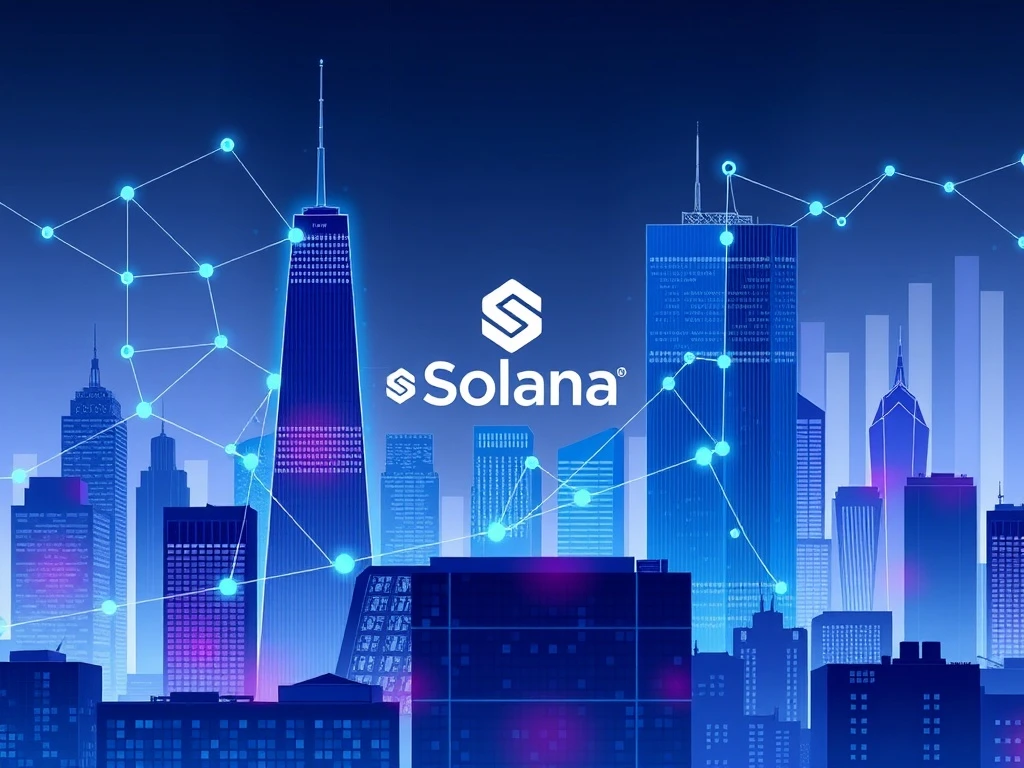
The Solana blockchain has achieved a remarkable milestone in the tokenization sector, with its real-world asset (RWA) market capitalization reaching an unprecedented $1.66 billion all-time high. This represents a staggering 90.1% growth within a single month, signaling accelerating institutional interest in blockchain-based asset tokenization. The surge demonstrates Solana’s emerging dominance in the RWA space, traditionally dominated by Ethereum and other established networks.
Solana RWA Market Growth Analysis
The $1.66 billion valuation marks a significant turning point for Solana’s ecosystem. This growth trajectory began accelerating in early 2024 but reached unprecedented velocity throughout the last quarter. Several key factors contributed to this explosive expansion. First, institutional players have increasingly recognized Solana’s technical advantages for financial applications. Second, regulatory clarity in major jurisdictions has provided necessary confidence for traditional finance participants. Third, infrastructure development has matured sufficiently to support complex financial instruments.
Market analysts note the 90.1% monthly growth rate far exceeds broader cryptocurrency market performance during the same period. This divergence suggests specific catalysts unique to the RWA sector rather than general market sentiment. The composition of tokenized assets reveals important trends. Real estate continues to dominate, representing approximately 45% of total value. Treasury products follow at 30%, with commodities and private equity comprising the remaining segments. This distribution indicates balanced institutional interest across asset classes.
Technical Infrastructure Enabling Growth
Solana’s architecture provides distinct advantages for RWA applications. The network’s high throughput and low transaction costs make it economically viable for fractional ownership models. Furthermore, its predictable execution environment appeals to institutional participants requiring settlement certainty. Several infrastructure projects have been instrumental in this growth. Tokenization platforms have developed specialized compliance modules. Custody solutions have integrated with traditional financial systems. Oracle networks provide reliable price feeds for various asset classes.
Institutional Adoption Driving Tokenized Assets
Institutional participation represents the most significant development in Solana’s RWA ecosystem. Traditional financial institutions have moved beyond experimentation to operational deployment. Major investment banks now tokenize portions of their treasury operations. Asset management firms offer tokenized versions of traditional products. Insurance companies explore blockchain-based asset representation for improved liquidity management. This institutional momentum creates a virtuous cycle attracting more participants.
The regulatory landscape has evolved to accommodate this growth. Several jurisdictions have established clear frameworks for tokenized securities. These regulations provide necessary guardrails while enabling innovation. Compliance technology has advanced correspondingly. Automated regulatory reporting tools integrate seamlessly with blockchain transactions. Identity verification systems maintain privacy while meeting know-your-customer requirements. These developments reduce friction for institutional adoption.
Comparative analysis reveals Solana’s competitive positioning. While Ethereum maintains the largest total RWA market share, Solana demonstrates superior growth metrics. The network’s transaction cost advantage becomes particularly relevant for high-frequency financial applications. Additionally, Solana’s developer ecosystem has produced specialized tooling for financial use cases. These tools simplify complex processes like dividend distribution and corporate actions.
Market Impact and Future Projections
The $1.66 billion milestone has broader implications for blockchain finance. It validates tokenization as a viable mechanism for asset representation. Furthermore, it demonstrates institutional willingness to embrace alternative blockchain platforms. Market observers anticipate continued growth throughout 2025. Several major announcements suggest additional institutional deployments are imminent. Traditional finance giants have publicly disclosed exploration phases. Some have already completed pilot programs with positive results.
Technical developments will further accelerate adoption. Planned network upgrades will enhance scalability and security. Cross-chain interoperability improvements will facilitate asset movement between ecosystems. Standardization efforts will reduce implementation complexity. These advancements address remaining barriers to mainstream adoption. The convergence of technological maturity and institutional readiness creates optimal conditions for sustained growth.
Real-World Asset Tokenization Evolution
Tokenized real-world assets represent a fundamental shift in financial infrastructure. The concept transforms illiquid assets into divisible, tradable digital representations. This transformation unlocks previously inaccessible value. Investors gain exposure to asset classes traditionally requiring significant capital. Asset owners access new liquidity sources. The entire financial ecosystem benefits from improved efficiency and transparency.
Solana’s specific implementation advantages deserve examination. The network’s architecture supports complex smart contracts necessary for sophisticated financial instruments. Its speed enables near-instant settlement, reducing counterparty risk. Low costs make fractional ownership economically viable at previously impractical scales. These technical characteristics align perfectly with RWA requirements. Consequently, developers have prioritized this vertical within Solana’s ecosystem.
The historical context illuminates current developments. RWA tokenization began gaining traction around 2020 but faced significant technical and regulatory hurdles. Early implementations focused on simple assets with straightforward ownership structures. Gradually, complexity increased as infrastructure matured. The current $1.66 billion valuation represents maturation across multiple dimensions. Technical infrastructure now supports enterprise requirements. Regulatory frameworks provide necessary clarity. Institutional processes have adapted to blockchain integration.
Global Distribution and Regional Trends
Geographic analysis reveals interesting patterns in Solana RWA adoption. North America leads in total value tokenized, followed closely by Europe. Asia-Pacific demonstrates the fastest growth rate, particularly in real estate tokenization. Emerging markets show increasing interest, though from smaller absolute bases. This global distribution indicates broad-based appeal rather than regional concentration. Different regions emphasize different asset classes based on local market characteristics.
Regional regulatory approaches significantly influence adoption patterns. Jurisdictions with clear digital asset frameworks experience accelerated growth. Markets with established financial centers demonstrate stronger institutional participation. These variations create a diverse global landscape. Despite differences, common themes emerge worldwide. Efficiency improvements attract participants across regions. Liquidity enhancement provides universal benefits. Transparency improvements address longstanding industry challenges.
Conclusion
Solana’s RWA market reaching $1.66 billion represents a watershed moment for blockchain finance. The 90.1% monthly growth demonstrates accelerating institutional adoption of tokenized real-world assets. This milestone validates Solana’s technical advantages for financial applications while signaling broader industry maturation. Continued expansion appears likely as infrastructure develops and regulatory clarity improves. The convergence of traditional finance and blockchain technology creates unprecedented opportunities for efficiency, accessibility, and innovation in asset management and ownership structures.
FAQs
Q1: What are real-world assets (RWAs) in blockchain context?
Real-world assets are tangible or intangible traditional assets represented as digital tokens on a blockchain. These include real estate, commodities, treasury products, and intellectual property. Tokenization creates divisible, tradable digital representations of these assets.
Q2: Why is Solana particularly suitable for RWA tokenization?
Solana offers high throughput, low transaction costs, and predictable execution—all critical for financial applications. Its architecture supports complex smart contracts necessary for sophisticated financial instruments while maintaining economic viability for fractional ownership models.
Q3: What percentage of Solana’s RWA market is institutional versus retail?
Current estimates suggest approximately 85% institutional participation in Solana’s RWA market. This high percentage reflects the capital requirements and regulatory complexities associated with major asset tokenization projects.
Q4: How does Solana’s RWA growth compare to other blockchain networks?
While Ethereum maintains larger total RWA value, Solana demonstrates superior growth rates. Its technical advantages for high-frequency financial applications attract institutions seeking efficiency improvements over established networks.
Q5: What regulatory developments support RWA tokenization growth?
Several jurisdictions have established clear frameworks for tokenized securities, including the EU’s MiCA regulations and specific US regulatory guidance. These frameworks provide necessary legal certainty while maintaining investor protections essential for institutional participation.