Mirae Asset Acquires Korbit Crypto Exchange in Landmark $100 Million Deal, Boosting Institutional Confidence
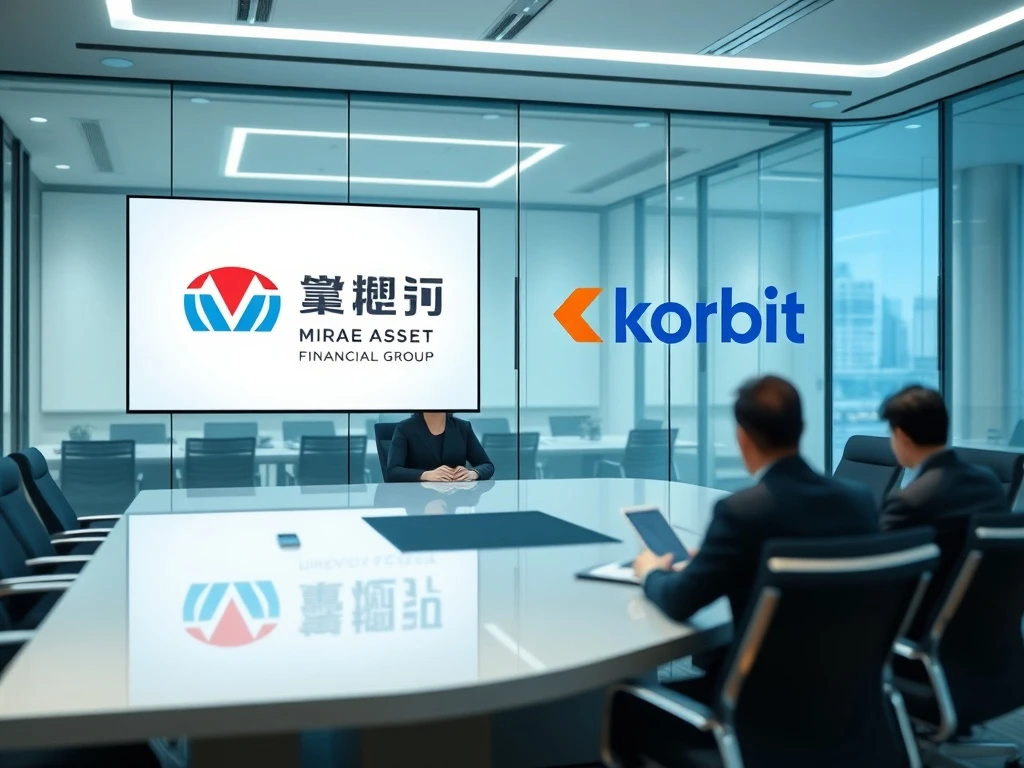
In a landmark move for South Korea’s financial sector, Mirae Asset Financial Group has announced a definitive agreement to acquire a controlling 92.06% stake in Korbit, one of the nation’s oldest and most regulated cryptocurrency exchanges. The colossal investment of 133.5 billion won (approximately $100 million USD), confirmed in Seoul on April 2, 2025, represents the most significant traditional finance incursion into the country’s digital asset market to date. This strategic acquisition immediately signals a powerful shift toward mainstream institutional adoption of cryptocurrencies within a tightly regulated framework.
Mirae Asset Acquires Korbit: The Deal’s Core Details
The transaction sees Mirae Asset Securities, the group’s brokerage arm, leading the purchase of the majority stake from NXC Corporation, the parent company of global gaming giant Nexon. Consequently, this deal values Korbit at roughly 145 billion won. Industry analysts view the timing as pivotal, following South Korea’s implementation of the Virtual Asset User Protection Act. This legislation provides a clearer regulatory pathway for established financial institutions. The acquisition is not merely an investment; it is a strategic integration. Mirae Asset plans to leverage Korbit’s technological infrastructure and regulatory licenses to expand its digital asset service offerings.
Key financial and structural details of the deal include:
- Stake Acquired: 92.06% of Korbit’s equity.
- Investment Value: 133.5 billion Korean won (~$100 million USD).
- Acquiring Entity: Mirae Asset Securities, a subsidiary of Mirae Asset Financial Group.
- Seller: NXC Corporation, the holding company for Nexon.
- Post-Deal Structure: Korbit will operate as a subsidiary under the Mirae Asset umbrella, maintaining its brand and operational team while integrating with the group’s wealth management platforms.
Context and History of South Korea’s Crypto Landscape
To understand the magnitude of this acquisition, one must consider South Korea’s unique crypto journey. The market has evolved from a retail-driven frenzy during the 2017-2018 bull run, characterized by the “Kimchi premium,” to a maturing ecosystem focused on compliance and investor protection. Korbit itself, founded in 2013, holds the distinction of being South Korea’s first licensed crypto exchange. It has operated under stringent real-name account banking requirements since 2018, a system that initially challenged exchanges but now serves as a high barrier to entry and a mark of credibility.
Other major players like Upbit and Bithumb have dominated trading volumes, but Korbit’s early compliance focus made it an attractive target for a conservative financial giant like Mirae Asset. The regulatory landscape crystallized in 2024 with the full enforcement of the Virtual Asset User Protection Act, which mandates strict reserve requirements, custody rules, and market surveillance. This regulatory clarity directly enabled traditional finance (TradFi) institutions to engage with the sector without the previous legal ambiguities.
Expert Analysis on Market Impact
Financial market experts interpret this move as a bellwether. “The Mirae Asset-Korbit deal is not an isolated event; it is a validation signal,” states Dr. Soo-Min Lee, a professor of Fintech at Seoul National University. “When a group with over $600 billion in assets under management makes this commitment, it tells global investors that South Korea’s digital asset market has transitioned from a speculative niche to a legitimate asset class within the institutional portfolio.” Furthermore, this acquisition creates immediate competitive pressure on other large securities firms and banks in Korea, potentially triggering a wave of similar partnerships or acquisitions in 2025.
Strategic Rationale and Future Integration Plans
Mirae Asset’s strategic rationale is multifaceted. Primarily, the group aims to capture the growing demand for regulated crypto services from its existing massive client base of retail and institutional investors. The integration roadmap likely involves offering seamless crypto trading and custody alongside traditional stocks and ETFs within its mobile and desktop platforms. Additionally, the group can develop structured products like crypto-linked funds and derivatives, using Korbit’s exchange as the underlying liquidity and execution venue.
The table below outlines the potential synergies between Mirae Asset’s traditional strengths and Korbit’s digital capabilities:
| Mirae Asset Strength | Korbit Capability | Potential Integrated Service |
|---|---|---|
| Massive retail investor network | Regulated crypto exchange license | In-app crypto trading for brokerage clients |
| Institutional sales and research | Secure custody technology | White-label custody and asset management for corporations |
| Global ETF and fund distribution | Blockchain technology expertise | Tokenized funds or digital asset ETFs |
This synergy positions the combined entity uniquely. It bridges the trust and scale of traditional finance with the innovation and growth of the digital asset space.
Broader Implications for Global Crypto Adoption
The transaction’s implications extend far beyond South Korea’s borders. It represents a clear case study in how mature financial markets can integrate cryptocurrencies through acquisition rather than organic build-out. Other Asia-Pacific financial hubs like Hong Kong, Singapore, and Japan are observing this model closely. Moreover, the deal reinforces a global trend of institutional convergence, following similar moves by BlackRock, Fidelity, and other asset managers into spot Bitcoin ETFs in the United States.
For the average investor, this trend means increased accessibility, better consumer protection, and more product variety. However, it also heralds increased market professionalism and potentially reduced volatility as institutional capital becomes a larger market component. The entry of major players like Mirae Asset also brings heightened regulatory scrutiny and compliance standards, further legitimizing the ecosystem.
Conclusion
The acquisition of Korbit crypto exchange by Mirae Asset Financial Group is a transformative event for South Korea’s financial industry. It underscores the irreversible momentum of institutional digital asset adoption within robust regulatory frameworks. This deal provides Mirae Asset with a critical technological and regulatory platform to lead the next wave of integrated financial services. Ultimately, the Mirae Asset-Korbit merger serves as a powerful indicator that the distinction between traditional and digital finance is rapidly dissolving, paving the way for a more secure, accessible, and mature global crypto market.
FAQs
Q1: How much did Mirae Asset pay to acquire Korbit?
Mirae Asset invested 133.5 billion South Korean won, which is approximately 100 million US dollars, to acquire a 92.06% controlling stake in the Korbit crypto exchange.
Q2: Why is this acquisition significant for the crypto industry?
This acquisition is significant because it represents a major traditional financial institution with over $600 billion in assets entering the crypto market through acquisition. It signals strong institutional confidence and accelerates the integration of digital assets into mainstream regulated finance.
Q3: What will happen to Korbit after the acquisition?
Korbit will operate as a subsidiary of Mirae Asset Financial Group. It is expected to maintain its brand and team while integrating its technology and services with Mirae Asset’s existing brokerage and wealth management platforms to offer clients seamless access to crypto assets.
Q4: How does South Korea’s regulation affect this deal?
The deal was made possible by South Korea’s clear regulatory framework, specifically the Virtual Asset User Protection Act enacted in 2024. This law provides the legal certainty required for large, conservative financial institutions like Mirae Asset to engage with the cryptocurrency sector.
Q5: Could this lead to more traditional finance companies buying crypto exchanges?
Yes, financial analysts widely view this acquisition as a likely catalyst for similar moves. Other major securities firms and banks in South Korea and other regulated markets may pursue partnerships or acquisitions to avoid being left behind in the digital asset service race.