AAVE v4 Migration: The Crucial Proposal That Could Reshape DeFi Governance Forever
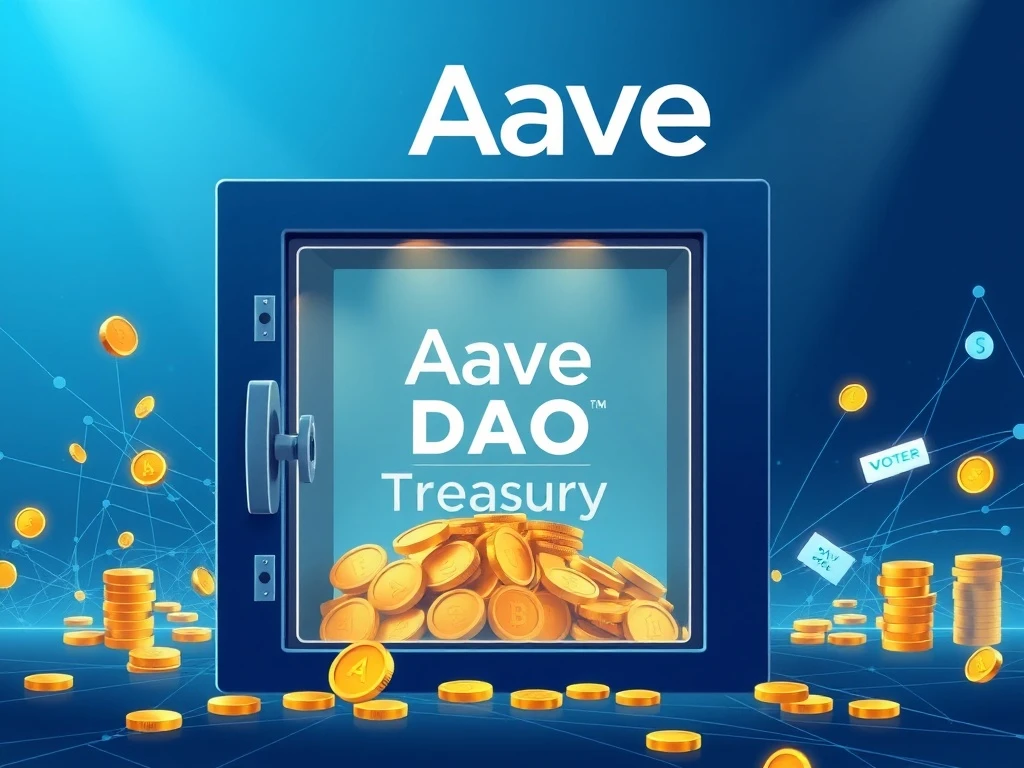
In a landmark move that could redefine decentralized finance governance, Aave Labs has unveiled a comprehensive proposal to channel 100% of revenue from Aave-branded products directly to the DAO treasury as part of its forthcoming v4 migration. This strategic initiative, announced in early 2025, represents one of the most significant governance decisions facing the $1.2 billion DeFi protocol and its community of token holders. The proposal includes establishing a separate foundation to manage Aave’s intellectual property assets while transitioning to v4 as the protocol’s core architecture over an 8-12 month timeline pending DAO approval.
AAVE v4 Migration: Architectural Evolution and Governance Implications
The proposed Aave v4 migration marks a substantial technical advancement for the protocol. Consequently, this upgrade introduces enhanced capital efficiency mechanisms and improved risk management frameworks. Furthermore, the migration includes sophisticated interest rate models and cross-chain liquidity features. Industry analysts note that v4 represents the most comprehensive protocol upgrade since Aave’s inception in 2017. Meanwhile, the governance proposal accompanying this technical evolution fundamentally alters the protocol’s economic structure.
Currently, Aave generates revenue through multiple channels including borrowing fees, flash loan fees, and protocol incentives. Under the new proposal, all revenue from officially branded Aave products would flow directly to the decentralized autonomous organization treasury. This represents a significant departure from previous models where revenue distribution followed more complex mechanisms. The DAO treasury currently holds approximately $160 million in various assets, primarily stablecoins and governance tokens.
DAO Treasury Allocation: Economic Realignment and Community Benefits
The proposed 100% revenue allocation to the Aave DAO treasury creates several immediate implications for token holders. First, this establishes a direct economic link between protocol performance and treasury growth. Second, it provides the community with enhanced resources for protocol development and ecosystem expansion. Third, this model potentially increases the intrinsic value proposition for AAVE token holders through improved treasury management capabilities.
Historical data reveals that Aave has generated substantial revenue since its launch:
| Time Period | Protocol Revenue | Primary Sources |
|---|---|---|
| 2023 | $48.7 million | Borrowing fees (62%), Flash loans (28%) |
| 2024 | $52.3 million | Borrowing fees (58%), Cross-chain fees (32%) |
| 2025 Q1 (Projected) | $15.1 million | Multi-chain deployment revenue |
This revenue stream, if fully allocated to the DAO treasury, would significantly enhance the protocol’s financial resources. Moreover, the proposal includes specific mechanisms for treasury fund allocation including protocol development grants, security audits, and liquidity incentives. The community would maintain control over these allocations through existing governance processes.
Expert Analysis: Governance Precedents and Industry Context
DeFi governance experts highlight several precedents for similar treasury allocation models. For instance, Compound Finance implemented a modified revenue-sharing mechanism in 2023. Similarly, Uniswap established its UNI token holder treasury through community governance processes. However, Aave’s proposal represents a more comprehensive approach to revenue allocation than previous DeFi governance models.
Industry analysts note that this proposal arrives during a period of increased regulatory scrutiny for decentralized protocols. The establishment of a separate foundation for trademark management potentially addresses certain regulatory considerations. This foundation would manage Aave’s branding assets while maintaining alignment with the DAO’s strategic direction. Legal experts suggest this structure could provide clearer jurisdictional boundaries for intellectual property management.
Migration Timeline and Technical Implementation Framework
The proposed 8-12 month migration timeline for Aave v4 involves multiple coordinated phases. Initially, the community must approve the governance proposal through standard voting mechanisms. Subsequently, technical teams would begin implementing the v4 architecture across supported networks. This migration would occur gradually to minimize disruption for existing users and liquidity providers.
Key technical components of the v4 migration include:
- Enhanced risk management modules with improved collateral factor calculations
- Cross-chain liquidity optimization for multi-network deployments
- Gas efficiency improvements reducing transaction costs by approximately 15-20%
- Modular interest rate models allowing community customization
- Improved user interface integration for simplified migration processes
Protocol developers emphasize that backward compatibility remains a priority throughout the migration. Existing positions would transition seamlessly to the new architecture. Additionally, comprehensive testing protocols would precede mainnet deployment across all supported networks including Ethereum, Polygon, and Avalanche.
Community Response and Governance Process
The Aave community has initiated preliminary discussions regarding the proposal across multiple platforms. Governance forums show active participation from both individual token holders and institutional delegates. Initial sentiment appears cautiously optimistic, though several community members have raised questions about implementation specifics.
The formal governance process follows established Aave Improvement Proposal (AIP) procedures:
- Temperature check through informal community polling
- Formal proposal submission with detailed specifications
- Seven-day discussion period with technical clarification
- Formal voting period requiring quorum and majority approval
- Implementation timeline establishment upon successful vote
Historical governance data indicates that major protocol upgrades typically achieve 60-75% voter participation rates. The current proposal’s complexity suggests potentially extended discussion periods before formal voting commences. Community delegates from major staking services have indicated they will conduct thorough analysis before determining voting positions.
Market Impact and Token Holder Considerations
AAVE token holders face several important considerations regarding this proposal. First, the revenue allocation model directly impacts token economics and potential value accrual mechanisms. Second, the migration timeline affects short-term protocol development priorities. Third, the foundation establishment creates new governance structures requiring community oversight.
Market analysts note that similar governance proposals in other protocols have influenced token valuation through improved fundamentals. However, the immediate market response remains uncertain pending further proposal details and community sentiment development. Historical precedent suggests that successful governance upgrades typically correlate with positive medium-term protocol performance metrics.
Conclusion
The Aave v4 migration proposal represents a pivotal moment for decentralized finance governance and protocol evolution. This comprehensive initiative combines technical advancement with economic realignment through direct revenue allocation to the DAO treasury. The proposed 8-12 month migration timeline provides adequate implementation period while maintaining protocol stability. Ultimately, AAVE token holders will determine the proposal’s fate through established governance processes, potentially setting new precedents for DeFi protocol development and community resource allocation. The outcome of this governance decision will significantly influence Aave’s trajectory as a leading decentralized lending protocol and may establish important patterns for the broader DeFi ecosystem.
FAQs
Q1: What exactly does the Aave v4 migration proposal entail?
The proposal includes transitioning to v4 as Aave’s core architecture, allocating 100% of revenue from Aave-branded products to the DAO treasury, and establishing a separate foundation to manage trademarks and branding assets over an 8-12 month period.
Q2: How will the revenue allocation to the DAO treasury benefit AAVE token holders?
Direct revenue allocation creates stronger economic alignment between protocol performance and treasury growth, provides enhanced resources for development and security, and potentially increases the intrinsic value proposition through improved treasury management capabilities.
Q3: What is the timeline for the proposed v4 migration?
The migration would occur over 8-12 months following DAO approval, involving phased implementation across supported networks with comprehensive testing protocols and backward compatibility maintenance.
Q4: How does the separate foundation for trademark management function?
The foundation would manage Aave’s intellectual property assets including trademarks and domains while maintaining alignment with DAO strategic direction, potentially addressing regulatory considerations through clearer jurisdictional boundaries.
Q5: What governance process will determine the proposal’s implementation?
The proposal follows standard Aave Improvement Proposal procedures including temperature checks, formal submission, discussion periods, and voting requiring quorum and majority approval from AAVE token holders.