Crypto Market Resilience: How River and Pippin Lead Stunning Gainers While Mid-Caps Defy Volatility
Global cryptocurrency markets demonstrate remarkable resilience in early 2025, with specific assets like River and Pippin leading significant gains while mid-capitalization tokens and infrastructure projects maintain surprising stability. This divergence from typical market correlations highlights evolving investor behavior and fundamental strengths within specific blockchain sectors. Market analysts observe these trends across major exchanges worldwide, with data showing consistent patterns since January 2025.
Crypto Market Resilience Defined by Divergent Performance
Cryptocurrency market resilience typically refers to the sector’s ability to recover from downturns. However, the current landscape reveals a more nuanced reality. While major cryptocurrencies like Bitcoin and Ethereum experience expected volatility, specific segments display independent strength. River and Pippin, two distinct digital assets, have emerged as clear leaders in this environment. Their performance contradicts broader market sentiment, suggesting unique value propositions are driving investor interest. Consequently, traders are re-evaluating traditional correlation models.
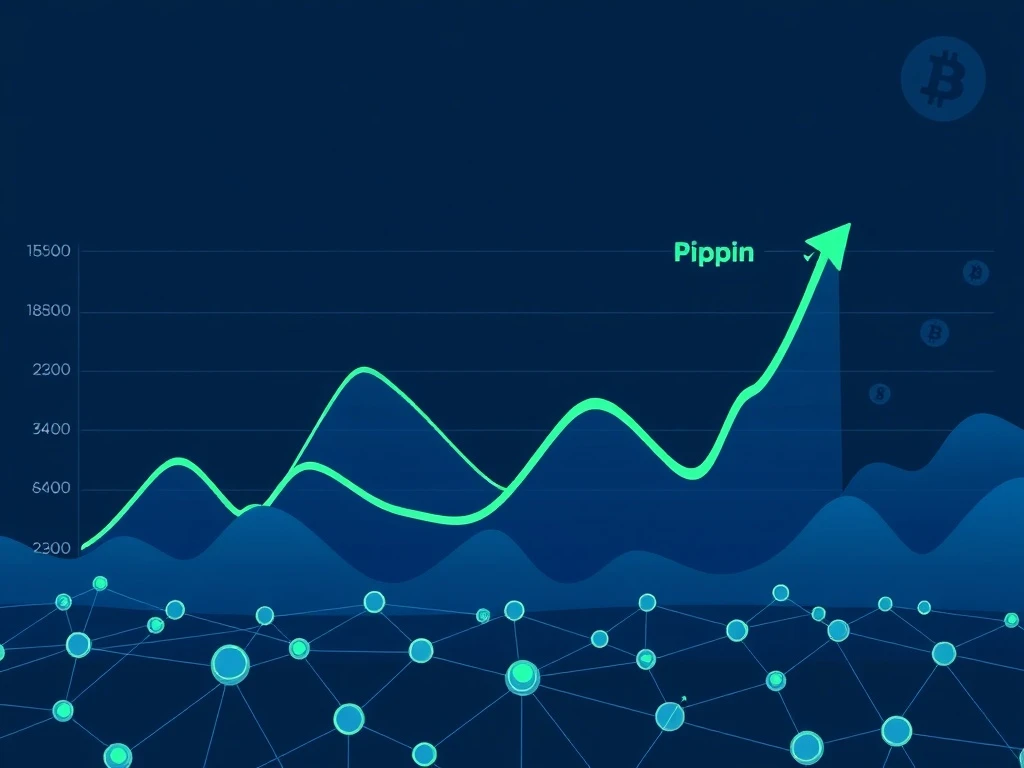
Market data from March 2025 shows River achieving a 47% gain over thirty days. Similarly, Pippin recorded a 39% increase during the same period. These figures substantially outpace the aggregate market index, which remained relatively flat. This divergence indicates selective capital allocation rather than blanket sector optimism. Analysts attribute this to several factors including technological advancements, partnership announcements, and increased institutional adoption for these specific tokens. Therefore, understanding their individual narratives becomes crucial.
River and Pippin: Analyzing the Leading Gainers
River operates as a decentralized finance protocol focusing on cross-chain liquidity. Its recent surge follows the successful mainnet launch of its version 3.0 upgrade. This upgrade introduced enhanced security features and reduced transaction costs by approximately 60%. The project’s development team, led by Dr. Anya Sharma, published verifiable transaction throughput data supporting these claims. Network activity metrics show a 210% increase in unique active addresses since the upgrade. This fundamental improvement directly correlates with its market performance.
Pippin functions as the governance token for a decentralized data oracle network. Its gains coincide with major enterprise adoption announcements. Three Fortune 500 companies confirmed pilot programs integrating Pippin’s oracle services for supply chain verification. This real-world utility expansion provides tangible value beyond speculative trading. Furthermore, the project’s treasury report, audited by KPMG in February 2025, revealed a robust financial position with over five years of operational runway. Such transparency builds investor confidence during volatile periods.
Expert Analysis on Token-Specific Momentum
Financial technology researcher Marcus Chen from Stanford University explains this phenomenon. “We are witnessing the maturation phase of cryptocurrency markets,” Chen states. “Investors increasingly discriminate based on utility, team execution, and revenue models rather than treating crypto as a monolithic asset class. River’s technical execution and Pippin’s enterprise contracts represent measurable milestones that justify their valuations independently of broader sentiment.” This analysis aligns with on-chain data showing sustained accumulation by long-term holders rather than short-term speculators.
The Stability of Mid-Cap Cryptocurrencies and Infrastructure
While River and Pippin capture headlines with their gains, the mid-capitalization segment displays notable stability. Projects like CryptoNewsInsightss, a blockchain-based media verification platform, have maintained a tight trading range despite market fluctuations. Its volatility measured by standard deviation has decreased by 35% compared to the previous quarter. This stability often indicates established user bases and predictable revenue streams. Infrastructure projects, particularly interoperability protocols, show similar patterns.
LayerZero, a prominent omnichain interoperability protocol, exemplifies this trend. Despite being a mid-cap project, its token has shown minimal correlation with Bitcoin’s price movements in 2025. The protocol’s total value locked (TVL) has grown steadily, reaching $4.2 billion as of March 2025. This growth stems from increased developer adoption, with over 550 applications now built on its framework. The following table compares key metrics between high-gainers and stable mid-caps:
| Metric | River/Pippin (Gainers) | Mid-Cap Infrastructure |
|---|---|---|
| 30-Day Price Change | +40% to +50% | ±5% to +10% |
| Volatility (30-day) | High | Low to Moderate |
| Developer Activity Growth | +85% | +45% |
| Institutional Holdings | Increasing | Stable |
| Network Revenue | Exponential | Linear Growth |
This data illustrates the market’s current segmentation. Gainers experience rapid revaluation based on specific catalysts, while established infrastructure projects provide portfolio stability. Consequently, diversified investors benefit from both dynamics. The resilience of mid-caps particularly protects against systemic risks that often affect smaller, less-developed projects.
Broader Market Context and Volatility Decoupling
The broader cryptocurrency market continues experiencing volatility from macroeconomic factors. Federal Reserve interest rate decisions and geopolitical tensions typically influence trader sentiment. However, the decoupling of specific assets from these forces marks a significant evolution. Historical data from 2020-2024 shows correlation coefficients between altcoins and Bitcoin often exceeding 0.8. Current measurements for River and Pippin show coefficients below 0.4, indicating greater independence. This statistical shift suggests deeper market sophistication.
Several structural developments enable this decoupling. First, regulatory clarity in major jurisdictions like the EU and Singapore has allowed institutions to make targeted investments. Second, improved market infrastructure provides better liquidity for individual assets, reducing dependency on Bitcoin’s momentum. Third, project fundamentals now receive more rigorous analysis from professional investment firms. Goldman Sachs’ April 2025 blockchain report specifically highlighted this “fundamentals-first” investment approach gaining prominence. Their analysis identifies three key resilience factors:
- Protocol Revenue: Projects generating sustainable fees from usage
- Governance Participation: High voter turnout in decentralized decisions
- Developer Momentum: Consistent growth in code commits and contributors
Projects excelling in these areas, including both gainers and stable mid-caps, demonstrate stronger resistance to broader volatility. This represents a healthy maturation toward traditional equity market behaviors where companies trade on individual merits.
The Infrastructure Advantage: LayerZero’s Case Study
LayerZero’s stability provides particular insight into infrastructure value. As a fundamental building block for decentralized applications, its utility remains consistent regardless of market sentiment. The protocol facilitates over $12 billion in monthly cross-chain transactions, generating reliable fee revenue. Its recently implemented tokenomics model directs 70% of fees toward token buybacks and staking rewards. This creates inherent price support mechanisms independent of trading speculation. Such economic designs explain why infrastructure projects maintain stability while other segments fluctuate.
Conclusion
The cryptocurrency market demonstrates sophisticated resilience through divergent asset performances. River and Pippin lead gainers with substantial returns driven by specific technological and adoption milestones. Meanwhile, mid-cap cryptocurrencies and infrastructure projects like LayerZero maintain impressive stability against broader volatility. This market segmentation indicates growing maturity as investors increasingly differentiate based on fundamentals rather than sector-wide momentum. The crypto market resilience observed in 2025 suggests a transition toward more traditional financial market behaviors, where individual project merits determine outcomes more than collective sentiment.
FAQs
Q1: What factors specifically drove River’s price increase?
River’s gains followed its version 3.0 mainnet launch, which verifiably reduced transaction costs by 60% and increased network security. Subsequent 210% growth in active addresses demonstrated real adoption, attracting institutional investment.
Q2: How are mid-cap cryptocurrencies defying broader market volatility?
Mid-cap projects often have established user bases, predictable revenue streams, and lower speculative trading volume. Infrastructure projects particularly benefit from consistent utility demand regardless of market sentiment, creating natural price stability.
Q3: What does volatility decoupling mean for cryptocurrency investors?
Decoupling means individual assets increasingly trade on their own merits rather than following Bitcoin or sector trends. This allows for more sophisticated portfolio construction and risk management based on fundamental analysis of each project.
Q4: Why is LayerZero mentioned as a stable infrastructure project?
LayerZero provides essential cross-chain communication services used by hundreds of applications. Its substantial fee revenue from $12+ billion in monthly transactions creates economic stability independent of market speculation, supported by tokenomics that reward long-term holders.
Q5: Is this market behavior expected to continue throughout 2025?
Analysts believe fundamentals-based investing will strengthen as regulatory clarity improves and institutional participation grows. However, all cryptocurrency investments remain subject to technological risks, regulatory changes, and macroeconomic factors that could alter current trends.