Ethereum Price Crash Sparks Strategic Accumulation: On-Chain Data Reveals Massive ETH Buys Below $2,000

Blockchain analytics platforms detected substantial Ethereum accumulation by large investors following a significant price correction that pushed ETH below the $2,000 psychological threshold on Tuesday, December 10, 2024. This strategic buying activity, visible through transparent on-chain data, suggests sophisticated market participants view current levels as a compelling entry point despite recent volatility. Consequently, analysts are examining whether this signals a potential market bottom or represents routine portfolio rebalancing by institutional entities.
Ethereum Price Crash Triggers Unusual On-Chain Activity
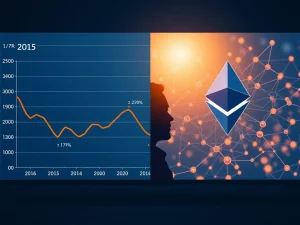
Ethereum experienced a sharp 18% decline over 48 hours, dropping from approximately $2,400 to briefly touch $1,950 before stabilizing around $2,050. This correction mirrored broader cryptocurrency market weakness driven by macroeconomic concerns and sector-specific headwinds. However, blockchain intelligence firms immediately noted anomalous transaction patterns. Specifically, tracking services recorded multiple transactions exceeding 10,000 ETH moving from exchange wallets to private cold storage addresses.
These movements represent a clear shift from selling pressure to accumulation behavior. Market data indicates exchange netflows turned negative during the price dip, meaning more ETH left exchanges than entered them. Historically, this metric serves as a reliable indicator of investor sentiment, with negative netflows often preceding price recoveries. Furthermore, the timing of these transactions within hours of the local price bottom suggests deliberate, price-sensitive execution strategies.
Analyzing the Massive ETH Buys: Who’s Accumulating and Why?
On-chain analysis reveals two primary categories of accumulators during this event. First, known whale addresses with historical accumulation patterns added significantly to their positions. Second, several new institutional-grade wallets appeared, receiving large ETH allocations directly from custody providers. This bifurcation indicates both existing large holders and new entrants participated in the buying activity.
Institutional Behavior Versus Retail Sentiment
Data from Glassnode and Nansen shows a divergence between institutional and retail behavior. While retail-focused exchange platforms saw continued selling, institutional custody platforms recorded substantial inbound transfers. This pattern suggests professional investors executed buy orders during the volatility, potentially viewing the dip as a discount relative to long-term valuation models. Notably, the accumulation occurred predominantly through over-the-counter desks and algorithmic execution to minimize market impact.
The table below summarizes key on-chain metrics observed during the accumulation period:
| Metric | Pre-Crash Level | Accumulation Period | Change |
|---|---|---|---|
| Exchange Netflow (24h) | +42,000 ETH | -38,500 ETH | -80,500 ETH |
| Whale Transactions (>10k ETH) | 3-5 daily | 12-15 daily | +300% |
| Mean Dollar Invested Age | 45 days | 52 days | +15.5% |
| ETH Held on Exchanges | 14.2M ETH | 13.8M ETH | -2.8% |
Historical Context and Market Cycle Comparisons
Similar accumulation patterns have occurred during previous Ethereum market cycles. For instance, during the June 2022 decline below $1,000, substantial whale accumulation preceded a 40% recovery over the following quarter. Likewise, the March 2020 crash saw similar on-chain behavior before Ethereum began its multi-year bull market. While historical patterns don’t guarantee future results, they provide valuable context for current events.
Several fundamental factors may explain the accumulation behavior:
- Upcoming Network Upgrades: Ethereum’s continued development roadmap includes significant scalability improvements
- Staking Yield Attraction: Current staking APRs near 4% provide yield during accumulation periods
- Institutional Adoption: Growing traditional finance integration creates structural demand
- Valuation Metrics: Several on-chain valuation models suggested ETH was approaching oversold conditions
Market Impact and Short-Term Price Implications
The immediate market impact of this accumulation has been stabilization around the $2,000 support level. Typically, large-scale accumulation creates substantial buy-side order walls that slow downward momentum. However, market analysts caution that single events rarely reverse established trends without broader catalyst alignment. The cryptocurrency market remains influenced by multiple external factors including regulatory developments, macroeconomic policy, and traditional equity market correlations.
Technical Analysis Perspective
From a technical standpoint, the $1,950-$2,050 zone represents a critical historical support region. This area previously acted as resistance during 2021’s consolidation phase before becoming support in early 2024. The successful defense of this level, combined with increasing volume profiles, suggests potential for a technical rebound. Nevertheless, traders generally await confirmation through sustained trading above the 20-day moving average near $2,200 before declaring trend reversal.
Broader Cryptocurrency Market Implications
Ethereum’s market position as the dominant smart contract platform means its price action often influences the broader altcoin market. The observed accumulation behavior may signal improving sentiment toward the entire decentralized application ecosystem. Notably, several Ethereum-based Layer 2 solutions and major DeFi tokens showed relative strength during this period, potentially indicating sector rotation rather than broad market capitulation.
Additionally, Bitcoin’s simultaneous stability above $40,000 creates a constructive environment for Ethereum recovery. Historically, Bitcoin dominance phases typically give way to altcoin seasons when market conditions improve. The current accumulation could represent early positioning for such a scenario. Market participants will monitor whether similar accumulation patterns emerge in other major cryptocurrencies in coming sessions.
Risk Factors and Considerations for Market Participants
While on-chain data provides valuable insights, several risk factors merit consideration. First, accumulation by large holders increases market concentration, potentially amplifying future volatility. Second, macroeconomic conditions including interest rate policy and inflation data continue influencing all risk assets. Third, regulatory developments remain unpredictable across major jurisdictions. Finally, cryptocurrency markets have historically experienced false accumulation signals during extended bear markets.
Investors should consider these key points when interpreting the data:
- On-chain data reflects past activity, not future price guarantees
- Large accumulations sometimes precede further declines if support breaks
- Market structure has evolved with derivatives playing larger roles
- Traditional finance inflows now significantly impact price discovery
Conclusion
Substantial Ethereum accumulation below $2,000 represents a significant on-chain development following recent price weakness. The data reveals sophisticated market participants actively acquiring ETH at perceived discount levels, potentially signaling improving long-term conviction. While single events rarely determine market trajectories, the scale and timing of this accumulation warrant attention from market observers. Ultimately, whether this activity marks a sustainable turning point will depend on broader market conditions, fundamental developments, and continued on-chain confirmation in the coming weeks. The Ethereum price crash has clearly triggered strategic responses from large holders, adding another chapter to cryptocurrency’s volatile but evolving market narrative.
FAQs
Q1: What exactly does “on-chain data” reveal about ETH accumulation?
On-chain data shows wallet movements, transaction sizes, and exchange flows. It revealed large ETH transfers from exchanges to private wallets during the price dip, indicating accumulation rather than selling.
Q2: How significant were the ETH purchases below $2,000?
Analytics tracked multiple transactions exceeding 10,000 ETH each, with total exchange outflows approaching 40,000 ETH during the accumulation period, representing substantial buying interest.
Q3: Does whale accumulation guarantee a price recovery?
No, while historically associated with market bottoms, accumulation doesn’t guarantee immediate recovery. Market conditions, broader sentiment, and external factors ultimately determine price direction.
Q4: How does this accumulation compare to previous Ethereum market cycles?
Similar patterns occurred in June 2022 and March 2020, both preceding significant recoveries. However, each market cycle has unique characteristics that limit direct comparability.
Q5: What should retail investors consider when seeing this data?
Retail investors should view this as one data point among many, consider their risk tolerance, investment horizon, and avoid making decisions based solely on whale activity without broader market analysis.