Presale Cryptos 2026: Unveiling the Critical Projects Poised for Major Impact
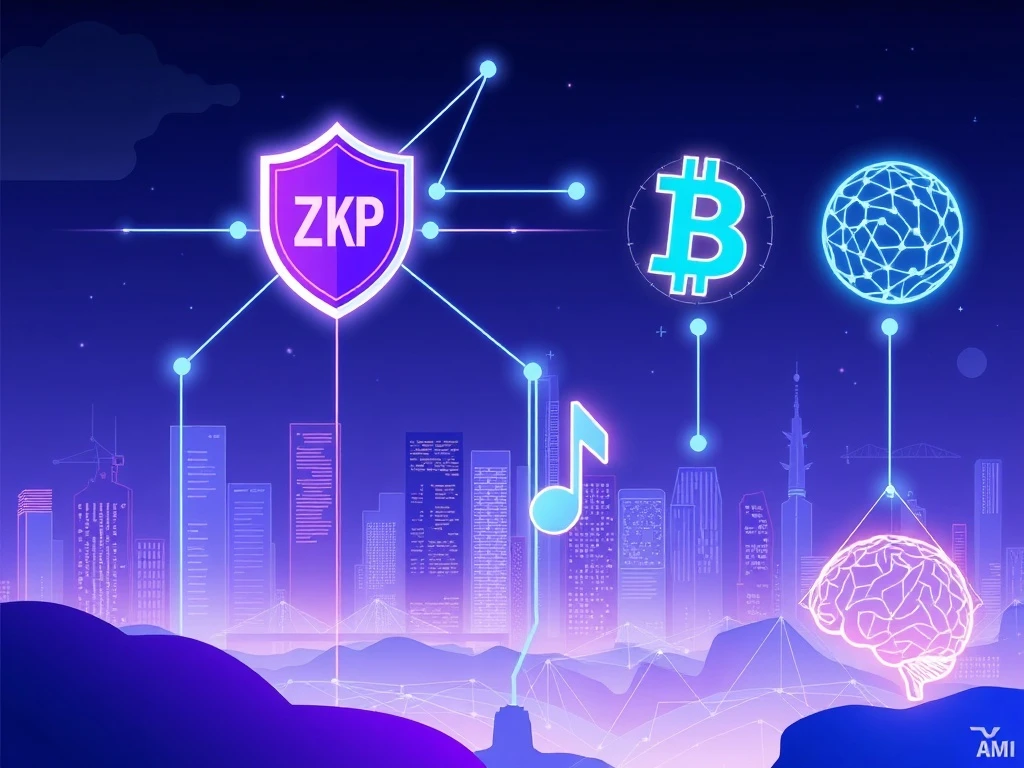
As the blockchain sector evolves beyond its initial hype cycles, a new wave of presale cryptocurrencies is capturing analyst attention for their foundational technology and real-world application potential heading into 2026. Projects like ZKP, Bitcoin Hyper, LivLive, and DeepSnitch AI are emerging not merely as speculative assets but as proposed solutions to persistent challenges in scalability, privacy, and utility. This analysis provides a neutral examination of these highlighted projects, their underlying technology, and the market context shaping their development.
Presale Cryptos 2026: A Shift Towards Applied Technology
The cryptocurrency presale landscape is demonstrably maturing. Consequently, investor scrutiny now heavily prioritizes technological merit and viable use cases over mere tokenomics. This shift reflects broader industry trends documented in reports from entities like the Bank for International Settlements and the World Economic Forum, which emphasize the growing importance of blockchain’s utility in digital infrastructure. Furthermore, the aftermath of several high-profile project failures has increased demand for transparency and technical substance during early funding rounds.
Several key sectors are driving current developer interest and, by extension, presale activity. These include, but are not limited to:
- Privacy-Enhancing Computation: Technologies like zero-knowledge proofs (ZKPs) which allow transaction validation without exposing underlying data.
- Scalability Solutions: Layer-2 networks and novel consensus mechanisms aiming to increase transaction throughput and reduce costs.
- AI and Blockchain Integration: Projects seeking to decentralize artificial intelligence processes or leverage blockchain for verifiable AI training data.
- Real-World Asset (RWA) Tokenization: Platforms facilitating the on-chain representation of physical or financial assets.
Deep Dive: The ZKP Protocol and Its Market Position
The project referred to as ‘ZKP’ in presale discussions typically centers on leveraging zero-knowledge proof technology. This cryptographic method enables one party to prove to another that a statement is true without revealing any information beyond the validity of the statement itself. Notably, ZK-rollups, a specific application of ZKPs, have become a leading scaling solution for Ethereum, as evidenced by the adoption by networks like zkSync and StarkNet.
Analyst projections citing significant growth potential often reference the expanding addressable market for privacy and scaling. For instance, the total value locked (TVL) in ZK-rollups has seen consistent quarterly growth, according to data aggregators like L2Beat. A new presale project in this space would need to demonstrate a novel implementation or a targeted niche application to stand out. Potential areas include private decentralized finance (DeFi) transactions, secure identity verification, or confidential enterprise blockchain solutions. The critical evaluation point for any ‘ZKP’ branded presale is the technical whitepaper, the credibility of its cryptographic team, and the clarity of its problem-solution fit.
Expert Perspective on Valuation and Risk
Financial analysts, such as those contributing to institutional research from firms like Fidelity Digital Assets or CoinShares, consistently caution that early-stage crypto valuations are highly speculative. While technological potential can be assessed, market adoption and token price are influenced by volatile factors including regulatory developments, macroeconomic conditions, and broader crypto market sentiment. Therefore, any numerical price target for a presale asset should be understood as a hypothetical model based on optimistic adoption scenarios, not a guarantee.
Bitcoin Hyper: Exploring Next-Generation Bitcoin Ecosystem Projects
The term ‘Bitcoin Hyper’ suggests a project focused on enhancing or building upon the Bitcoin network. This could encompass several development avenues. One prominent area is the development of Layer-2 solutions for Bitcoin, such as the Lightning Network for fast micropayments, or sidechains like Stacks that enable smart contracts. Another avenue involves projects related to Bitcoin Ordinals and BRC-20 tokens, which have created a new ecosystem for digital artifacts and fungible tokens directly on the Bitcoin blockchain.
The success of such a presale would hinge on its specific technical approach and its ability to attract developer mindshare within the Bitcoin community. Metrics for evaluation would include network activity (e.g., number of channels for a Lightning project), partnership announcements with established Bitcoin infrastructure firms, and the progress of its codebase on public repositories like GitHub. The project must clearly articulate how it adds unique value to an ecosystem that prioritizes security and stability over rapid feature expansion.
LivLive and DeepSnitch AI: Targeting Niche Applications
LivLive appears to target the intersection of blockchain and live entertainment or content creation, potentially involving tokenized rewards, fan engagement, or decentralized media platforms. The success of similar models, though varied, provides a framework for analysis. Key challenges in this sector include user acquisition, content creator onboarding, and achieving liquidity for niche tokens. A presale in this space should be evaluated on the strength of its partnerships with content platforms or artists and the usability of its proposed platform.
DeepSnitch AI, as the name implies, sits at the convergence of artificial intelligence and blockchain. Potential applications in this rapidly evolving field are diverse. They could range from decentralized AI model marketplaces, where algorithms are trained and sold, to platforms for verifying the provenance and bias of training datasets using on-chain hashes. Given the intense regulatory and technical scrutiny on AI, a presale project’s viability would depend heavily on the AI research credentials of its team, its approach to data ethics, and a clearly defined, achievable initial use case rather than overly broad ambitions.
Conclusion
The presale cryptos highlighted for 2026, namely concepts like ZKP, Bitcoin Hyper, LivLive, and DeepSnitch AI, represent broader thematic trends within the blockchain industry’s maturation. Their potential is intrinsically linked to their ability to deliver functional technology that addresses identifiable gaps in privacy, scalability, entertainment, and AI governance. For any participant considering the presale cryptos 2026 landscape, rigorous due diligence remains paramount. This involves scrutinizing technical documentation, assessing team expertise, understanding the competitive landscape, and acknowledging the high-risk, speculative nature of early-stage cryptographic asset investment. The evolution of these projects will offer a valuable case study in how the market values applied blockchain innovation in the coming years.
FAQs
Q1: What is a cryptocurrency presale?
A cryptocurrency presale is an early funding round where tokens are offered to select investors, often at a discounted rate, before a public sale or exchange listing. It is typically used to raise capital for development and marketing.
Q2: Why is zero-knowledge proof (ZKP) technology considered important?
ZKP technology is crucial because it enhances privacy and scalability. It allows for secure verification of transactions or data without revealing sensitive information, enabling more private blockchain applications and efficient scaling solutions like ZK-rollups.
Q3: What are the main risks of investing in presale cryptocurrencies?
The main risks include high volatility, potential for project failure or abandonment, regulatory uncertainty, market illiquidity, and the possibility of technical flaws or security vulnerabilities in the underlying code.
Q4: How can I evaluate the legitimacy of a presale crypto project?
Evaluate the project’s publicly available whitepaper, the experience and public profiles of the development team, its code repository activity on platforms like GitHub, the clarity of its problem-solution statement, and any existing partnerships or audit reports from reputable security firms.
Q5: What is the difference between a Bitcoin Layer-2 and a sidechain?
A Bitcoin Layer-2, like the Lightning Network, is a protocol built on top of Bitcoin that leverages its security for fast, off-chain transactions which are later settled on the main chain. A sidechain, like Stacks, is a separate blockchain that runs in parallel to Bitcoin, with its own consensus rules, but is connected via a two-way peg allowing asset movement between chains.