Machi Big Brother’s Devastating Liquidation: Hyperliquid Account Crashes to a Mere $92K
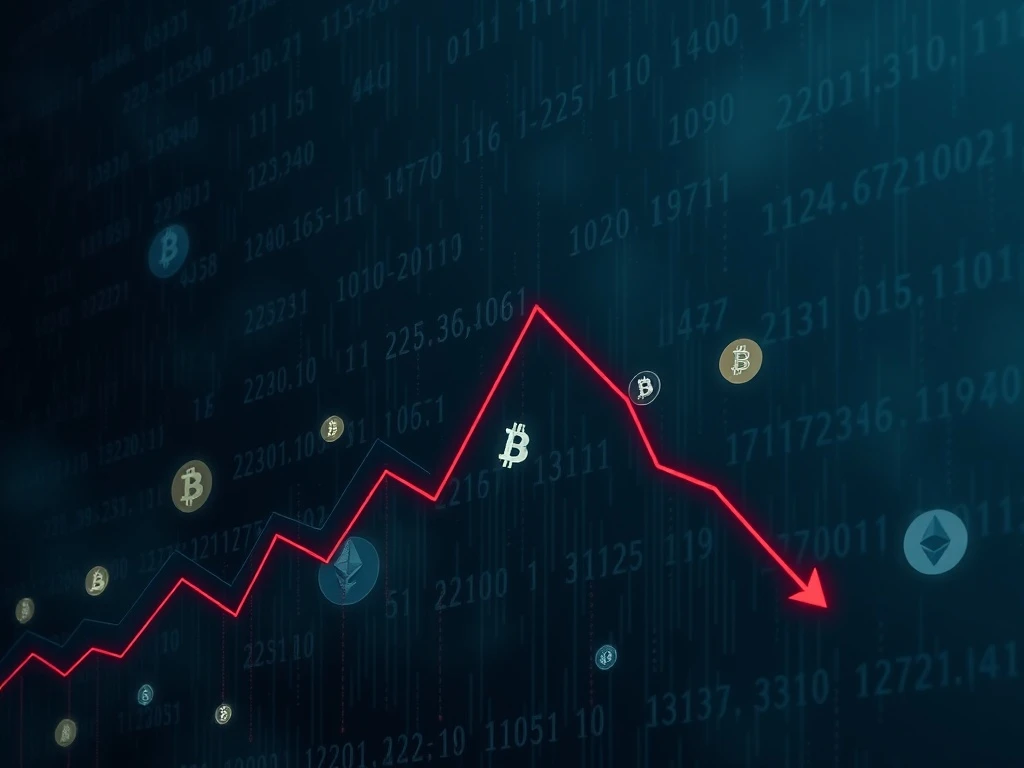
In a stark reminder of the extreme volatility inherent in cryptocurrency derivatives trading, prominent investor Machi Big Brother has suffered another severe financial setback. On-chain analytics reveal his account on the decentralized platform Hyperliquid has been partially liquidated, collapsing to a balance of just $92,000. This latest event, occurring in March 2025, compounds a staggering series of losses that now exceed $27.5 million, sending ripples through the decentralized finance (DeFi) community and highlighting the critical risks of leveraged trading.
Machi Big Brother’s Liquidation Event: A $3.19 Million Blow
Blockchain intelligence firm Lookonchain first reported the fresh liquidation data, providing a transparent, verifiable account of the losses. Consequently, the investor’s Hyperliquid account witnessed a direct depletion of $3.19 million in USDC stablecoin. This development reduces the account’s total value to approximately $92,000, a figure that represents a dramatic fall from its previous holdings. Furthermore, this incident is not an isolated one. It forms part of a distressing pattern for the trader, whose publicly visible on-chain activity shows cumulative losses surpassing $27.5 million across various platforms and episodes.
The mechanics behind such an event are central to understanding DeFi risk. Hyperliquid is a decentralized perpetual futures exchange where users can employ high leverage, often 10x, 20x, or more, to amplify potential gains. However, this leverage also magnifies losses. When the value of a trader’s collateral falls below a specific maintenance margin threshold, the protocol automatically executes a liquidation. This process sells the positions to repay the borrowed funds, often at unfavorable prices, which can trigger cascading market effects.
The Anatomy of a Crypto Liquidation
Liquidations on platforms like Hyperliquid follow a precise, automated sequence. First, a trader opens a leveraged position using collateral. Then, if the market moves against that position by a certain percentage, the liquidation engine activates. Finally, the protocol closes the position, frequently via a liquidation bot, and charges a penalty fee. This entire process happens in seconds, leaving little room for manual intervention. For context, the total cryptocurrency derivatives market sees billions in liquidations weekly during periods of high volatility, underscoring the systemic nature of this risk.
Context and History of Machi’s Trading Woes
Machi Big Brother, a pseudonymous figure known within crypto circles, has a documented history of high-stakes, high-risk trading. His previous losses have been cataloged by multiple on-chain analysts, creating a public timeline of financial erosion. This pattern provides a real-world case study in the psychological and strategic challenges of derivatives trading. Notably, the repetition of similar events suggests common factors, such as aggressive leverage use during unstable market conditions or a potential adherence to a specific, risky trading thesis.
Comparatively, the landscape of crypto investing features both spectacular successes and failures. While some traders achieve legendary status through timely bets, many others, including formerly large holders or “whales,” face significant drawdowns. The public nature of blockchain data uniquely exposes these journeys, offering unparalleled transparency. This transparency serves as a continuous learning tool for the broader market, illustrating the unforgiving mathematics of leverage.
- High Leverage: Amplifies both profits and losses exponentially.
- Market Volatility: Crypto’s rapid price swings quickly trigger margin calls.
- Automated Protocols: Decentralized systems execute liquidations without emotion or delay.
- Public Ledger: On-chain data makes losses and strategies visible to all.
Broader Implications for DeFi and Retail Traders
This high-profile event carries significant implications for the decentralized finance sector. Primarily, it underscores the non-custodial but high-risk nature of DeFi trading platforms. Users maintain control of their assets but also bear full responsibility for risk management. Additionally, such liquidations can create localized selling pressure on the affected assets, potentially impacting market prices for other traders. Therefore, platforms like Hyperliquid continuously refine their risk parameters and liquidation engines to maintain protocol solvency and user confidence.
For retail traders observing these events, the lessons are crucial. Experts consistently emphasize several core principles for navigating derivatives markets:
| Risk Management Principle | Practical Application |
|---|---|
| Use Conservative Leverage | Limit leverage to 5x or less to withstand volatility. |
| Employ Stop-Loss Orders | Set automatic exit points to pre-empt liquidation. |
| Diversify Collateral | Avoid over-concentration in a single volatile asset. |
| Continuous Monitoring | Actively track positions, especially in turbulent markets. |
Moreover, the role of on-chain analytics has become indispensable. Services like Lookonchain, Nansen, and Arkham provide real-time insights into whale movements, exchange flows, and smart contract activity. Consequently, the market can react to and learn from public transactions, creating a more informed, albeit speculative, environment.
The Evolving Regulatory Perspective
Incidents involving substantial personal losses also feed into ongoing global discussions about DeFi regulation. Policymakers are grappling with how to approach decentralized platforms that lack a central intermediary. The dominant question revolves around investor protection versus innovation freedom. While some jurisdictions may push for leverage caps or risk disclosures, the inherent global and permissionless nature of DeFi presents a unique challenge. This event exemplifies the real-world consequences that regulatory frameworks seek to mitigate.
Conclusion
The repeated liquidation of Machi Big Brother’s Hyperliquid account to $92,000 is a powerful, data-driven narrative about risk in cryptocurrency derivatives trading. It highlights the severe financial consequences of high leverage during adverse market moves. Furthermore, the public nature of the loss, verified by on-chain data, provides a transparent case study for the entire digital asset ecosystem. Ultimately, while decentralized finance offers unprecedented access and opportunity, the Machi Big Brother liquidation saga reinforces the timeless imperative of prudent risk management, position sizing, and a deep understanding of the tools at one’s disposal. The market will undoubtedly continue to watch, analyze, and learn from such public financial journeys.
FAQs
Q1: What is a liquidation in cryptocurrency trading?
A liquidation occurs when an exchange automatically closes a trader’s leveraged position because the collateral value has fallen below the required maintenance margin. This happens to prevent the account from going into negative balance and to protect the lending protocol.
Q2: How did on-chain analysts discover Machi Big Brother’s losses?
Analysts used blockchain explorers and specialized tools from firms like Lookonchain to track the public wallet addresses associated with Machi Big Brother. They monitored transactions to and from the Hyperliquid exchange smart contract, identifying the large USDC transfer out indicating a liquidated position.
Q3: What is Hyperliquid?
Hyperliquid is a decentralized perpetual futures exchange built on its own high-performance blockchain (L1). It allows users to trade perpetual contracts with leverage directly from their self-custody wallets, without a centralized intermediary holding funds.
Q4: Why do liquidations sometimes cause a cascade in the market?
Liquidations can create a cascade, or “liquidation cascade,” when large, forced sell orders from liquidations push the market price down further. This price drop can then trigger additional liquidations for other traders with similar positions, creating a feedback loop of selling pressure.
Q5: Can traders prevent liquidation?
Traders can prevent liquidation by actively managing their positions. Key methods include using lower leverage, adding more collateral to the position if the market moves against it (averaging down, which is risky), or manually closing the position before the liquidation price is hit. Setting stop-loss orders is a common preventative strategy.