Bitcoin Plummets: Market Enters Extreme Fear Zone as $BTC and $ETH Extend Losses
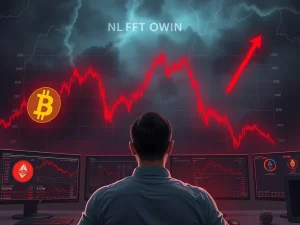
Global cryptocurrency markets extended their decline on Tuesday, December 9, 2025, as Bitcoin ($BTC) and Ethereum ($ETH) both posted significant losses, pushing the overall market deeper into correction territory amid extreme fear indicators. The Crypto Fear & Greed Index registered its lowest reading in eight months, signaling widespread investor caution across digital asset markets.
Bitcoin and Ethereum Lead Market Decline
Bitcoin experienced a 7.2% decline over the past 24 hours, falling to $58,400 according to CoinMarketCap data. Meanwhile, Ethereum dropped 8.5% to $3,150, marking its lowest level since early November. These leading cryptocurrencies have now erased most of their gains from the previous quarter, with Bitcoin down 22% from its recent high of $74,800 recorded in late October.
The broader cryptocurrency market capitalization declined by approximately $180 billion over the past week. Major altcoins followed the downward trend, with Solana (SOL) falling 9.3%, Cardano (ADA) dropping 8.7%, and Polkadot (DOT) decreasing by 10.1%. Market analysts attribute this correction to several converging factors:
- Regulatory uncertainty surrounding proposed legislation in multiple jurisdictions
- Institutional profit-taking after significant gains earlier this year
- Macroeconomic concerns including potential interest rate adjustments
- Technical breakdowns below key support levels for major cryptocurrencies
Crypto Fear Index Signals Extreme Caution
The Crypto Fear & Greed Index, a widely monitored sentiment indicator, plunged to 18 out of 100, firmly placing the market in “extreme fear” territory. This represents the most pessimistic reading since April 2025, when similar market conditions prevailed. The index incorporates multiple data points including volatility, market momentum, social media sentiment, and trading volume patterns.
Historical data reveals that extreme fear readings often precede potential buying opportunities for long-term investors. According to blockchain analytics firm Glassnode, previous instances of such extreme sentiment have frequently marked local bottoms in cryptocurrency markets. However, current market dynamics differ from previous cycles due to increased institutional participation and regulatory developments.
Expert Analysis of Current Market Conditions
Market analysts emphasize the importance of distinguishing between short-term volatility and long-term fundamentals. “While current price action appears concerning, we must remember that cryptocurrency markets have experienced similar corrections throughout their history,” notes Dr. Sarah Chen, Senior Blockchain Analyst at Digital Asset Research Group. “The underlying blockchain technology continues to demonstrate robust growth in adoption metrics, particularly in enterprise applications and payment systems.”
Technical analysts point to critical support levels that could determine the market’s next direction. For Bitcoin, the $56,000-$57,000 range represents a crucial zone where previous accumulation occurred. Ethereum faces important support around $3,000, a psychological level that has served as both resistance and support throughout 2025.
| Asset | Price | 24-Hour Change | Weekly Change |
|---|---|---|---|
| Bitcoin (BTC) | $58,400 | -7.2% | -12.4% |
| Ethereum (ETH) | $3,150 | -8.5% | -14.2% |
| Solana (SOL) | $142 | -9.3% | -16.8% |
| Cardano (ADA) | $0.48 | -8.7% | -15.3% |
DeFi Sector Experiences Significant Dips
The decentralized finance (DeFi) sector mirrored the broader market decline, with total value locked (TVL) across major protocols decreasing by approximately 15% over the past week. Leading DeFi platforms including Uniswap, Aave, and Compound all experienced reduced activity and declining token prices. Several factors contributed to this DeFi downturn:
- Reduced liquidity provision as market makers become more cautious
- Decreased borrowing activity across lending protocols
- Profit-taking from earlier DeFi token appreciations
- Concerns about regulatory approaches to decentralized protocols
Despite the current downturn, DeFi fundamentals remain strong according to industry observers. Daily active users across major protocols have increased year-over-year, and technological innovations continue to advance. The current market conditions may present opportunities for protocol developers to focus on infrastructure improvements rather than speculative features.
NFT Markets Show Surprising Resilience
In contrast to broader market trends, certain segments of the non-fungible token (NFT) market demonstrated relative stability and even growth during the current downturn. Blue-chip NFT collections including CryptoPunks and Bored Ape Yacht Club maintained their floor prices with only minor adjustments. Meanwhile, utility-focused NFT projects in gaming and membership sectors actually increased trading volume.
This divergence suggests evolving market dynamics where certain NFT categories have developed independent value propositions beyond pure speculation. Gaming NFTs, in particular, have demonstrated resilience due to their embedded utility within virtual economies. The current market environment appears to be separating projects with sustainable fundamentals from those relying primarily on market momentum.
Historical Context and Market Cycles
Current market conditions bear similarities to previous cryptocurrency cycles while exhibiting distinct characteristics of the 2025 landscape. Previous major corrections in 2018 and 2022 saw declines of 80%+ from all-time highs, whereas the current pullback remains more moderate at approximately 35% from peak levels. This relative stability may reflect increased market maturity and institutional participation.
The cryptocurrency market has experienced seven major corrections exceeding 30% since Bitcoin’s inception. Each previous instance eventually led to new all-time highs, though recovery timelines varied significantly. Market participants should consider this historical context when evaluating current conditions and potential future trajectories.
Conclusion
The cryptocurrency market continues to navigate challenging conditions as Bitcoin and Ethereum extend their losses amid extreme fear indicators. While current price action raises concerns among investors, historical patterns suggest that such periods often precede eventual recoveries. The divergence between declining DeFi sectors and resilient NFT markets highlights the increasing sophistication and segmentation within digital asset ecosystems. Market participants should monitor key support levels and fundamental adoption metrics rather than reacting solely to short-term price movements. As regulatory frameworks continue to develop and institutional adoption progresses, cryptocurrency markets will likely maintain their characteristic volatility while gradually maturing as an asset class.
FAQs
Q1: What is causing the current Bitcoin and Ethereum decline?
The decline results from multiple factors including regulatory uncertainty, institutional profit-taking, macroeconomic concerns, and technical breakdowns below key support levels. These elements have combined to create negative sentiment across cryptocurrency markets.
Q2: How long might this market downturn last?
Historical cryptocurrency corrections have varied from several weeks to multiple months. While precise timing remains unpredictable, previous cycles suggest that extreme fear periods often precede eventual market recoveries, though timing varies based on fundamental and technical factors.
Q3: Should investors be concerned about the extreme fear reading?
While extreme fear indicates significant market stress, experienced investors often view such readings as potential contrarian indicators. Historical data shows that buying during extreme fear periods has frequently produced favorable long-term returns, though careful risk management remains essential.
Q4: Why are NFT markets performing differently from DeFi during this downturn?
NFT markets, particularly utility-focused projects, have developed independent value propositions beyond pure speculation. Gaming NFTs and membership tokens derive value from their embedded utility, making them less dependent on broader market sentiment than purely financial DeFi protocols.
Q5: What key levels should traders watch for Bitcoin and Ethereum?
For Bitcoin, the $56,000-$57,000 range represents crucial support, while Ethereum faces important psychological support around $3,000. Breaking below these levels could signal further declines, while holding them might indicate potential stabilization and recovery.