Polymarket’s $11 Million Mystery: How Trader Kch123’s Shocking Profit Raises Critical Questions About Prediction Market Integrity
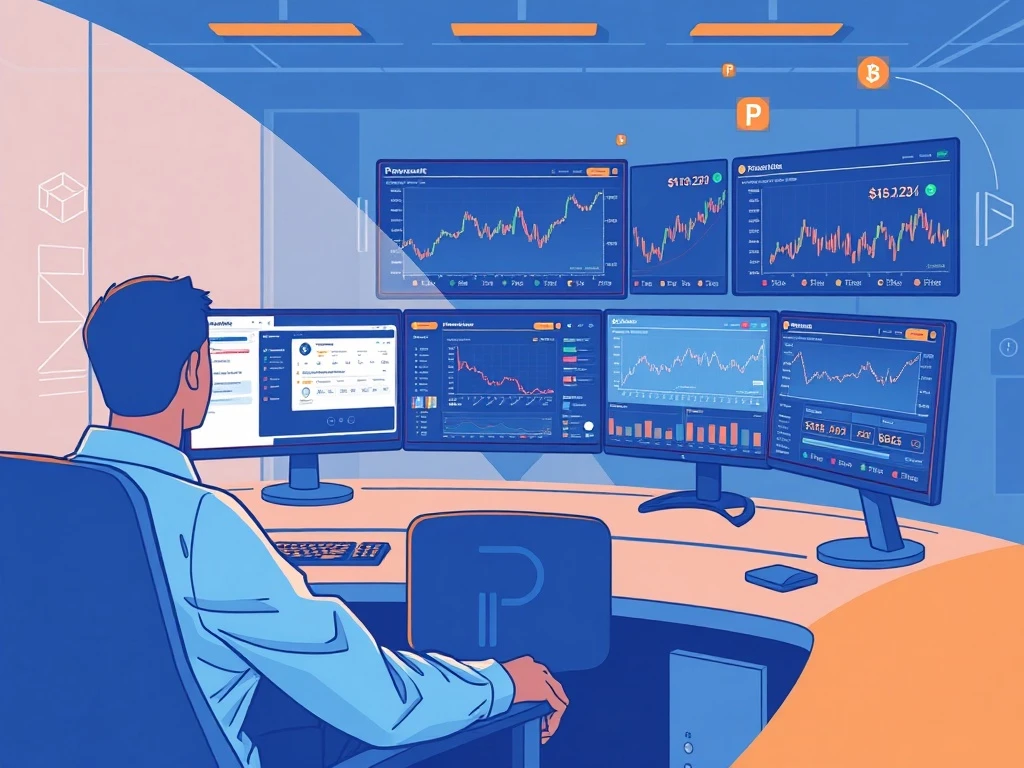
In a stunning development that has captivated the cryptocurrency community, an anonymous trader using the identifier “Kch123” recently secured over $11 million in profit through Polymarket prediction markets. This extraordinary financial gain, verified by on-chain analysts in late 2024, immediately sparked intense debate about information asymmetry, market transparency, and the evolving regulatory landscape for decentralized prediction platforms. The massive profit represents one of the largest single-trader successes in prediction market history, consequently drawing scrutiny from both enthusiasts and skeptics alike.
Polymarket’s $11 Million Profit: Analyzing the Kch123 Phenomenon
Blockchain analytics firm Arkham Intelligence first identified the remarkable trading activity in November 2024. The trader, operating under the pseudonym Kch123, executed a series of strategic positions across multiple prediction markets on the Polymarket platform. These markets covered diverse topics including political outcomes, cryptocurrency price movements, and significant world events. According to transaction data, Kch123 consistently placed substantial bets on outcomes that eventually materialized, thereby accumulating profits exceeding $11 million over several months.
Polymarket operates as a decentralized prediction market platform built on Polygon blockchain technology. The platform allows users to trade shares in the outcomes of real-world events using cryptocurrency. Each share typically costs between $0.01 and $1.00, representing the market’s assessment of an event’s probability. Traders who correctly predict outcomes can consequently realize substantial returns on their investments.
The Kch123 case demonstrates several important aspects of prediction markets:
- Market Efficiency: Prediction markets often aggregate dispersed information effectively
- Risk Management: Successful traders employ sophisticated position-sizing strategies
- Information Advantage: Some participants may possess superior knowledge or analysis capabilities
- Platform Growth: High-profile successes attract increased participation to prediction markets
Understanding Prediction Markets and Their Legal Framework
Prediction markets have existed in various forms for decades, with the Iowa Electronic Markets operating legally since 1988 as a research project. These markets function as information aggregation mechanisms where participants trade contracts based on event outcomes. The prices of these contracts reflect the collective wisdom of participants regarding event probabilities. Polymarket represents a decentralized evolution of this concept, leveraging blockchain technology to create global, permissionless markets.
The legal status of prediction markets varies significantly across jurisdictions. In the United States, the Commodity Futures Trading Commission (CFTC) generally regulates prediction markets as event contracts. The regulatory framework distinguishes between markets for hedging commercial risks and those for speculative purposes. Decentralized platforms like Polymarket operate in a complex regulatory gray area, consequently facing ongoing scrutiny from financial authorities worldwide.
Several key factors differentiate prediction markets from traditional gambling:
- Information-Based: Prices reflect aggregated knowledge rather than random chance
- Market Making: Liquidity providers facilitate continuous trading
- Research Value: Academic institutions use prediction markets for forecasting studies
- Financial Innovation: Blockchain enables new market structures and settlement mechanisms
Expert Perspectives on Market Integrity
Financial regulation experts emphasize the importance of market integrity in decentralized platforms. Dr. Elena Rodriguez, a blockchain governance researcher at Stanford University, explains: “Prediction markets face fundamental challenges regarding information symmetry. While traditional financial markets have established insider trading regulations, decentralized platforms operate across multiple jurisdictions with varying legal standards. The Kch123 case highlights the urgent need for transparent governance frameworks that balance innovation with investor protection.”
Market analysts have identified several possible explanations for Kch123’s success. Some suggest sophisticated data analysis capabilities, while others point to potential information advantages. Importantly, Polymarket’s decentralized nature makes traditional insider trading investigations particularly challenging. The platform’s smart contracts automatically execute settlements based on predetermined oracle inputs, thereby reducing human intervention in outcome determination.
The following table compares traditional and decentralized prediction markets:
| Aspect | Traditional Prediction Markets | Decentralized Prediction Markets |
|---|---|---|
| Regulation | Established financial authorities | Evolving regulatory frameworks |
| Settlement | Centralized administration | Smart contract automation |
| Access | Often restricted geographically | Global, permissionless access |
| Transparency | Limited public visibility | Full blockchain transparency |
| Information Flow | Concentrated among participants | Distributed across network |
The Technical Architecture of Polymarket’s Platform
Polymarket utilizes Polygon’s layer-2 scaling solution to provide fast, low-cost transactions for prediction market participants. The platform employs USDC stablecoin for all trading activities, thereby minimizing cryptocurrency price volatility exposure. Smart contracts automatically manage market creation, trading, and settlement processes. Oracle networks, including Chainlink and UMA, provide external data for outcome resolution.
The platform’s technical design incorporates several innovative features:
- Scalability: Polygon integration enables high transaction throughput
- Cost Efficiency: Low gas fees facilitate smaller position sizes
- Transparency: All transactions remain publicly verifiable on-chain
- Security: Smart contracts undergo regular security audits
- Interoperability: Cross-chain functionality expands market access
Market creation on Polymarket follows a community-driven process. Users propose markets covering various topics, then other participants provide liquidity through bonding curves. This decentralized approach enables diverse market coverage while maintaining sufficient liquidity for efficient price discovery. The platform’s governance token, POLY, facilitates community participation in platform development decisions.
Historical Context of Prediction Market Controversies
Prediction markets have experienced several notable controversies throughout their development. In 2003, the Pentagon proposed the Policy Analysis Market, which would have allowed trading on geopolitical events. Public outcry forced cancellation of the project amid ethical concerns. More recently, decentralized prediction platforms have faced regulatory challenges regarding their classification as gambling or financial markets.
The Kch123 case follows a pattern of high-profile prediction market successes. In 2020, several traders earned substantial profits by correctly predicting COVID-19 pandemic developments. Similarly, political prediction markets have consistently demonstrated forecasting accuracy exceeding traditional polling methods. These successes validate prediction markets’ information aggregation capabilities while simultaneously raising questions about potential misuse.
Academic research provides valuable insights into prediction market dynamics. Studies from the University of Chicago and MIT demonstrate that well-designed prediction markets often outperform expert opinion in forecasting accuracy. However, researchers also identify vulnerabilities including manipulation attempts and information cascades. The decentralized nature of platforms like Polymarket introduces additional complexity to these established research findings.
Regulatory Implications and Future Developments
The substantial profits generated by Kch123 have attracted regulatory attention globally. Financial authorities increasingly recognize the need for updated frameworks addressing decentralized prediction markets. The European Union’s Markets in Crypto-Assets (MiCA) regulation, scheduled for full implementation in 2025, provides comprehensive rules for crypto-asset service providers. However, prediction markets occupy a specific niche requiring additional regulatory clarification.
Industry participants advocate for balanced regulatory approaches that protect investors while fostering innovation. Several key considerations emerge from ongoing policy discussions:
- Jurisdictional Coordination: International cooperation prevents regulatory arbitrage
- Technology Neutrality: Regulations should focus on economic function rather than technological implementation
- Consumer Protection: Clear disclosure requirements enhance market integrity
- Innovation Space: Regulatory sandboxes enable controlled experimentation
- Market Surveillance: Decentralized monitoring tools detect suspicious activities
The Polymarket platform has implemented several voluntary compliance measures including know-your-customer procedures for large traders and transaction monitoring systems. These initiatives demonstrate the industry’s capacity for self-regulation while awaiting formal regulatory frameworks. Platform developers continue engaging with policymakers to establish appropriate standards for decentralized prediction markets.
Conclusion
The remarkable $11 million profit achieved by trader Kch123 on Polymarket prediction markets represents a significant milestone for decentralized finance. This case highlights both the potential and challenges of prediction markets operating on blockchain technology. While demonstrating sophisticated market participation and information aggregation capabilities, the incident simultaneously raises important questions about market integrity and regulatory frameworks. The evolving landscape of prediction markets continues to balance innovation with necessary safeguards, ultimately shaping the future of decentralized information markets. As regulatory clarity develops and technological solutions advance, prediction markets will likely play an increasingly important role in global information ecosystems.
FAQs
Q1: What exactly are prediction markets?
Prediction markets are exchange-traded platforms where participants buy and sell contracts based on the outcomes of future events. Prices reflect the aggregated knowledge and opinions of all market participants regarding event probabilities.
Q2: How does Polymarket differ from traditional betting platforms?
Polymarket operates as a decentralized platform using blockchain technology and smart contracts for automated settlement. Unlike traditional betting platforms, it offers global access, transparent transaction records, and uses cryptocurrency for all transactions.
Q3: Is insider trading possible on decentralized prediction markets?
While traditional insider trading regulations don’t directly apply to decentralized platforms, information advantages can still exist. The pseudonymous nature of blockchain trading makes enforcement challenging, though platforms implement various monitoring systems.
Q4: What regulatory frameworks govern prediction markets?
Regulation varies by jurisdiction, with some countries treating prediction markets as financial instruments and others as gambling. The European Union’s MiCA regulation and various national frameworks provide evolving guidance for these platforms.
Q5: How do prediction markets ensure accurate outcome resolution?
Platforms like Polymarket use decentralized oracle networks that aggregate information from multiple independent sources. These oracles provide verifiable data for smart contract settlement, minimizing manipulation risks.