Layer-2 Social Dominance: How Linea and Starknet’s Explosive Growth is Redefining Blockchain Success
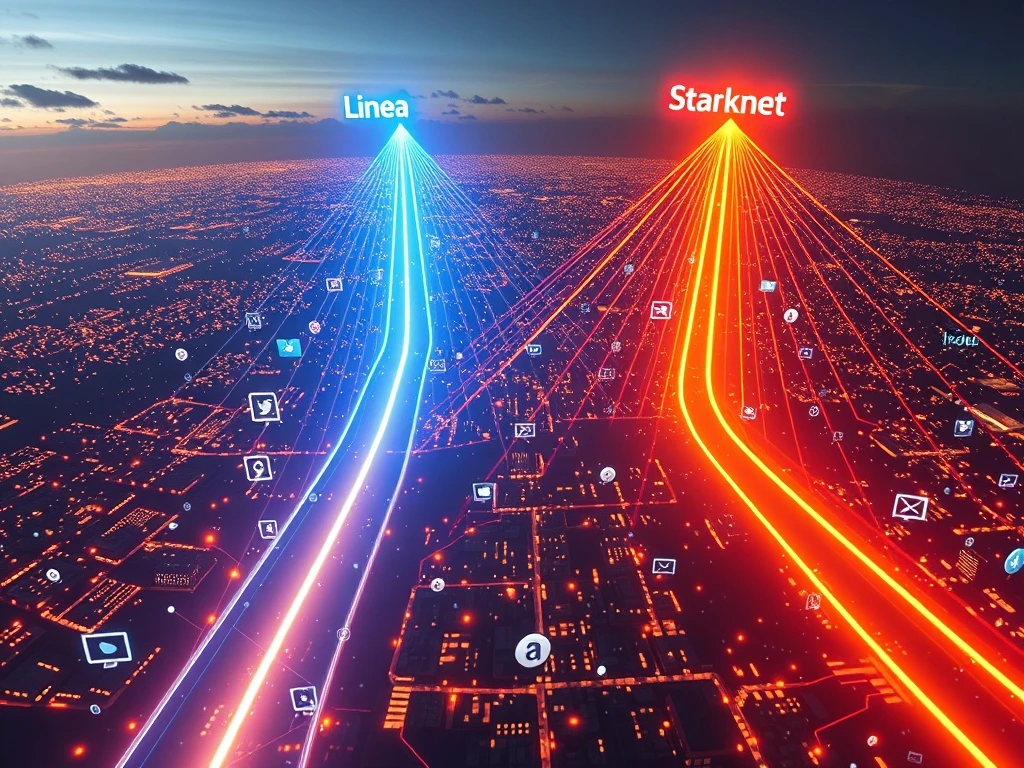
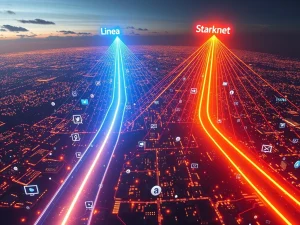
In the competitive arena of blockchain scaling, a new and powerful indicator has emerged to signal which networks are poised for sustained success. As of early 2025, the Layer-2 sector is witnessing a significant shift, where social engagement metrics are becoming as critical as transaction volume. Consequently, two platforms, Linea and Starknet, are decisively outpacing their rivals, not just in technical throughput but in the vibrant social activity that now foreshadows long-term network growth and developer adoption.
Understanding Layer-2 Social Dominance
The concept of ‘social dominance’ in blockchain refers to the measurable buzz, discussion, and collaborative engagement surrounding a network across various platforms. These platforms include developer forums like GitHub and Stack Exchange, social media channels like X (formerly Twitter) and Farcaster, and dedicated community hubs like Discord and Telegram. Importantly, this metric goes beyond mere popularity. It measures the quality and volume of conversations about development, partnerships, tutorials, and ecosystem projects. For instance, a surge in technical discourse about a specific zero-knowledge proof implementation on Starknet’s forum holds more predictive weight than general price speculation. Therefore, analysts now track these signals to gauge genuine, organic growth.
Linea and Starknet: A Data-Driven Lead
Recent aggregated data from multiple blockchain analytics and social listening firms reveals a clear trend. Linea, ConsenSys’s zkEVM rollup, and Starknet, powered by StarkWare’s STARK proofs, are consistently ranking highest in weekly social engagement growth. This analysis considers several key performance indicators (KPIs):
- Developer Activity: Commitments to core repositories and ecosystem projects.
- Technical Discourse: Threads solving implementation problems or debating upgrades.
- Ecosystem Announcements: Frequency and engagement with new dApp launches.
- Educational Content: Creation and sharing of tutorials and explainer threads.
For example, the period following Linea’s Voyage event campaign and Starknet’s recent quantum leap upgrade saw corresponding spikes of over 200% in related social mentions. This correlation between major network milestones and social volume is now a standard pattern for leading L2s.
The Expert Perspective on Social Metrics
Industry analysts emphasize that social engagement is a leading indicator, not a lagging one. ‘Transaction counts can be artificially inflated, but sustained, high-quality social discussion is far harder to manufacture,’ notes Dr. Anya Petrova, a network dynamics researcher at the Cambridge Centre for Alternative Finance. ‘What we see with Linea and Starknet is a bottom-up, community-driven growth model. Their social dominance suggests developers are not just building, but actively discussing their work, which attracts more builders. It creates a powerful network effect that directly translates to a more robust and innovative ecosystem.’ This view is supported by on-chain data showing that networks with high social engagement consistently onboard new, unique contract deployers at a faster rate.
The Impact of Ecosystem Activity Surges
The social dominance of Linea and Starknet is both a cause and effect of surging ecosystem activity. A vibrant social layer attracts developers, which leads to more decentralized applications (dApps). Subsequently, these new dApps generate their own social buzz and user activity, creating a positive feedback loop. Key areas of growth observed in these leading ecosystems include:
| Ecosystem | Primary Growth Sector (Q1 2025) | Notable Metric |
|---|---|---|
| Linea | Decentralized Social (DeSo) & Gaming | 30+ new DeSo protocol deployments |
| Starknet | DeFi & Autonomous Worlds | TVL increase of 150% in 90 days |
This structured growth demonstrates specialization. Linea’s integration with the broader ConsenSys product suite (like MetaMask) makes it a natural home for social and gaming experiments. Conversely, Starknet’s focus on scalable computation positions it for complex DeFi and persistent world applications. Their social channels reflect these specializations, with highly focused, technical conversations that attract niche experts.
Why Social Engagement Predicts Long-Term Growth
The shift towards valuing social metrics stems from lessons learned in earlier blockchain cycles. Networks that grew primarily through financial speculation often collapsed when market sentiment shifted. In contrast, networks with strong, engaged communities of builders demonstrated greater resilience and continuous innovation. Social engagement provides several tangible benefits:
- Faster Iteration: Public developer discussion accelerates problem-solving.
- Improved Documentation: Active communities create better learning resources.
- Stronger Governance: Informed discussion leads to more effective decentralized decision-making.
- Enhanced Security: More eyes on code and more public debate about potential risks.
Therefore, the current social dominance of Linea and Starknet is not a fleeting trend. It is a fundamental reflection of their health and potential longevity. Investors and developers are increasingly using these non-financial metrics to make allocation and building decisions.
Conclusion
The blockchain scaling race has entered a new, more sophisticated phase. While transaction speed and cost remain fundamental, the battle for developer mindshare and community engagement has become paramount. Currently, Linea and Starknet are leading the pack in Layer-2 social dominance, turning their networks into hubs of conversation and collaboration. This surge in genuine ecosystem activity, measured through rigorous social engagement metrics, provides the strongest evidence yet for their capacity for sustained, long-term network growth. As the industry evolves, a network’s social footprint may well become its most valuable asset.
FAQs
Q1: What exactly are ‘social engagement metrics’ for a Layer-2 blockchain?
Social engagement metrics quantitatively measure the discussion and activity around a blockchain network outside of on-chain transactions. This includes data from developer forums (GitHub commits, issue discussions), social media platforms (volume, sentiment, and reach of posts), and community channels (active participants, quality of technical help).
Q2: Why are Linea and Starknet specifically good at generating social engagement?
Both have fostered strong, developer-centric cultures. Linea benefits from deep integration with the Ethereum/ConsenSys ecosystem, providing a familiar toolset. Starknet has cultivated a reputation for cutting-edge zero-knowledge technology, attracting researchers and developers interested in its unique Cairo programming language.
Q3: Can high social engagement exist without real technical progress?
While possible in the short term, it is unsustainable. The metrics that matter most are tied to technical discourse and developer activity. Sustained, high-quality social engagement is generally correlated with genuine technical milestones, ecosystem expansion, and educational content creation.
Q4: How does social dominance translate to a better user experience?
Indirectly but powerfully. High social engagement leads to more developers building more applications, giving end-users more choice. It also leads to better documentation, faster bug fixes, and more community support, all of which improve the overall experience of interacting with the network.
Q5: Are other Layer-2 networks like Arbitrum and Optimism falling behind?
Not necessarily falling behind, but the competitive landscape is segmenting. Established networks like Arbitrum and Optimism have massive total value locked (TVL) and user bases. The trend shows that Linea and Starknet are currently experiencing higher growth rates in social engagement and niche ecosystem development, indicating where the next wave of innovation is most active.