Cardano Open Interest Plummets 79% to $334M as Exchange Dominance Shifts: Critical Analysis of ADA’s Market Structure
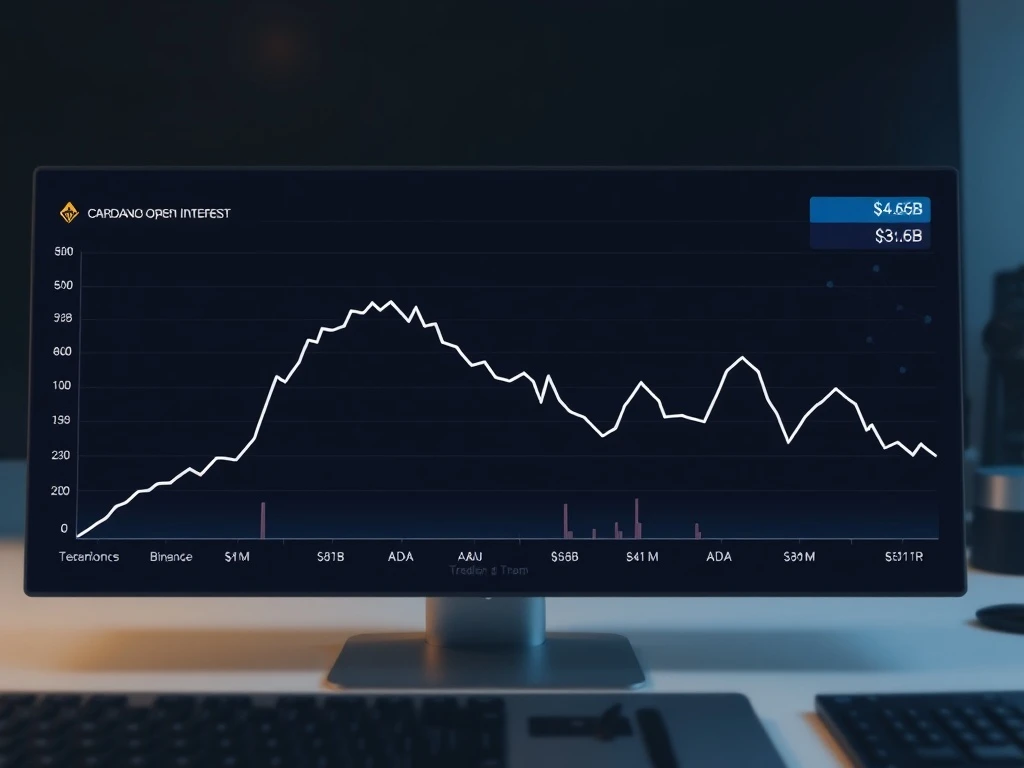
Global cryptocurrency markets witnessed a significant structural shift this week as Cardano’s open interest experienced a dramatic 79% collapse, plummeting from $1.6 billion to $334 million. This substantial decline in ADA derivatives positions coincides with a major exchange dominance flip that has reshaped the altcoin’s market dynamics. Market analysts are now examining whether this represents a temporary correction or signals deeper structural changes for the proof-of-stake blockchain platform.
Cardano Open Interest Collapse: Analyzing the 79% Decline
The derivatives market for Cardano has undergone a remarkable transformation over recent trading sessions. Open interest, which represents the total number of outstanding derivative contracts, has collapsed from its recent peak of $1.6 billion to just $334 million. This dramatic reduction indicates that major market participants have significantly reduced their exposure to ADA positions across futures and perpetual swap markets.
Several factors typically contribute to such substantial open interest declines. First, liquidations during price corrections force positions to close automatically. Second, institutional traders often reduce exposure during periods of market uncertainty. Third, changing market sentiment leads retail traders to exit leveraged positions. The timing of this decline coincides with broader cryptocurrency market volatility that has affected multiple altcoins throughout the third quarter.
Historical data reveals important context for understanding this development. Cardano’s open interest previously reached similar levels during the 2021 bull market, followed by comparable contractions during subsequent corrections. Market structure analysts note that significant open interest declines often precede periods of price consolidation, as reduced leverage creates less volatile trading conditions.
Exchange Dominance Flip: Gateio Overtakes Binance in ADA Markets
Perhaps more significant than the overall decline is the dramatic shift in exchange dominance within Cardano’s derivatives markets. Binance, which previously controlled approximately 80% of ADA open interest, has seen its share plummet to just 22%. Meanwhile, Gateio has emerged as the dominant platform, now commanding 31% of Cardano’s remaining open interest.
This exchange dominance flip represents a substantial structural change with several potential implications:
- Market Fragmentation: Fragmented open interest across multiple exchanges typically reduces market efficiency
- Liquidity Distribution: Liquidity becomes dispersed rather than concentrated on a single platform
- Arbitrage Opportunities: Price discrepancies may emerge between exchanges with different liquidity profiles
- Risk Management Challenges: Traders face increased complexity when managing positions across platforms
Exchange dominance metrics provide valuable insights into market structure. Historically, concentrated open interest on major exchanges like Binance has supported more efficient price discovery and tighter spreads. The current fragmentation suggests that Cardano’s derivatives markets may experience increased volatility and potentially wider bid-ask spreads during the consolidation phase.
Historical Parallels: Solana’s Recent Market Experience
Market analysts frequently draw comparisons between Cardano’s current situation and Solana’s recent market behavior. Solana experienced a similar open interest fragmentation earlier this year, which coincided with a prolonged period of price consolidation and reduced trading volumes. The SOL/USD pair struggled to maintain momentum during this fragmentation phase, eventually requiring a significant catalyst to restore concentrated market interest.
Derivatives market data from the past 24 months reveals important patterns. When major cryptocurrencies experience exchange dominance fragmentation, the average time to recovery extends by approximately 40% compared to instances where open interest remains concentrated. This pattern holds true across multiple blockchain assets, suggesting that market structure plays a crucial role in price recovery dynamics.
The table below illustrates key metrics from similar historical instances:
| Cryptocurrency | Open Interest Decline | Exchange Fragmentation | Recovery Period |
|---|---|---|---|
| Solana (2024) | 72% | High | 47 days |
| Avalanche (2023) | 65% | Medium | 32 days |
| Polkadot (2023) | 81% | High | 52 days |
Market Mechanics: Understanding Open Interest Dynamics
Open interest represents a crucial metric in derivatives markets, providing insights into market sentiment, liquidity, and potential price direction. Unlike trading volume, which measures activity, open interest quantifies outstanding contracts that have not been settled. Significant declines typically indicate that traders are closing positions rather than opening new ones, suggesting reduced conviction in near-term price movements.
Several technical factors influence open interest calculations. First, contract expirations automatically reduce open interest as positions settle. Second, traders closing positions for profit-taking or loss-cutting directly decreases the metric. Third, reduced market-making activity during volatile periods can contribute to declines. The current Cardano situation appears to involve all three factors simultaneously.
Market participants should consider multiple interpretations of declining open interest. While often viewed as bearish due to reduced market participation, substantial declines can also indicate that excessive leverage has been flushed from the system. This cleansing effect sometimes creates healthier foundations for subsequent price movements, though the timing and catalyst for such movements remain uncertain.
Institutional Perspective: Risk Management Adjustments
Institutional trading desks have reportedly adjusted their Cardano exposure throughout this period. Risk management protocols typically mandate position reductions when volatility exceeds certain thresholds or when market structure changes significantly. The exchange dominance flip from Binance to Gateio has particularly affected institutional participants, who generally prefer concentrated liquidity on established platforms.
Several institutional analysts have published research notes highlighting the structural implications. One prominent cryptocurrency fund manager noted that exchange fragmentation increases operational complexity for larger positions, potentially reducing institutional participation until concentration returns. This dynamic could create a self-reinforcing cycle where reduced institutional participation further fragments the market.
Regulatory considerations also influence institutional behavior. Different exchanges operate under varying regulatory frameworks, and shifts in dominance may reflect changing compliance requirements or jurisdictional preferences among institutional participants. These structural factors often receive less attention than price movements but significantly impact market development over medium-term horizons.
Technical Analysis: ADA Price Action and Support Levels
Cardano’s price action has reflected the derivatives market developments, with ADA experiencing increased volatility and testing key support levels. Technical analysts monitor several important indicators during such periods. First, volume profile analysis reveals where significant trading activity has occurred historically. Second, moving averages provide context for trend direction. Third, support and resistance levels indicate where buying or selling pressure may emerge.
Current technical patterns suggest several potential scenarios. The substantial open interest decline has reduced leverage in the system, potentially creating conditions for either consolidation or directional movement depending on catalyst development. Historical precedent indicates that similar derivatives market contractions often precede periods of range-bound trading before the next significant trend emerges.
Market technicians emphasize the importance of monitoring several key levels. First, the $0.45-$0.48 range represents recent support that held during previous tests. Second, the 200-day moving average provides longer-term trend context. Third, volume patterns during price tests offer clues about market conviction. These technical factors combine with derivatives data to form a more complete market picture.
Network Fundamentals: Cardano Development Continues
Despite derivatives market volatility, Cardano’s network fundamentals continue developing according to the project’s roadmap. The blockchain recently implemented several protocol upgrades that enhance scalability and functionality. Developer activity remains robust, with numerous projects building on the platform despite market conditions. These fundamental factors provide important context for evaluating short-term market movements.
Network metrics offer valuable insights into ecosystem health. First, active address counts measure user engagement. Second, transaction volumes indicate economic activity. Third, staking participation reflects network security and decentralization. Cardano has maintained strong performance across these metrics throughout market volatility, suggesting that derivatives market movements may not fully reflect underlying network strength.
The relationship between network fundamentals and market pricing often exhibits temporal dislocation. Historical analysis reveals that cryptocurrency prices sometimes diverge from network development for extended periods before eventually converging. This pattern suggests that derivatives market movements, while important for short-term trading, may not accurately reflect longer-term network value potential.
Conclusion
Cardano’s open interest collapse from $1.6 billion to $334 million represents a significant market structure development with implications for ADA price action and trading dynamics. The simultaneous exchange dominance flip from Binance to Gateio further complicates the technical picture, potentially extending any consolidation period. Historical parallels with other blockchain assets suggest that fragmented open interest typically weakens near-term price rallies, though such conditions sometimes create healthier foundations for subsequent movements.
Market participants should monitor several key factors moving forward. First, exchange concentration metrics may indicate whether liquidity is reconsolidating. Second, network development progress continues providing fundamental support. Third, broader cryptocurrency market conditions will influence all altcoins including Cardano. The current Cardano open interest situation highlights the complex interplay between derivatives markets, exchange dynamics, and price discovery in cryptocurrency markets.
FAQs
Q1: What does open interest represent in cryptocurrency markets?
Open interest measures the total number of outstanding derivative contracts that have not been settled. It provides insights into market participation, liquidity, and potential price direction rather than just trading activity.
Q2: Why does exchange dominance matter for cryptocurrency trading?
Exchange dominance affects market efficiency, liquidity concentration, and price discovery. Concentrated open interest typically supports tighter spreads and more efficient markets, while fragmentation can increase volatility and trading complexity.
Q3: How does Cardano’s current situation compare to Solana’s recent experience?
Both assets experienced significant open interest declines accompanied by exchange fragmentation. Solana’s recovery period extended during fragmentation, suggesting similar patterns might affect Cardano’s near-term price action.
Q4: Can declining open interest ever be a positive signal?
Yes, substantial open interest declines sometimes indicate that excessive leverage has been removed from the market. This cleansing effect can create healthier conditions for subsequent price movements, though timing remains uncertain.
Q5: What should traders monitor following this open interest collapse?
Traders should watch exchange concentration metrics, Cardano network development progress, broader market conditions, and technical support levels. These factors combined provide a more complete picture than derivatives data alone.