Bitso Cross-Border Payments Revolutionized by Ripple’s RLUSD and XRP for Lightning-Fast Settlements
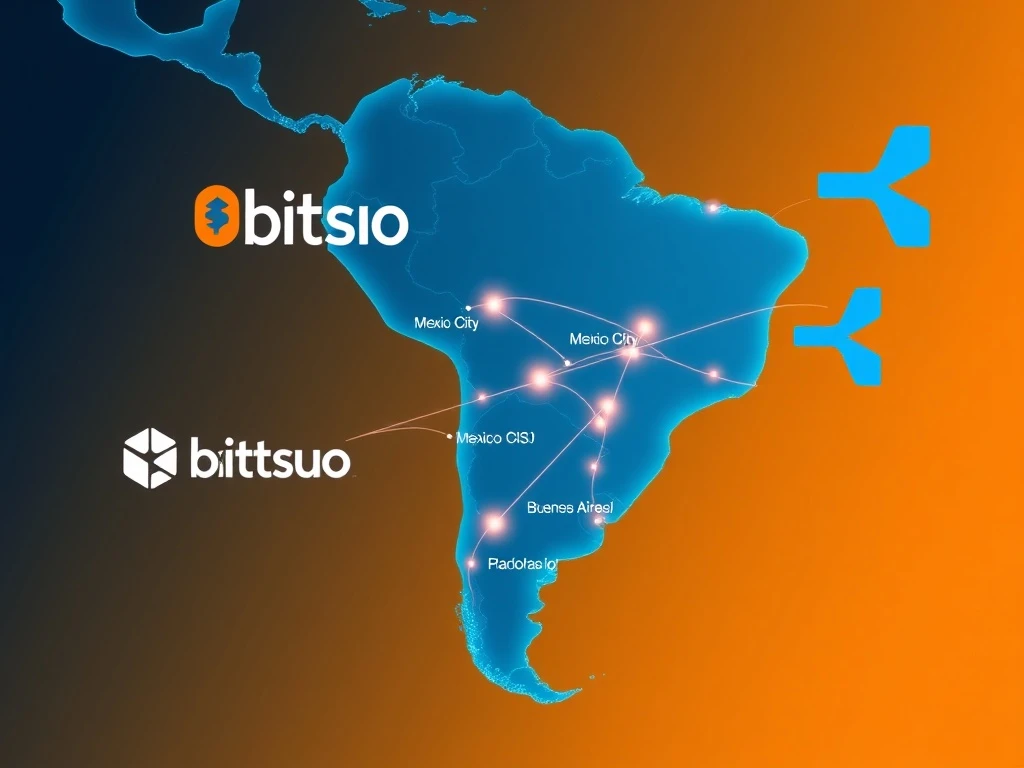
In a significant move for Latin American finance, cryptocurrency exchange Bitso has integrated Ripple Payments with the XRP ledger and the new RLUSD stablecoin, fundamentally transforming how money moves across borders. This strategic partnership, announced in early 2025, directly tackles the long-standing inefficiencies of traditional remittance corridors, promising near-instant settlement and dramatically reduced costs for millions of users. Consequently, this development marks a pivotal step toward financial inclusion and modernized economic infrastructure in the region.
Bitso Cross-Border Payments: A New Era for Latin American Finance
Bitso, one of Latin America’s largest regulated digital asset platforms, is now leveraging Ripple’s enterprise-grade technology stack. Specifically, the integration utilizes Ripple Payments, which acts as a bridge between different currencies and payment systems. Moreover, the system employs the XRP Ledger for its consensus mechanism and settlement speed, alongside Ripple’s newly launched RLUSD stablecoin. This stablecoin provides the crucial price stability necessary for everyday business and personal transactions. Therefore, the combination creates a powerful trifecta designed for efficiency.
Traditionally, cross-border payments in the region have been plagued by high fees, slow processing times—often taking 3-5 business days—and opaque pricing structures. For instance, a worker sending money from the United States to Mexico could lose a significant portion of their funds to intermediary banks and service charges. However, Bitso’s new solution aims to settle transactions in a matter of seconds, not days, while providing clear, upfront cost structures. This shift has the potential to save the Latin American diaspora billions annually.
The Technical Engine: How Ripple Payments, XRP, and RLUSD Work Together
The process begins when a user initiates a cross-border transfer on the Bitso platform. Instead of routing the payment through the cumbersome correspondent banking network, Bitso converts the sender’s funds into digital assets. Ripple’s technology then facilitates the transaction using the XRP Ledger as a neutral, decentralized settlement layer. Importantly, XRP’s role is often as a bridge currency, providing the liquidity for instantaneous cross-currency exchanges.
For transactions requiring stability, the RLUSD stablecoin enters the equation. Pegged 1:1 to the US dollar and built on the XRP Ledger, RLUSD allows users to send value without exposure to the volatility typically associated with cryptocurrencies like XRP. This makes it ideal for payroll, supplier payments, and remittances where the exact amount must be guaranteed. The entire flow is managed through Ripple Payments’ application programming interfaces (APIs), which Bitso integrates directly into its user-facing platform.
Expert Analysis on Market Impact and Adoption
Financial technology analysts highlight the strategic timing of this rollout. The Latin American cross-border payment market is experiencing rapid growth, driven by digitalization and a large unbanked population seeking efficient alternatives. “Bitso’s move is not just a product launch; it’s a strategic positioning at the intersection of two high-growth trends: cryptocurrency adoption and fintech disruption in emerging markets,” notes Maria Fernandez, a lead analyst at Fintech Latin America. “By utilizing a regulated stablecoin like RLUSD, they directly address the trust and regulatory concerns that have historically slowed enterprise crypto adoption.”
Furthermore, data from regional central banks shows a consistent increase in digital remittance inflows. This partnership directly targets that demand. The table below contrasts the traditional model with Bitso’s new Ripple-powered solution:
| Feature | Traditional Bank Transfer | Bitso with Ripple (XRP/RLUSD) |
|---|---|---|
| Settlement Time | 3-5 business days | 3-5 seconds |
| Average Cost | 5-10% of transaction value | Significantly lower, often under 1% |
| Transparency | Hidden fees and poor exchange rates | Real-time quotes, clear fee structure |
| Accessibility | Requires bank account, limited hours | 24/7 access via smartphone |
Real-World Context and Competitive Landscape
This initiative places Bitso in direct competition with both traditional money transfer operators (MTOs) like Western Union and newer fintech players such as Wise. However, Bitso’s crypto-native approach offers a distinct technological advantage in settlement speed. Meanwhile, other cryptocurrency exchanges in the region are also exploring similar blockchain-based payment solutions, indicating a broader industry trend.
The success of this service will depend on several key factors:
- Regulatory Clarity: Operating across multiple Latin American jurisdictions requires navigating diverse financial regulations.
- User Education: Overcoming skepticism and teaching users about the benefits of crypto-powered payments.
- Network Liquidity: Ensuring sufficient depth of XRP and RLUSD markets to handle large transaction volumes without price slippage.
- Partnership Expansion: Connecting with more banks and payment processors on both the sending and receiving ends.
Bitso has already established a strong regulatory footing in key markets like Mexico, Brazil, and Colombia, which provides a solid foundation for this expansion. The company reports that initial pilot programs with corporate clients have shown reductions in payment processing costs by over 60% compared to legacy methods.
Conclusion
The integration of Ripple Payments with RLUSD and XRP by Bitso represents a transformative leap for cross-border payments in Latin America. By harnessing blockchain technology, this partnership delivers tangible benefits: unprecedented speed, lower costs, and enhanced transparency. Ultimately, this evolution moves the region’s financial infrastructure toward a more inclusive and efficient future. As adoption grows, the Bitso cross-border payments model could set a new global standard for how value is transferred across borders, proving the practical utility of digital assets in solving real-world economic challenges.
FAQs
Q1: What is RLUSD and how is it different from other stablecoins?
RLUSD is a US dollar-pegged stablecoin issued by Ripple and built directly on the XRP Ledger. Unlike some stablecoins that run on Ethereum, it is designed specifically for fast, low-cost payments and settlements on Ripple’s native network, offering regulatory clarity and enterprise-grade features.
Q2: Do users need to understand cryptocurrency to use Bitso’s new payment service?
Not necessarily. Bitso designs its user interface to abstract away the technical complexity. A user might simply select a destination country and currency, while the platform automatically handles the conversion to and from XRP or RLUSD in the background, providing a familiar remittance experience.
Q3: How does using XRP make transactions faster and cheaper?
The XRP Ledger settles transactions in 3-5 seconds through its unique consensus protocol. This eliminates the need for multiple intermediary banks that hold funds during the multi-day process of traditional transfers, thereby reducing both time and the associated correspondent banking fees.
Q4: Is this service available for all Latin American countries?
Initially, Bitso is rolling out the service in its core markets where it has strong regulatory licenses and operational presence, such as Mexico, Brazil, and Argentina. The company plans to expand to other Latin American nations based on demand and regulatory progress.
Q5: What are the main risks associated with using this new payment system?
The primary risks are typical of digital asset services: potential technological glitches, the regulatory risk of operating in evolving legal landscapes, and, if not using RLUSD, exposure to the market volatility of XRP. Bitso mitigates these through robust technology, proactive regulatory engagement, and by offering the stablecoin option for risk-averse users.