BlockDAG Presale Final Entry: Analyzing the $0.00025 Opportunity Before the February 11 TGE
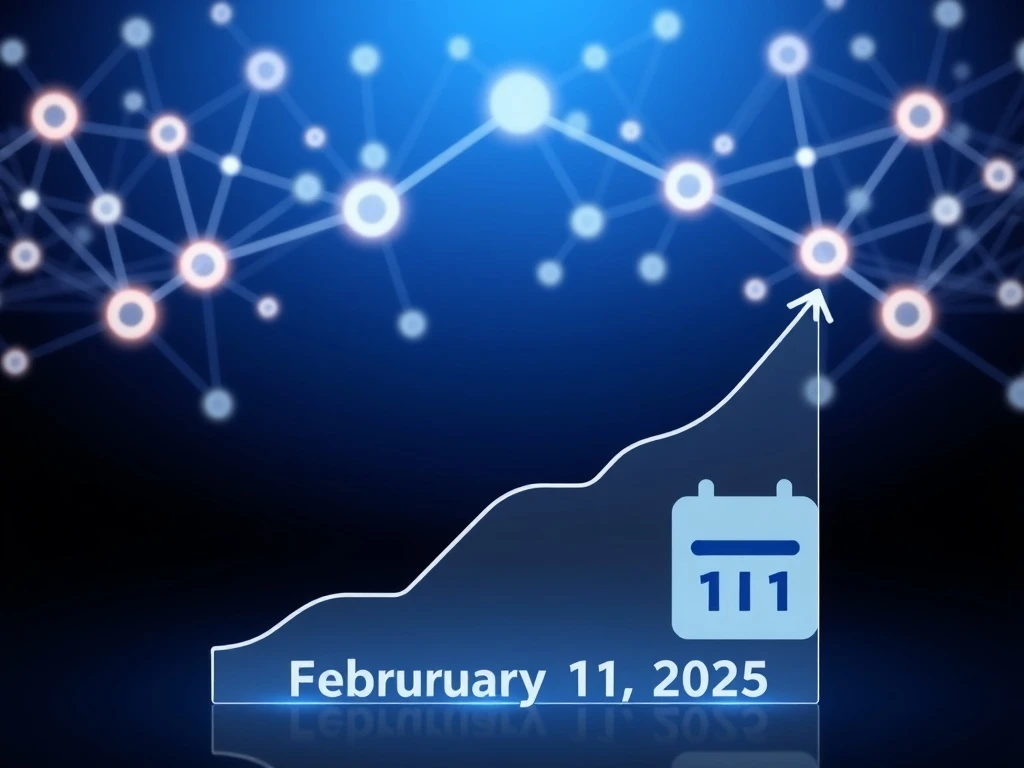
As the cryptocurrency market continues to evolve in early 2025, the BlockDAG network has announced the final entry price for its presale phase. The project has set a price of $0.00025 per BDAG token ahead of its scheduled Token Generation Event (TGE) on February 11. This development has generated significant discussion within investment and blockchain technology circles regarding its potential implications and inherent risks.
Understanding the BlockDAG Presale Mechanism
A cryptocurrency presale represents an early funding round for a blockchain project. Developers typically offer native tokens to selected investors before a public launch. The BlockDAG presale follows this established model, aiming to secure capital for network development and initial ecosystem growth. Presales allow projects to bootstrap operations while providing early supporters with potential token allocations.
Consequently, the final price point of $0.00025 establishes the valuation for this concluding round. Market analysts compare this structure to historical presales for networks like Ethereum, Solana, and Avalanche. Each of those projects conducted early sales at different price points relative to their eventual market performance. However, past results never guarantee future outcomes in the highly volatile digital asset space.
The Token Generation Event and Market Dynamics
The scheduled Token Generation Event on February 11, 2025, marks a critical technical and financial milestone. During a TGE, the project’s native tokens are officially created and distributed on the blockchain. This event transitions the asset from a speculative presale instrument to a tradable cryptocurrency on supported exchanges. The process involves smart contract deployment and liquidity provisioning.
Market entry following a TGE introduces the asset to real-time supply and demand forces. Price discovery begins as trading commences on decentralized and centralized platforms. Historical data from CoinMarketCap and CryptoCompare shows that TGE outcomes vary dramatically. Some tokens experience immediate appreciation, while others face significant selling pressure from early participants seeking to realize gains.
Expert Perspectives on High-Potential Returns
Financial technology researchers emphasize the mathematical framework behind the projected returns. A rise from $0.00025 to $1 represents a 400,000% increase (a 4,000x multiple). An increase to $5 represents a 2,000,000% gain (a 20,000x multiple). These figures originate from simple percentage calculations based on the entry price. However, industry veterans from institutions like the Digital Asset Research Institute consistently warn investors.
They note that such projections represent extreme best-case scenarios, not probable outcomes. The total cryptocurrency market capitalization would need to expand significantly to support valuations implying multi-trillion dollar network values. Furthermore, successful projects require sustained technological development, community adoption, and real-world utility beyond speculative trading.
Comparative Analysis of Historical Crypto Presales
Providing context, the table below outlines notable historical presale prices and subsequent all-time highs for reference. This data illustrates the spectrum of possible outcomes.
| Project | Approx. Presale Price | Subsequent All-Time High | Approx. Return Multiple |
|---|---|---|---|
| Ethereum (ETH) | $0.31 (2014) | $4,878 (2021) | ~15,735x |
| Binance Coin (BNB) | $0.15 (2017) | $690 (2021) | ~4,600x |
| Solana (SOL) | $0.22 (2020) | $260 (2021) | ~1,180x |
| Avalanche (AVAX) | $0.50 (2020) | $147 (2021) | ~294x |
| Many Unsuccessful Projects | Various | Below Presale Price | 0x (Loss of Capital) |
This comparison highlights the extreme variance in results. While a few projects generated life-changing returns, many others failed completely. The success factors often include:
- Technological Innovation: Solving a genuine scalability or usability problem.
- Team Execution: Delivering on roadmap promises and building developer tools.
- Market Timing: Launching during a period of bullish sentiment and capital inflow.
- Ecosystem Growth: Fostering a robust community of builders and users.
Critical Risk Assessment for Potential Investors
Engaging with any cryptocurrency presale carries substantial risk. Regulatory bodies like the U.S. Securities and Exchange Commission (SEC) have increased scrutiny on token sales. They often evaluate whether such offerings constitute unregistered securities. Potential regulatory action could impact token distribution, trading, or project operations. Investors must consider jurisdiction-specific rules.
Furthermore, the technical risks are significant. The BlockDAG architecture itself, a directed acyclic graph, presents different challenges and advantages compared to traditional blockchains like Bitcoin. While promising higher throughput, DAG-based networks can face issues with security, consensus finality, and smart contract compatibility. Successful implementation is non-trivial and requires extensive testing.
Other paramount risks include:
- Liquidity Risk: Tokens may be difficult to sell immediately after the TGE if exchange listings are limited.
- Project Failure Risk: The development team may fail to deliver the promised technology or roadmap.
- Market Risk: Broader crypto bear markets can depress prices regardless of project fundamentals.
- Smart Contract Risk: Vulnerabilities in the token’s code could lead to exploits and fund loss.
The Importance of the Underlying Technology
Beyond price speculation, the long-term value of any cryptocurrency network hinges on its technological utility. A directed acyclic graph structure aims to process transactions in parallel, unlike linear blockchains. This design could potentially offer greater scalability and lower fees. Academic papers from conferences like IEEE Blockchain explore these trade-offs in detail.
Therefore, informed evaluation should focus on the project’s technical whitepaper, GitHub repository activity, and the team’s proven expertise. The sustainable value driver for BDAG tokens would be their required use for network fees, staking, or governance within a thriving ecosystem. Speculation on price alone, without utility, represents a fundamentally riskier proposition.
Conclusion
The final BlockDAG presale entry at $0.00025 presents a defined scenario for early participants ahead of the February 11 Token Generation Event. While the mathematical potential for high returns exists based on historical crypto precedents, it is coupled with exceptionally high risk. Prudent engagement requires thorough due diligence, an understanding of DAG technology, and strict risk management. The cryptocurrency market rewards innovation and adoption, but investors must navigate a landscape filled with both opportunity and peril.
FAQs
Q1: What is a Token Generation Event (TGE)?
A Token Generation Event is the process where a cryptocurrency project creates and distributes its native tokens on the blockchain. It marks the official launch of the token for trading and use within its ecosystem, distinct from the earlier presale or private sale phases.
Q2: How does a presale price of $0.00025 translate to potential returns?
The return is a simple calculation based on a future price. If BDAG reached $1, a $250 investment (purchasing 1,000,000 tokens at $0.00025) would be worth $1,000,000, a 4,000x return. This is a hypothetical projection and not a prediction of future value.
Q3: What are the main risks of participating in a crypto presale?
Key risks include total loss of capital if the project fails, regulatory uncertainty, illiquidity (inability to sell tokens), smart contract bugs or exploits, and extreme market volatility affecting the token’s price post-launch.
Q4: What is a Directed Acyclic Graph (DAG) in blockchain?
A DAG is a data structure different from a linear blockchain. It allows transactions to be processed in parallel, forming a graph-like network. Proponents argue it offers better scalability and speed, but it presents unique challenges for achieving security and consensus.
Q5: What should I research before considering any cryptocurrency investment?
Conduct thorough due diligence: read the project’s technical whitepaper, audit reports, and roadmap; assess the experience and background of the development team; review code activity on GitHub; understand the token’s utility within the network; and only invest capital you are prepared to lose entirely.