Zero Knowledge Proof’s Strategic Stage 2 Launch Captivates Market as Uniswap and Monero Face Bearish Pressure
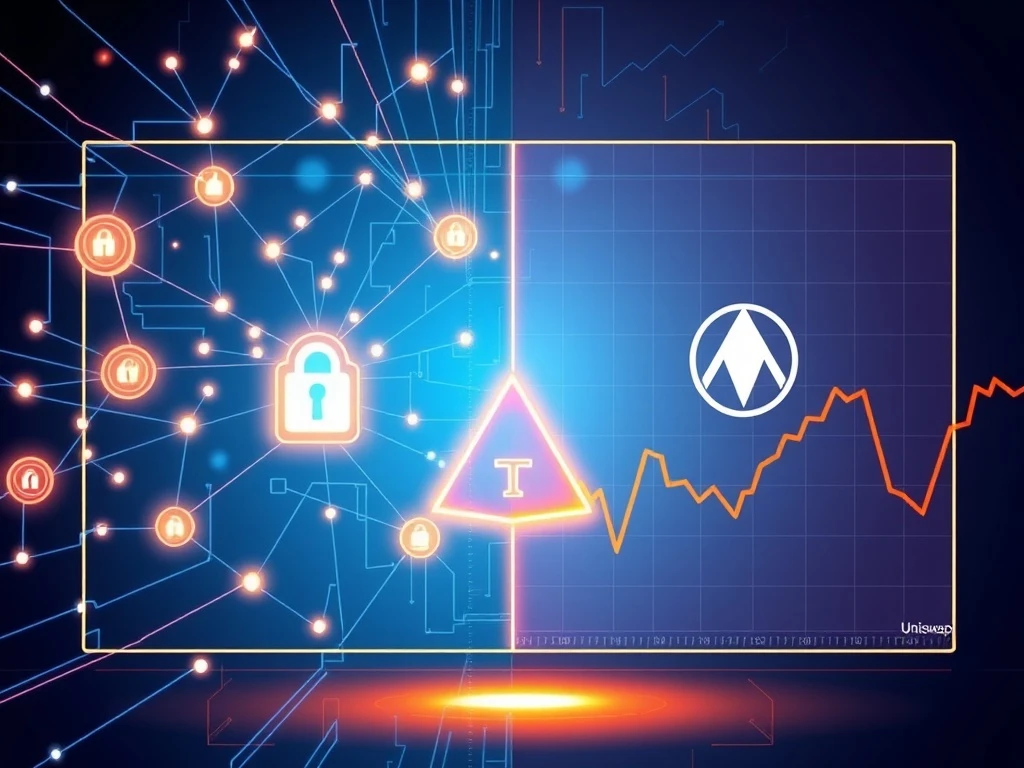
Global cryptocurrency markets exhibit divergent trajectories in early 2025, with established decentralized exchange token Uniswap and privacy-focused Monero demonstrating significant bearish pressure. Meanwhile, the Zero Knowledge Proof project’s transition to its Stage 2 presale phase, featuring a defined 190 million daily token supply cap, emerges as a focal point for analysts tracking foundational blockchain innovation. This development occurs against a backdrop of shifting investor sentiment toward protocols emphasizing both technological advancement and controlled tokenomics.
Zero Knowledge Proof Implements Stage 2 With Defined Supply Mechanics
The Zero Knowledge Proof protocol has formally initiated its Stage 2 presale auction, introducing a critical new parameter: a hard-capped daily token supply limit of 190 million units. This mechanism represents a deliberate shift in project tokenomics, designed to address concerns about inflation and supply predictability that often plague early-stage blockchain ventures. The presale structure employs a graduated pricing model that adjusts based on participation volume and time elapsed within the stage.
Furthermore, the project’s core technological proposition remains its utilization of zero-knowledge succinct non-interactive arguments of knowledge (zk-SNARKs). This cryptographic method allows one party to prove to another that a statement is true without revealing any information beyond the validity of the statement itself. Consequently, the protocol aims to enhance scalability and privacy for decentralized applications, a persistent challenge within the broader blockchain ecosystem. Market observers note the timing of this launch coincides with increased regulatory and institutional scrutiny on transaction privacy and data efficiency.
Uniswap Price Trends Reflect Broader DeFi Market Sentiment
Uniswap’s native token, UNI, has faced sustained downward pressure throughout the first quarter of 2025. Analytical data from multiple market aggregators shows a consistent pattern of lower highs and lower lows on weekly charts. Several interconnected factors contribute to this trend. Firstly, overall trading volume on decentralized exchanges has contracted from its 2024 peaks, directly impacting the fee-generation model that underpins UNI’s valuation thesis. Secondly, the competitive landscape has intensified with the emergence of next-generation automated market makers offering lower fees and integrated cross-chain liquidity.
Additionally, governance activity on the Uniswap DAO has slowed, with fewer major protocol upgrade proposals reaching consensus. This period of relative development stagnation contrasts with a rapidly evolving sector. On-chain metrics reveal a notable increase in UNI token movement from long-term holding addresses to exchanges, typically a precursor to selling pressure. However, some analysts point to the protocol’s entrenched market position and substantial treasury as potential foundations for a future recovery, dependent on successful execution of its v4 roadmap and broader Ethereum ecosystem growth.
Expert Analysis on DEX Token Valuation
Financial technology researchers emphasize that decentralized exchange tokens like UNI derive value from a complex mix of utility, governance rights, and fee-sharing potential. The current bearish trend, therefore, reflects not just market cycles but also a reassessment of these value drivers. A report from the Blockchain Transparency Institute in March 2025 indicated that fee capture across major DEXs has become more concentrated among a smaller number of liquidity pools, potentially diluting the broad-based value accrual to governance token holders. This structural shift necessitates adaptation from incumbent protocols.
Monero Price USD Weakness Highlights Privacy Coin Challenges
Monero (XMR), long considered the premier privacy-focused cryptocurrency, has demonstrated pronounced weakness against the US dollar. Its price decline significantly outpaces the broader crypto market correction. The primary catalyst for this underperformance appears to be escalating regulatory actions across multiple jurisdictions. For instance, several major regulated exchanges, citing compliance with updated Financial Action Task Force (FATF) travel rule guidelines, have either delisted XMR or imposed severe restrictions on its trading pairs.
This regulatory pressure directly impacts liquidity and accessibility, key components for any asset’s market valuation. Technically, Monero’s privacy features, which obfuscate transaction details by default, create inherent friction with regulatory frameworks demanding transaction transparency for anti-money laundering (AML) purposes. Network data shows a decline in daily transaction count and a contraction in its hashrate, suggesting some miner capitulation. The project’s development community continues to advance its protocol, with recent upgrades focusing on ring signature efficiency and bulletproofs+, but market sentiment remains overwhelmingly dictated by the external regulatory climate rather than technological progress.
The Regulatory Landscape for Cryptographic Privacy
Legal experts specializing in digital assets note a global trend toward distinguishing between consumer data protection and transactional anonymity. Regulations like the European Union’s Markets in Crypto-Assets (MiCA) framework provide clarity for transparent ledgers but create significant compliance hurdles for protocols like Monero. This environment incentivizes development in privacy-enhancing technologies that are compatible with regulatory scrutiny, such as selective disclosure or auditability features, a niche that newer projects like Zero Knowledge Proof are attempting to address directly.
Comparative Analysis: Tokenomics and Market Positioning
The contrasting fortunes of these assets provide a case study in current market priorities. The table below summarizes key differentiating factors:
| Metric | Zero Knowledge Proof (Stage 2) | Uniswap (UNI) | Monero (XMR) |
|---|---|---|---|
| Primary Value Proposition | Scalable Privacy via zk-SNARKs | Governance of Leading DEX | Strong, Default Transaction Privacy |
| Current Supply Focus | Capped Daily Emission (190M) | Fixed 1B Supply, Fully Diluted | Tail Emission (~0.6 XMR/block) |
| Key Market Challenge | Proving Technology at Scale | DEX Competition & Fee Compression | Regulatory Delistings & Scrutiny |
| Investor Sentiment Driver | Presale Demand & Tech Roadmap | Ethereum Ecosystem Growth | Global Regulatory Developments |
This divergence highlights a market increasingly discriminating between:
- Established Utility vs. Growth Potential: Uniswap offers proven utility but faces mature-market challenges.
- Absolute Privacy vs. Compliant Privacy: Monero champions untraceability, while new entrants explore regulatory-compatible models.
- Inflationary Models vs. Hard Caps: Investor appetite has shifted toward predictable, transparent supply schedules.
Conclusion
The cryptocurrency landscape in 2025 demonstrates a clear maturation phase, punishing assets facing structural headwinds while rewarding precise technological and economic narratives. Uniswap contends with the commoditization of decentralized exchange functions and compressed fee margins. Monero battles an existential regulatory threat to its core value proposition. In this environment, the Zero Knowledge Proof project’s Stage 2 launch, with its emphasis on a verifiable daily supply cap and scalable privacy technology, strategically positions itself to attract capital seeking exposure to next-generation infrastructure. Ultimately, market movements underscore a broader transition from speculative momentum towards fundamental analysis of tokenomics, utility, and long-term viability within an evolving digital asset framework.
FAQs
Q1: What is the significance of the 190 million daily supply cap for Zero Knowledge Proof?
A1: The daily supply cap is a tokenomic mechanism designed to control inflation and provide predictable emission during the presale stage. It aims to prevent sudden supply shocks and build investor confidence by demonstrating disciplined issuance management from the project’s early phases.
Q2: Why is Uniswap’s price under bearish pressure despite its market leadership?
A2: Uniswap faces pressure from multiple sources: decreased overall DEX trading volume reducing fee revenue, intense competition from newer AMM protocols, and a perceived slowdown in major governance-led protocol upgrades. Its value is tied to network usage and fee generation, both of which have softened.
Q3: Are Monero’s technological advancements ineffective against its price decline?
A3: Monero continues to make technical progress, but its price is currently dominated by external regulatory factors, not technological ones. Exchange delistings and compliance requirements severely limit liquidity and access, outweighing positive developments in its cryptography for most market participants.
Q4: How does Zero Knowledge Proof’s technology differ from Monero’s privacy approach?
A4: Monero uses ring signatures and stealth addresses to obfuscate transaction details on its ledger. Zero Knowledge Proof technology (zk-SNARKs) allows for proving the validity of a transaction without revealing its details, potentially offering privacy while enabling compliance through selective disclosure or verification, a key distinction in the current regulatory climate.
Q5: What should investors consider when evaluating a crypto presale like Zero Knowledge Proof Stage 2?
A5: Key considerations include: the clarity and sustainability of the tokenomics (like supply caps), the technical credibility and roadmap of the core protocol, the experience of the development team, the defined use case and market need, and the terms of the presale itself (lock-ups, vesting, fund allocation).