AI Trading Agents: The Revolutionary Path to Mastering Your Crypto Portfolio in 2025
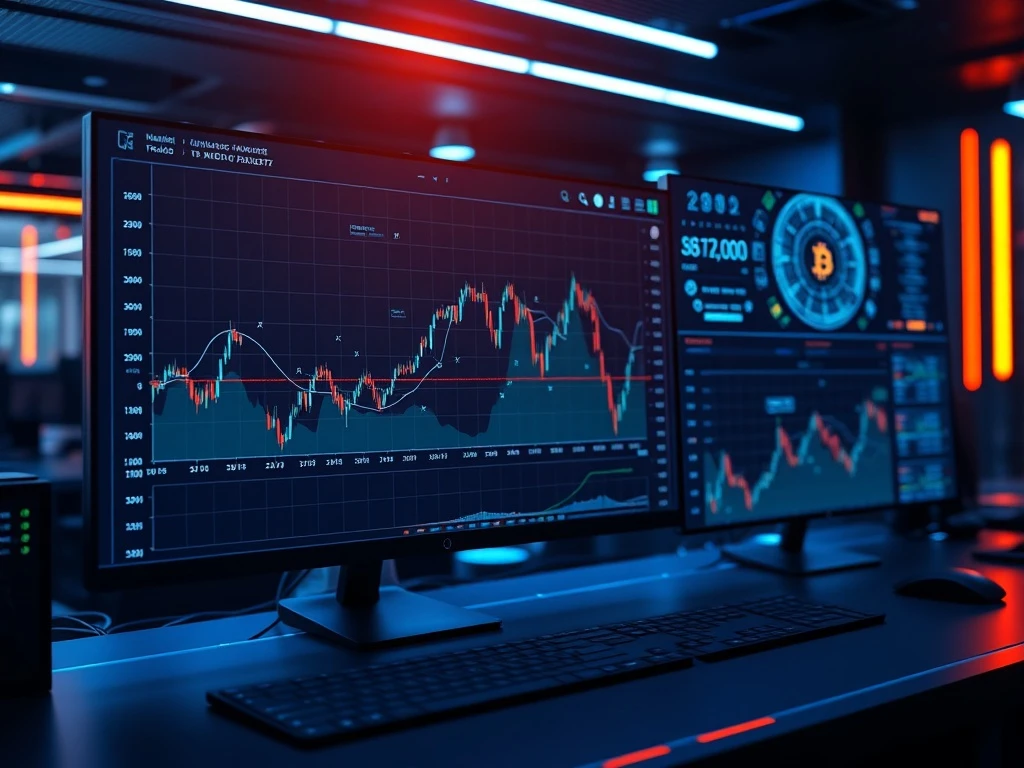
As cryptocurrency markets evolve through 2025, artificial intelligence trading agents emerge as transformative tools for investors seeking precision and efficiency. These sophisticated systems analyze market patterns, execute trades autonomously, and adapt strategies in real-time, fundamentally changing how traders interact with volatile digital asset markets. The integration of AI with decentralized finance creates unprecedented opportunities for both novice and experienced cryptocurrency participants.
Understanding AI Trading Agents in Modern Cryptocurrency Markets
AI trading agents represent intelligent software systems designed specifically for financial market automation. These agents utilize machine learning algorithms to process vast amounts of market data continuously. They identify trading patterns that human analysts might overlook. Furthermore, they execute transactions with millisecond precision across multiple cryptocurrency exchanges simultaneously. The technology has evolved significantly since early algorithmic trading systems, incorporating deep learning and neural networks that adapt to changing market conditions. Major financial institutions now allocate substantial resources to developing these systems, recognizing their potential to generate consistent returns in unpredictable markets.
The Technical Foundation of Automated Trading Systems
Modern AI trading agents operate on several technological pillars. Natural language processing components scan news sources and social media for sentiment indicators. Predictive analytics engines forecast price movements based on historical patterns and current market signals. Risk management modules automatically adjust position sizes and implement stop-loss protocols. These systems typically process thousands of data points per second, including order book depth, trading volume patterns, and cross-market arbitrage opportunities. The most advanced agents incorporate reinforcement learning, allowing them to refine strategies based on performance outcomes without human intervention.
Implementing AI Agents in Your Crypto Trading Strategy
Successful implementation requires careful planning and configuration. Traders must first define their risk parameters, including maximum drawdown tolerance and position sizing rules. Next, they select appropriate trading pairs based on liquidity and volatility characteristics. The configuration process involves setting profit targets, defining entry and exit conditions, and establishing correlation limits between different assets. Many platforms now offer pre-configured strategy templates that users can customize according to their preferences. Regular performance monitoring remains essential, even with automated systems, to ensure alignment with evolving market conditions and personal financial goals.
Configuration typically follows these essential steps:
- Risk Parameter Definition: Establish maximum loss thresholds and position sizing rules
- Strategy Selection: Choose between arbitrage, market making, or trend following approaches
- Asset Allocation: Determine cryptocurrency pair focus and diversification parameters
- Performance Metrics: Define success indicators beyond simple profit measurements
- Monitoring Protocols: Establish regular review intervals and adjustment procedures
Evaluating AI Trading Platforms: Key Considerations for 2025
The cryptocurrency ecosystem now hosts numerous AI trading platforms, each offering distinct features and capabilities. When evaluating options, traders should consider several critical factors. Platform security represents the foremost concern, requiring robust encryption and secure API key management. Historical performance data, preferably verified through third-party audits, provides insight into potential returns. The sophistication of underlying algorithms determines how effectively systems adapt to market shifts. Integration capabilities with major exchanges affect execution speed and liquidity access. Finally, transparency regarding fee structures and operational methodologies builds necessary trust between users and platform providers.
The Runbot RunAIgent Innovation: Tokenized Trading Agents
Runbot’s RunAIgent launchpad introduces a novel approach combining AI trading with tokenization mechanics. Each trading agent connects to a specific token ($AiToken) through a dynamic bonding curve, ensuring continuous liquidity. This structure allows community governance through decentralized autonomous organization mechanisms. The platform provides backtesting engines that simulate strategies against historical data, optimizing parameters before live deployment. Users can access pre-built strategy NFTs incorporating proven technical indicators like Relative Strength Index and Moving Average Convergence Divergence. This model represents a significant evolution beyond traditional automated trading systems, creating investable entities with transparent performance tracking.
| Feature | Traditional Bots | RunAIgent Model |
|---|---|---|
| Liquidity Mechanism | Exchange Dependent | Token Bonding Curve |
| Governance | Centralized Control | DAO Community Voting |
| Strategy Access | Proprietary Systems | NFT Marketplace |
| Performance Transparency | Limited Reporting | On-Chain Verification |
| Customization Level | Pre-Set Parameters | Behavior Definition |
Risk Management in Automated Crypto Trading
Despite technological advantages, AI trading agents carry inherent risks requiring careful management. Market volatility can trigger unexpected losses even with sophisticated algorithms. Technical failures, including connectivity issues or exchange API disruptions, may prevent timely trade execution. Over-optimization represents another concern, where systems perform well historically but fail in live market conditions. Regulatory uncertainty surrounding automated trading continues evolving across jurisdictions. Successful implementation requires comprehensive risk frameworks incorporating maximum position limits, correlation controls between strategies, and regular stress testing against extreme market scenarios. Diversification across multiple agents and strategies further mitigates potential downsides.
Real-World Performance and Market Adaptation
Historical data from 2020-2024 demonstrates that well-configured AI trading agents typically outperform manual trading during trending markets. However, during periods of extreme volatility or low liquidity, human oversight becomes increasingly valuable. The most successful implementations combine automated execution with periodic strategy reviews and adjustments. As cryptocurrency markets mature, institutional adoption of AI trading grows substantially, with estimates suggesting automated systems now execute 60-70% of spot trading volume on major exchanges. This institutional participation increases market efficiency while potentially reducing arbitrage opportunities for retail traders.
Future Developments in AI-Powered Cryptocurrency Trading
The evolution of AI trading agents continues accelerating through 2025. Several emerging trends promise to further transform the landscape. Cross-chain interoperability enables agents to operate simultaneously across multiple blockchain networks. Federated learning approaches allow collaborative model training without compromising proprietary data. Quantum computing integration may eventually enable processing capabilities far exceeding current systems. Regulatory technology components help ensure compliance across jurisdictions automatically. Perhaps most significantly, the convergence of decentralized finance with AI trading creates entirely new financial instruments and market structures previously impossible with traditional systems.
Conclusion
AI trading agents represent a fundamental advancement in cryptocurrency market participation, offering enhanced efficiency, precision, and accessibility. These systems democratize sophisticated trading strategies while providing institutional-grade tools to individual investors. The integration of tokenization through platforms like Runbot’s RunAIgent creates novel investment vehicles with transparent performance tracking. As technology evolves, successful cryptocurrency traders will increasingly incorporate AI agents into their strategic toolkit, combining automated execution with informed oversight. The future of cryptocurrency trading clearly involves sophisticated human-AI collaboration, where technology handles execution while humans focus on strategy development and risk management.
FAQs
Q1: What minimum technical knowledge do I need to use AI trading agents?
Basic understanding of cryptocurrency markets and trading concepts proves sufficient for most platforms. Many systems offer intuitive interfaces with pre-configured strategies. However, comprehending risk management principles remains essential regardless of technical expertise.
Q2: How much capital should I allocate to AI trading agents initially?
Experts recommend beginning with 10-20% of your total cryptocurrency portfolio. This allows performance evaluation without excessive risk exposure. Many platforms support small initial deposits, enabling testing with minimal financial commitment.
Q3: Can AI trading agents operate during extreme market volatility?
Advanced systems include volatility adaptation mechanisms, but extreme conditions may trigger safety protocols. Some agents automatically reduce position sizes or pause trading during unprecedented market movements to protect capital.
Q4: How do tokenized AI agents differ from traditional trading bots?
Tokenization creates investable assets with transparent on-chain performance tracking. These tokens often include governance rights and liquidity mechanisms unavailable with conventional bots, representing both trading tools and potential investment vehicles.
Q5: What security measures protect AI trading agent platforms?
Reputable platforms implement multiple security layers including exchange-grade encryption, secure API key management, and regular third-party audits. Many utilize non-custodial approaches where users retain control of their assets throughout the trading process.