BlockDAG’s Imminent 200× Launch Stuns Market as ADA and SHIB Face Persistent Struggles
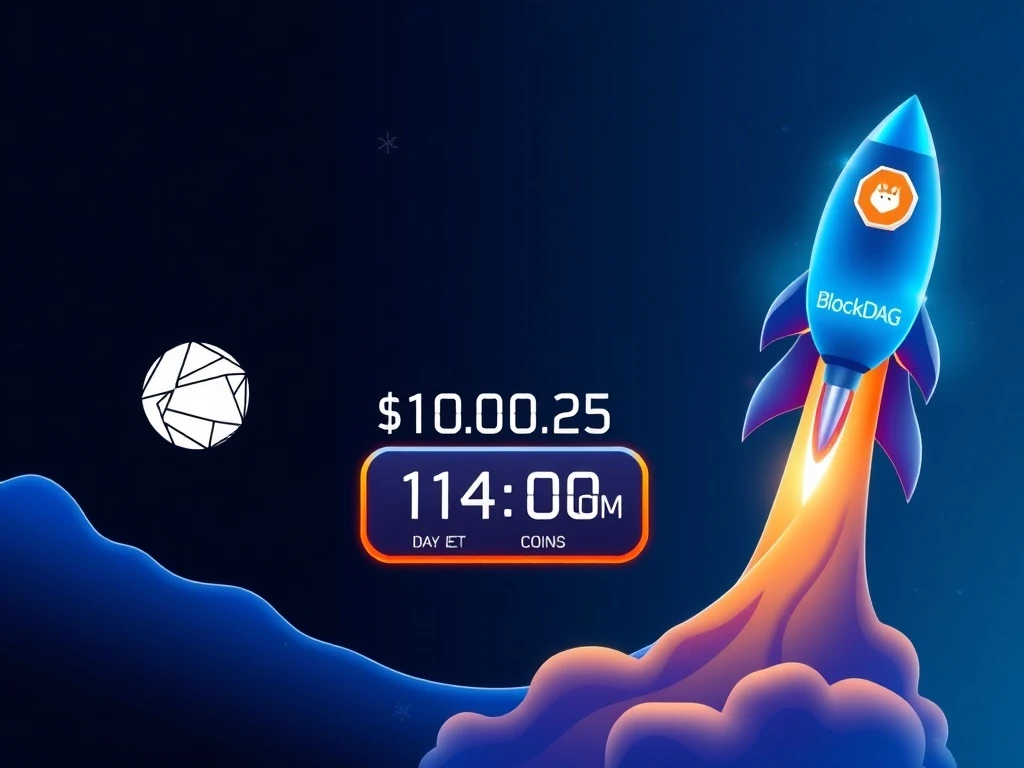
As the broader cryptocurrency market navigates a period of consolidation in early 2025, a stark divergence in performance is capturing analyst attention. While established altcoins like Cardano (ADA) and meme-inspired Shiba Inu (SHIB) grapple with persistent price pressures, the imminent launch of BlockDAG’s presale, touting a 200× growth potential from its $0.00025 entry point, is generating significant buzz. With only 142 million coins remaining before its February 16 launch, this emerging project presents a compelling counter-narrative to current market sentiment.
BlockDAG’s Presale Momentum Builds Toward Launch
The BlockDAG project is concluding its final presale phase with notable velocity. Priced at $0.00025 per coin, the project has successfully mobilized a community of early adopters, capitalizing on a narrative of high-growth potential within the layer-1 blockchain space. Market analysts point to several factors driving this interest. Firstly, the project’s underlying Directed Acyclic Graph (DAG) structure promises scalability advantages over traditional linear blockchains, a critical concern as network adoption grows. Secondly, the low entry point provides a psychological anchor for retail investors seeking asymmetric returns. However, experts consistently warn that such projected multipliers represent speculative models based on optimal conditions and carry substantial risk. The finite supply of 142 million coins in this final batch creates a scarcity effect, a common mechanism in crypto economics to foster urgency among potential buyers.
Technical Foundations and Market Positioning
BlockDAG enters a crowded field of smart contract platforms. Its purported value proposition hinges on solving the blockchain trilemma—achieving decentralization, security, and scalability simultaneously. While similar claims have been made by other projects, BlockDAG’s timing coincides with increased developer search for efficient, low-cost environments. The project’s roadmap, which emphasizes cross-chain interoperability and developer-friendly tools, aims to attract ecosystem builders post-launch. Success will ultimately depend on real-world adoption, network security audits, and the delivery of promised technical milestones, factors that historically separate enduring projects from short-lived ventures.
Cardano (ADA) Confronts Development and Market Hurdles
Conversely, Cardano, a veteran proof-of-stake blockchain, faces a different set of challenges. Despite a robust academic foundation and a methodical development approach led by IOG, ADA’s market price has struggled to regain its previous highs. Several interconnected factors contribute to this pressure. The slow pace of smart contract adoption and dApp deployment on the Cardano mainnet has led to critiques regarding its competitive edge against more agile rivals like Solana and Ethereum L2s. Furthermore, broader market conditions have suppressed trading volumes across major altcoins. On-chain data reveals that while Cardano’s staking participation remains high, signaling strong holder commitment, it has not translated into proportional price appreciation. Network upgrades, including ongoing work on scalability solutions like Hydra, are viewed as long-term value drivers, but the market currently appears focused on short-term utility and user growth metrics.
Shiba Inu (SHIB) Navigates the Meme Coin Volatility Cycle
Shiba Inu’s market behavior exemplifies the high-beta nature of meme coins. SHIB’s value is intrinsically tied to market sentiment, social media trends, and broader Bitcoin movements, often decoupling from fundamental utility metrics. Recent struggles highlight the asset class’s volatility. The SHIB ecosystem has attempted to pivot towards utility through projects like Shibarium, its layer-2 solution, and a growing metaverse initiative. Nevertheless, the token’s price remains exceptionally sensitive to whale movements and macroeconomic factors influencing risk-on assets. Analysts note that for SHIB to achieve sustained growth beyond meme-driven rallies, it must demonstrate tangible, high-volume use cases for its expanding suite of products, a transition that has historically proven difficult for tokens born from viral popularity.
A Comparative Landscape of Risk and Reward
The contrast between these assets underscores a fundamental spectrum in cryptocurrency investing. On one end, projects like BlockDAG represent high-risk, high-reward early-stage bets on unproven technology and execution. In the middle, established platforms like Cardano carry lower launch risk but face execution risk in a fiercely competitive smart contract arena. On the other end, assets like Shiba Inu contend with sentiment risk, where value is disproportionately linked to community momentum. A prudent analysis separates the marketing narrative of ‘200× potential’ from the disciplined assessment of technology, team, tokenomics, and market fit—a framework applied by institutional analysts when evaluating any crypto asset.
Regulatory and Macroeconomic Context for 2025
The operating environment for all cryptocurrencies continues to evolve. Regulatory clarity, particularly in the United States and European Union, is shaping market access and institutional participation. Projects launching in 2025, including BlockDAG, must navigate stricter compliance landscapes regarding securities laws and investor protection. Simultaneously, macroeconomic variables such as interest rate trajectories and inflation data influence capital flows into speculative assets. This backdrop means that launch success is no longer solely a function of community hype but also of regulatory preparedness and economic resilience. Projects with clear compliance strategies and sustainable tokenomic models are increasingly viewed as better positioned for long-term survival.
Conclusion
The current crypto landscape presents a study in contrasts. The struggles of ADA and SHIB reflect the growing pains of established projects within a maturing and competitive market. Meanwhile, the fervor around BlockDAG’s launch highlights the enduring appeal of early-stage opportunities, albeit accompanied by significant risk. Investors are reminded to differentiate between promotional potential and verifiable fundamentals. As the February 16 launch date for BlockDAG’s final presale batch approaches, market observers will watch not only the price action but also the subsequent steps in development and delivery. The true test for any project, whether a nascent BlockDAG or a veteran like Cardano, remains consistent execution, growing adoption, and the creation of real-world utility beyond exchange listings.
FAQs
Q1: What is BlockDAG and why is its launch significant?
BlockDAG is a new blockchain project utilizing a Directed Acyclic Graph structure, aiming to improve scalability. Its launch is significant due to high presale demand, a low entry price of $0.00025, and ambitious growth projections circulating within its community.
Q2: Why are Cardano (ADA) and Shiba Inu (SHIB) prices struggling?
ADA faces challenges related to the pace of its ecosystem growth and dApp adoption relative to competitors. SHIB, as a meme coin, experiences high volatility and its price is heavily influenced by broader market sentiment and social media trends rather than fundamental metrics alone.
Q3: What does a ‘200× potential’ claim mean?
This is a speculative projection suggesting the asset’s value could multiply two hundred times from its presale price. It is a marketing term based on optimistic models and should not be considered a guarantee. All cryptocurrency investments carry a high risk of loss.
Q4: How many BlockDAG coins are left before launch?
According to the project’s announced schedule, there are 142 million coins remaining in its final presale batch before the launch phase begins on February 16, 2025.
Q5: What should investors consider before participating in a new launch like BlockDAG?
Investors should conduct thorough due diligence, examining the project’s technical whitepaper, development team’s experience, tokenomics (supply distribution and vesting), security audit status, regulatory compliance approach, and long-term roadmap. Understanding the high risks associated with early-stage projects is crucial.