Cardano ADA Price Analysis: The Critical $0.13 Support That Could Trigger a Monumental 10x Cycle
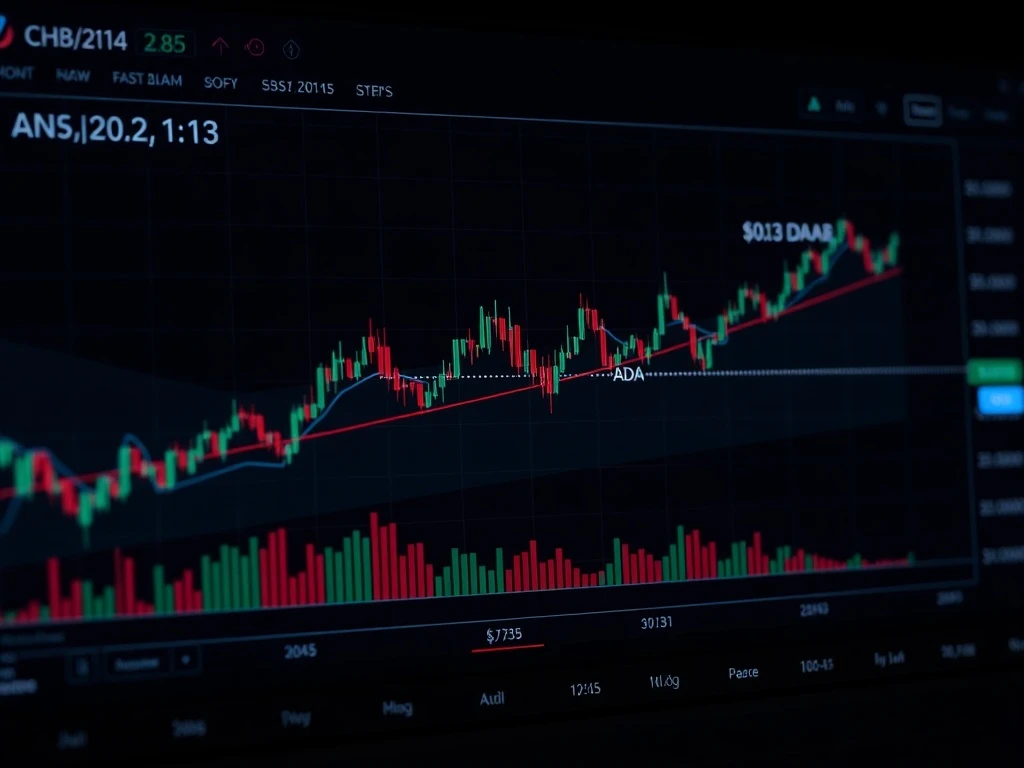
Global cryptocurrency markets face a pivotal moment as Cardano’s ADA token approaches the crucial $0.13 support level, a technical zone that historical data suggests could determine the blockchain project’s trajectory for the coming cycle. Market analysts worldwide now scrutinize this price threshold following ADA’s 93% decline from its all-time high, with technical indicators revealing sustained accumulation patterns across high-time-frame charts. The current market structure places Cardano within a long-term accumulation range that typically precedes significant volatility events, according to multiple blockchain analytics platforms tracking on-chain metrics and exchange flow data.
Cardano ADA Price Technical Structure Analysis
Technical examination reveals Cardano trades within a well-defined accumulation range that has developed over multiple market cycles. The $0.13 level represents more than just a psychological barrier; it corresponds with historical support zones where previous accumulation phases initiated. Market participants monitor this level closely because sustained defense could signal institutional accumulation, while breakdown might indicate further distribution. On-chain analytics firms report increased wallet activity near this price threshold, suggesting heightened interest from both retail and institutional investors. The current technical setup mirrors patterns observed during previous cycle transitions, particularly the 2018-2020 accumulation phase that preceded ADA’s historic rally.
Multiple technical indicators converge around the $0.13 zone, creating what analysts describe as a “technical confluence.” The weekly Relative Strength Index (RSI) currently registers near oversold territory at approximately 32, a level that historically preceded significant reversals during previous Cardano cycles. Meanwhile, the Moving Average Convergence Divergence (MACD) indicator shows diminishing bearish momentum on monthly timeframes, suggesting potential trend exhaustion. Volume profile analysis reveals substantial trading activity clustered around this support level, indicating strong market memory and potential reversal significance. These technical factors combine to create what market technicians call a “high-probability reversal zone” that could determine ADA’s medium-term trajectory.
Historical Context and Market Cycle Comparisons
Historical analysis provides crucial context for understanding Cardano’s current market position. During the previous bear market cycle between 2018 and 2020, ADA established a similar accumulation range between $0.02 and $0.05 that lasted approximately 18 months. That extended consolidation phase ultimately preceded a 6,000% price appreciation during the subsequent bull market. Current market structure shows parallels to that historical pattern, though at different price levels and within a more mature market environment. The cryptocurrency sector has evolved significantly since Cardano’s last major accumulation phase, with increased institutional participation, regulatory developments, and broader mainstream adoption influencing price discovery mechanisms.
The table below illustrates key metrics comparing Cardano’s current market position with previous cycle transitions:
| Metric | 2018-2020 Accumulation | Current Market Position |
|---|---|---|
| Price Range | $0.02 – $0.05 | $0.13 – $0.25 |
| Duration | 18 months | 14 months (ongoing) |
| RSI Level | 28-35 | 30-38 |
| Network Growth | ~200% annually | ~150% annually |
| Institutional Interest | Limited | Substantial |
Market analysts emphasize that while historical patterns provide valuable context, each market cycle operates within unique macroeconomic conditions. The current environment features different interest rate policies, regulatory frameworks, and institutional participation levels compared to previous cycles. These factors could influence both the duration of accumulation phases and the magnitude of subsequent price movements. Technical analysts therefore recommend considering multiple scenarios rather than relying solely on historical precedent when evaluating potential outcomes.
On-Chain Metrics and Network Fundamentals
Beyond price action, Cardano’s fundamental metrics provide additional context for evaluating the $0.13 support level’s significance. Network analytics reveal several key developments:
- Active Address Growth: Daily active addresses have increased approximately 40% year-over-year despite price declines
- Staking Participation: Over 70% of ADA’s circulating supply remains staked, indicating strong holder conviction
- Development Activity: GitHub commit frequency remains among the highest in the cryptocurrency sector
- Smart Contract Deployment: Plutus script usage has grown steadily since the Alonzo hard fork implementation
These fundamental factors suggest underlying network strength that may support price stability during accumulation phases. The divergence between declining prices and improving network metrics represents what analysts call “positive fundamental divergence,” a condition that often precedes significant price reversals in both traditional and cryptocurrency markets. Market participants particularly note the sustained staking participation rate, which indicates long-term holder commitment despite extended price depreciation. This metric often serves as a proxy for investor confidence in blockchain networks.
Market Structure and Accumulation Dynamics
Accumulation phases represent critical periods when informed investors establish positions before broader market recognition. Technical analysis identifies several characteristics of genuine accumulation:
- Volume Patterns: Increasing volume on price advances with decreasing volume on declines
- Time Distribution: Extended periods of sideways price action within defined ranges
- Support Tests: Repeated testing of key support levels without sustained breakdowns
- Sentiment Extremes: Generally negative market sentiment despite improving fundamentals
Current Cardano market structure exhibits several of these accumulation characteristics, particularly regarding volume patterns and support tests. Exchange order book analysis reveals substantial buy-side liquidity clustered around the $0.13 level, suggesting institutional accumulation interest. Meanwhile, derivatives market data shows declining open interest and funding rates near neutral levels, indicating reduced speculative positioning that often accompanies accumulation phases. These technical factors combine with fundamental improvements to create what analysts describe as a “constructive” market structure for potential future appreciation.
The psychological aspect of accumulation cannot be overlooked. Extended periods of sideways price action typically test investor patience and conviction, often shaking out weaker hands while allowing committed investors to accumulate positions. Market sentiment indicators currently show extreme pessimism toward Cardano and similar altcoins, a condition that historically correlated with accumulation phases. This sentiment extreme, combined with improving fundamentals and constructive technical structure, creates what veteran traders call a “setup” for potential significant movement once accumulation completes.
Risk Factors and Alternative Scenarios
While technical analysis suggests potential for significant appreciation from current levels, market participants must consider alternative scenarios and risk factors. Several variables could influence Cardano’s price trajectory:
- Macroeconomic Conditions: Interest rate policies and inflation trends impact all risk assets
- Regulatory Developments: Evolving cryptocurrency regulations create uncertainty
- Competitive Landscape: Blockchain platform competition intensifies continuously
- Network Adoption Pace: Real-world usage must justify network valuation
Technical analysts emphasize that the $0.13 support level represents a critical juncture rather than a guaranteed reversal point. Sustained trading below this level could trigger further downside toward next support zones near $0.10 or $0.08, according to Fibonacci extension analysis. Market participants therefore monitor this level not as a binary outcome determinant but as a key indicator of market structure health. The reaction around this price zone will provide valuable information about underlying supply and demand dynamics that could influence Cardano’s medium-term trajectory.
Conclusion
Cardano ADA price analysis reveals the critical importance of the $0.13 support level within the current market structure. Technical indicators suggest Cardano trades within a long-term accumulation range that shares characteristics with previous cycle transitions. While historical patterns provide context, current market conditions feature unique macroeconomic and regulatory variables that could influence outcomes. Market participants should monitor both technical reactions around this key level and fundamental network developments when evaluating Cardano’s potential trajectory. The convergence of oversold technical conditions, improving network metrics, and extreme negative sentiment creates an environment where the $0.13 support level could indeed determine whether Cardano enters a new appreciation cycle or requires further consolidation.
FAQs
Q1: What makes the $0.13 level particularly significant for Cardano’s ADA?
The $0.13 level represents a confluence of technical factors including historical support, volume profile significance, and indicator alignments. It corresponds with previous accumulation phase initiations and currently tests critical market structure integrity.
Q2: How does the current accumulation phase compare to Cardano’s previous cycles?
Current accumulation shares characteristics with the 2018-2020 phase but occurs at higher price levels within a more mature market. Key differences include greater institutional participation and different macroeconomic conditions influencing duration and outcome potential.
Q3: What fundamental metrics support Cardano’s network strength during this price consolidation?
Active address growth, sustained staking participation, consistent development activity, and increasing smart contract deployment all indicate underlying network strength despite price declines, creating positive fundamental divergence.
Q4: What technical indicators suggest potential trend change near the $0.13 level?
Weekly RSI near oversold territory, diminishing bearish momentum on monthly MACD, volume patterns showing accumulation characteristics, and order book liquidity clustering all suggest potential trend exhaustion and reversal possibility.
Q5: What risk factors could invalidate the accumulation thesis for Cardano?
Macroeconomic deterioration, adverse regulatory developments, competitive displacement, or failure to achieve adoption milestones could all negatively impact Cardano’s trajectory regardless of technical patterns observed at the $0.13 support level.