Bitcoin Search Volume Skyrockets: Unprecedented Google Trends Signal Retail Frenzy Amid Price Swings
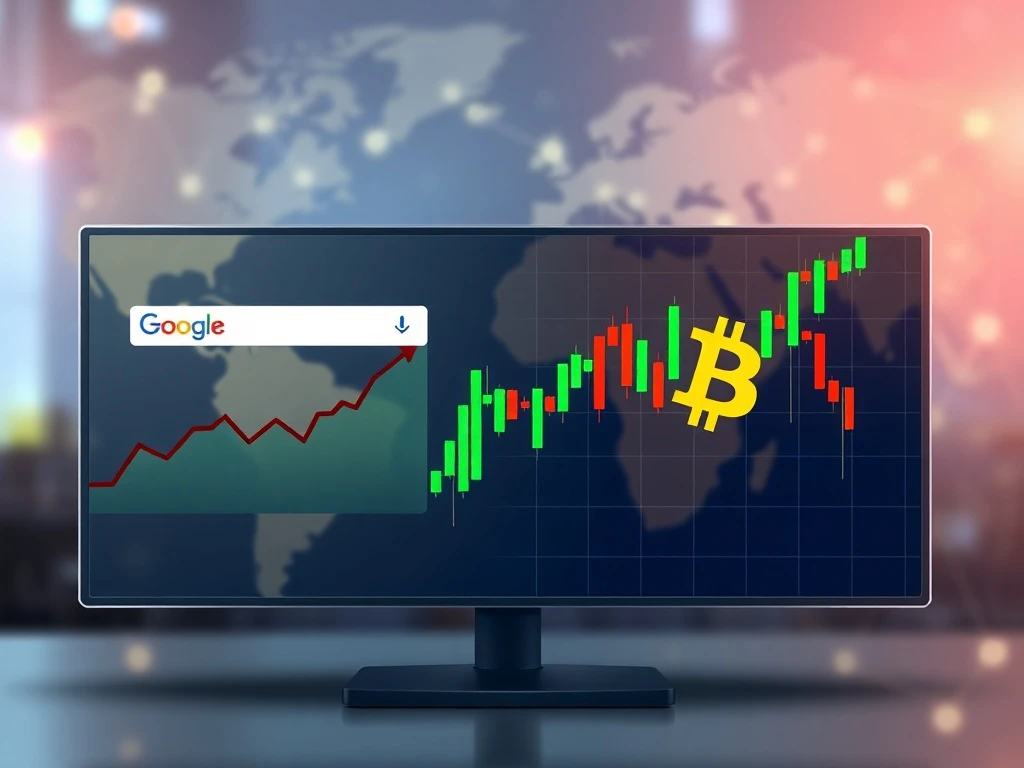
Global Google search volume for the term “Bitcoin” has surged to a 12-month high, data reveals, coinciding with dramatic swings in the flagship cryptocurrency’s price throughout early February 2025. This spike in public search interest, a traditional barometer for retail investor attention, suggests a significant shift in market participant behavior as Bitcoin tested key psychological support levels. Analysts are now scrutinizing whether this data marks the beginning of a renewed retail influx or a reaction to short-term volatility.
Bitcoin Search Volume Hits Peak Amid Market Turbulence
According to provisional data from Google Trends, worldwide searches for “Bitcoin” achieved a perfect score of 100 for the week commencing February 1, 2025. This represents the highest level of search interest observed over the past year. The previous peak was a score of 95, recorded in mid-November 2024 when Bitcoin’s price first dipped below the $100,000 threshold. The correlation between search volume and price movement is a well-established phenomenon within cryptocurrency markets. Significant price events, whether sharp rallies to new all-time highs or sudden corrections, consistently drive public curiosity and information-seeking behavior. Consequently, this latest surge provides a quantifiable measure of heightened retail attention during a period of notable price discovery.
The search spike unfolded against a backdrop of intense market activity. Bitcoin’s price experienced a rapid descent from approximately $81,500 on February 1 to briefly touch the $60,000 level—a price point not seen since October 2024—within just five days. Following this test of support, the asset demonstrated resilience, rebounding to trade around $70,740 at the time of reporting. This represents a seven-day decline of 15.51%, highlighting the volatility that captivated public interest. Market observers frequently use tools like Google Trends alongside other on-chain and social metrics to gauge the temperature of the retail market, which often lags behind institutional moves but can provide powerful momentum.
Analysts Decode the Retail Signal
The dramatic increase in search traffic has prompted leading analysts to offer their interpretations. André Dragosch, Head of Europe for asset manager Bitwise, pointed directly to the data as a signal of returning retail participation. In a social media post, Dragosch stated succinctly, “Retail is coming back.” This perspective suggests that the current price range, significantly lower than recent highs, may be attracting new buyers or those who had previously been priced out of the market. The implication is that search activity could be a precursor to capital allocation, a pattern observed in previous market cycles.
Evidence from Exchange Flows and Sentiment Gauges
Supporting this thesis, data from specific geographic markets indicates buying pressure. Julio Moreno, Head of Research at CryptoQuant, highlighted renewed activity from U.S. investors following the dip to $60,000. Moreno noted that the “Coinbase premium”—the price difference between the Coinbase exchange (predominantly U.S. retail) and other global exchanges—turned positive for the first time since mid-January. This metric often serves as a real-time indicator of net buying or selling pressure from U.S. retail traders. When the premium is positive, it typically suggests stronger buying demand on Coinbase relative to other platforms.
However, the market narrative is not uniformly optimistic. Other indicators reveal a landscape of extreme caution. The Crypto Fear & Greed Index, a popular sentiment gauge, plummeted to an “Extreme Fear” score of 6. This level approaches historic lows not witnessed since the bear market depths of June 2022. This divergence creates a fascinating market dynamic: surging public interest and potential buying, as measured by searches and exchange flows, coexists with overwhelming market fear, as measured by sentiment indices. Some analysts argue this very divergence can signal a potential inflection point.
The Historical Context of Search and Price Cycles
To understand the potential significance of this event, it is instructive to examine the historical relationship between Bitcoin search volume and its price cycles. Past bull markets have often been preceded or accompanied by peaks in public search interest. For instance, the monumental rally in late 2020 and early 2021 saw Google search interest for Bitcoin reach its all-time high. The search volume typically spikes during rapid price appreciation, as fear of missing out (FOMO) drives new users to research the asset. Conversely, during prolonged bear markets, search interest dwindles, reflecting public apathy or disillusionment.
The current scenario presents a nuanced case. The search spike occurred not during a rally, but during a sharp correction. This could indicate several behaviors:
- Bargain Hunting: Investors are researching entry points at perceived lower prices.
- Panic or Confirmation: Existing holders are searching for news to confirm their investment thesis or understand the cause of the drop.
- Media Amplification: Increased media coverage of the price drop itself drives more people to search for foundational information.
This context is crucial for separating signal from noise. A search spike during a sell-off may reflect different underlying intentions than a spike during a rally, though both demonstrate heightened engagement.
Comparative Market Indicators Table
The table below contrasts key indicators from the recent search volume peak with the previous peak in November 2024, providing a clearer picture of market conditions.
| Indicator | Week of Feb 1, 2025 | Week of Nov 16-23, 2024 |
|---|---|---|
| Google Trends Score | 100 (Peak) | 95 |
| BTC Price Range | ~$60,000 – $81,500 | ~$98,000 – $102,000 |
| Key Price Event | Fall to $60k support | Break below $100k support |
| Fear & Greed Index | 6 (Extreme Fear) | ~40 (Fear) |
| Primary Narrative | Retail bargain hunting? | Bull market correction |
Broader Implications for the Crypto Ecosystem
The resurgence in Bitcoin-centric search traffic has implications beyond Bitcoin itself. Historically, increased attention on Bitcoin serves as a gateway for interest in the broader cryptocurrency and digital asset ecosystem. Newcomers who begin by researching Bitcoin often expand their exploration to include Ethereum, altcoins, decentralized finance (DeFi), and non-fungible tokens (NFTs). Therefore, a sustained increase in Bitcoin search volume can be a leading indicator for overall ecosystem growth and capital inflows. Furthermore, this data is vital for content creators, exchanges, and educational platforms, as it signals a growing audience seeking information, which in turn shapes marketing and product development strategies across the industry.
From a macroeconomic perspective, the interest coincides with evolving regulatory landscapes and institutional adoption milestones in early 2025. Searches may not only reflect price action but also a public seeking to understand Bitcoin’s role in a changing financial world. This blend of price-driven and fundamentals-driven curiosity makes the current search trend particularly noteworthy for long-term market observers.
Conclusion
The unprecedented surge in Google search volume for “Bitcoin” during a period of significant price volatility offers a compelling snapshot of market psychology in early 2025. While the data strongly suggests a re-awakening of retail investor interest, possibly driven by perceived buying opportunities at lower price levels, it exists in tension with extreme fear gauged by sentiment indices. This dichotomy is classic of transitional market phases. Whether this search activity translates into sustained buying pressure and marks a local bottom, or merely represents a fleeting reaction to volatility, will be determined by subsequent price action and on-chain flow data. Nevertheless, the Bitcoin search volume spike remains a critical data point, confirming that public attention on the world’s premier cryptocurrency remains intensely tethered to its price movements, continuing a defining characteristic of the digital asset class.
FAQs
Q1: What does a Google Trends score of 100 mean for Bitcoin?
A score of 100 represents the peak search interest for a term within a selected region and time frame. For Bitcoin during the week of February 1, 2025, it means search volume hit its highest relative point in the past 12 months, indicating maximum public curiosity in that period.
Q2: Is Google search volume a reliable indicator for Bitcoin price predictions?
While not a direct predictive tool, search volume is a reliable indicator of retail investor attention and sentiment. Historically, extreme peaks often coincide with market tops (due to FOMO) or significant volatility (during crashes). It is best used in conjunction with other on-chain and technical metrics.
Q3: What is the “Coinbase premium” and why is it important?
The Coinbase premium is the price difference for Bitcoin on the U.S.-based Coinbase Pro exchange versus other global exchanges like Binance. A positive premium often indicates stronger buying pressure from U.S. retail investors, while a negative premium can suggest selling pressure.
Q4: Why is the Crypto Fear & Greed Index in “Extreme Fear” if people are searching to buy Bitcoin?
This divergence is common. The Fear & Greed Index aggregates various market signals (volatility, momentum, social media). Extreme fear can indicate a potential buying opportunity for contrarian investors. The high search volume could represent those contrarians researching their entry, while overall market sentiment remains panicked.
Q5: How does retail interest impact the Bitcoin market differently from institutional interest?
Retail interest often brings higher volatility and momentum-driven trading, reacting strongly to price moves and news. Institutional interest typically involves larger, slower-moving capital focused on long-term custody and macroeconomic trends. A healthy market usually requires a balance of both participant types.