Critical Binance & Bybit Withdrawals Halt: Technical Strain Triggers Market Panic
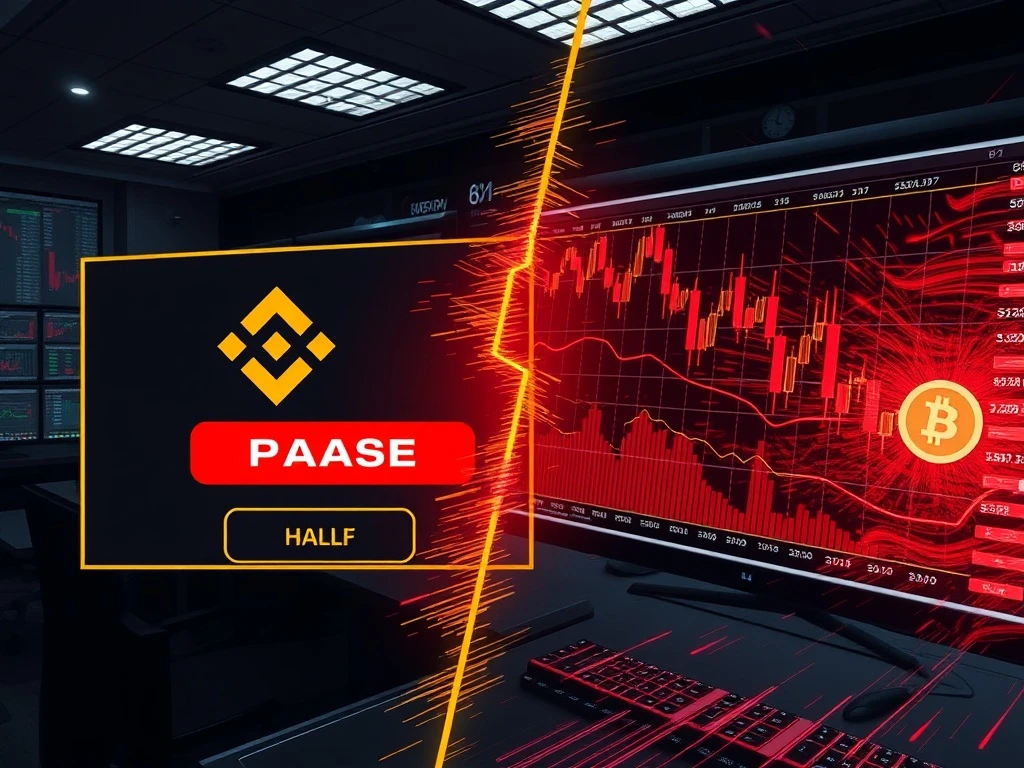
On a day of extreme market volatility, leading cryptocurrency exchanges Binance and Bybit implemented a critical pause on user withdrawals, a move that immediately sent shockwaves through the global digital asset community and intensified an already sharp Bitcoin selloff. This incident, reported on March 10, 2025, highlights the persistent technical challenges major trading platforms face during periods of unprecedented transaction volume and market stress.
Binance and Bybit Withdrawals Halt Amid Market Turmoil
During a severe market downturn, Binance temporarily suspended cryptocurrency withdrawals for approximately twenty minutes. Consequently, the platform cited overwhelming technical strain as the primary cause, explicitly denying any liquidity issues. Simultaneously, reports confirmed that rival exchange Bybit also paused withdrawal services as selling pressure intensified across the crypto ecosystem. This coordinated pause occurred as Bitcoin’s price plummeted over 13%, briefly trading below the critical $64,000 support level. Trading activity surged exponentially across all major exchanges, creating a perfect storm of network congestion and system overload.
Market analysts immediately scrutinized the event. They noted that such operational halts, while brief, can severely impact trader confidence. Historically, withdrawal pauses have been red flags, often associated with deeper financial troubles. However, in this instance, on-chain data provided a counter-narrative. Blockchain analytics firms reported that Binance’s exchange wallets actually saw a net increase in Bitcoin balances during the turmoil. This crucial data point indicated that user deposits continued to exceed withdrawal requests, contradicting the widespread online panic about a potential liquidity crisis.
Anatomy of a Crypto Market Selloff
The withdrawal halts were a symptom of a much larger market event. The selloff was characterized by a cascade of liquidations in the derivatives market. As Bitcoin’s price broke through key technical levels, leveraged long positions worth hundreds of millions of dollars were automatically closed by exchange systems. This created a self-reinforcing cycle of selling. The surge in transaction submissions overwhelmed the standard processing queues of even the most robust exchanges like Binance and Bybit.
- Price Action: Bitcoin dropped from above $73,000 to below $64,000 in a matter of hours.
- Volume Spike: Spot and derivatives trading volumes spiked to yearly highs, exceeding typical capacity.
- Network Fees: Transaction fees on underlying networks like Ethereum and Bitcoin itself rose significantly.
This environment tests the fundamental infrastructure of centralized exchanges. Their architecture must reconcile user interface speed with the finality of on-chain settlements. During extreme volatility, this reconciliation process can bottleneck, forcing exchanges to choose between slowing services or risking failed transactions.
Expert Analysis on Exchange Infrastructure
Industry infrastructure experts weighed in on the technical dilemma. A former exchange CTO, speaking on background, explained that withdrawal systems are often among the most complex components. “They interact with hot wallets, cold storage, risk engines, and blockchain networks,” the expert stated. “A sudden 10x spike in requests, combined with congested blockchains, can cause timeouts and failures. A temporary pause is a standard risk-mitigation procedure to prevent funds from being sent incorrectly.” This perspective frames the halt not as a failure of solvency but as a controlled response to abnormal system stress.
The Resilience and Perception of Centralized Exchanges
The event sparked a renewed debate about the resilience of centralized cryptocurrency exchanges. Proponents argue that the quick resolution—with services restored within half an hour—demonstrates robust operational management. The fact that user funds remained secure and that the halt was attributed to technical, not financial, causes is a positive sign of maturity. Furthermore, the on-chain data showing net deposits is a powerful, verifiable indicator of continued user trust in the platform’s fundamentals.
Conversely, critics point to the central point of failure such incidents reveal. The concentration of power and user assets on a few large platforms creates systemic risk. A prolonged outage during a crash could prevent users from accessing assets to cover margins or make crucial trades, potentially leading to greater personal financial loss. This incident serves as a stark reminder of the trade-offs between the convenience of centralized services and the self-custody principles of decentralized finance.
| Exchange | Action Taken | Stated Reason | Duration | Market Context |
|---|---|---|---|---|
| Binance | Paused withdrawals | Technical strain | ~20 minutes | BTC down >13% |
| Bybit | Paused withdrawals | High volatility & load | Reported briefly | Surge in selling pressure |
| Other Major Exchanges | Slowed processing times | Network congestion | Varies | Elevated fees & delays |
Historical Context and Regulatory Implications
Withdrawal halts have a sensitive history in cryptocurrency. Past events, such as the issues faced by Mt. Gox and, more recently, FTX, began with similar operational difficulties that masked fatal financial flaws. Therefore, the market’s visceral reaction to any pause is understandable. Regulators in multiple jurisdictions are likely to examine this event closely. They may demand more transparent real-time reporting from exchanges during periods of market stress and require stricter stress-testing of technical infrastructure as part of licensing requirements.
The incident also underscores the importance of real-time, transparent communication. Binance’s swift public clarification regarding liquidity helped calm nerves. Moving forward, the industry may develop standardized protocols for communicating operational status during crises, similar to circuit breakers in traditional equity markets.
Conclusion
The temporary Binance and Bybit withdrawals halt during a severe Bitcoin selloff was a significant stress test for cryptocurrency exchange infrastructure. While triggered by technical strain from unprecedented trading volume and not by liquidity shortfalls, the event exposed the fragile interplay between market volatility, user psychology, and platform resilience. The verifiable on-chain data proving net deposits to Binance offers a strong counterpoint to fear-driven narratives. Ultimately, this incident highlights the ongoing evolution of crypto markets, emphasizing the critical need for robust technical systems, transparent communication, and informed user risk management as the industry continues to scale under pressure.
FAQs
Q1: Why did Binance really pause withdrawals?
Binance officially stated the pause was due to “technical strain” caused by an extreme surge in trading activity and withdrawal requests during a sharp market selloff. They explicitly confirmed it was not related to liquidity issues, a point supported by on-chain data showing net deposits to exchange wallets.
Q2: How long were withdrawals paused on Binance?
The withdrawal service halt on Binance lasted approximately twenty minutes before full functionality was restored. This relatively short duration indicates a managed response to a temporary system overload.
Q3: Did users lose funds during the withdrawal halt?
No verifiable reports indicate users lost funds. The pause was a preventive measure to ensure withdrawal transactions processed correctly once the system congestion eased. All pending transactions were completed after the pause was lifted.
Q4: What does on-chain data say about Binance’s health during this event?
Blockchain analytics showed that the total Bitcoin balance in Binance’s known wallets increased during the selloff and withdrawal pause. This indicates more users were depositing Bitcoin than withdrawing it, a sign of net inflow and contradicting rumors of a liquidity crisis or bank run.
Q5: Should I be worried about keeping funds on major exchanges after this?
This event highlights a classic trade-off. Centralized exchanges offer convenience but present a single point of technical failure during extreme market events. The industry-standard practice for risk management is to only keep assets on an exchange that you intend to trade actively, storing the majority of holdings in self-custodied wallets for security and control.