Bitcoin Plunges Below $64K Amid Historic Selling Pressure: Critical Support Levels and Expert Predictions for 2025
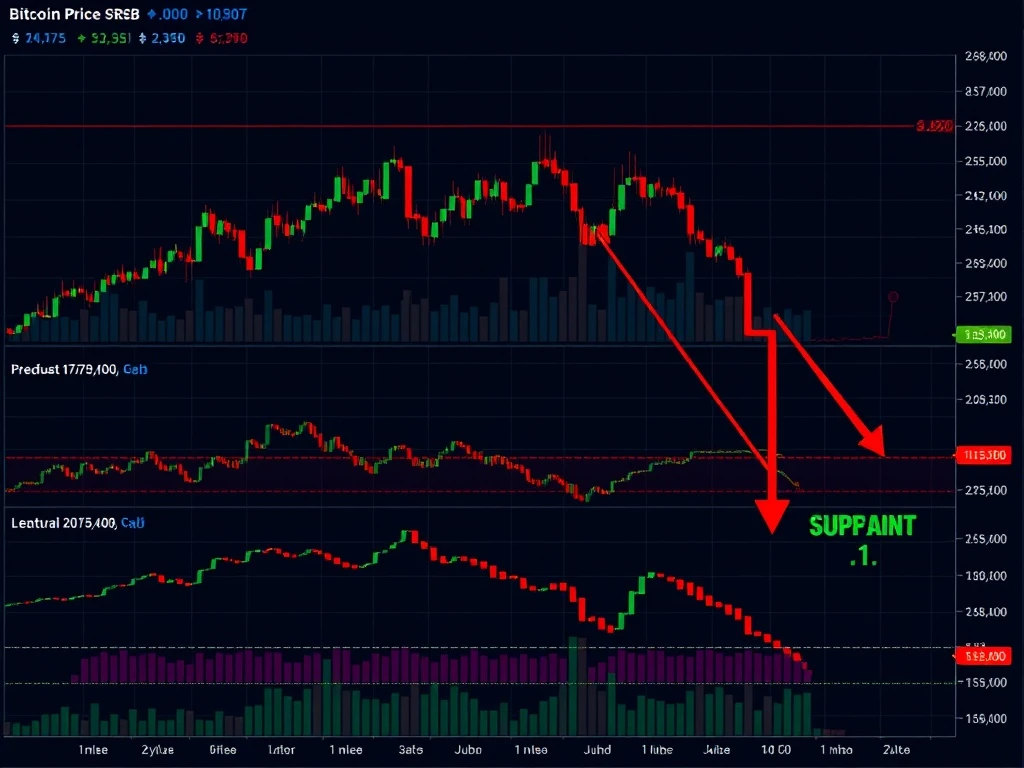
Global cryptocurrency markets experienced significant turbulence this week as Bitcoin, the world’s leading digital asset, plunged below the critical $64,000 threshold amid unprecedented selling pressure. This dramatic decline represents a 13% drop over just four trading days, marking one of the most substantial corrections in the current market cycle and raising urgent questions about potential price stabilization points. Market analysts worldwide are now scrutinizing historical patterns, technical indicators, and on-chain data to identify where Bitcoin might find its next sustainable support level.
Bitcoin’s Technical Breakdown and Market Context
The recent Bitcoin price movement shattered multiple psychological and technical support levels that traders had been monitoring closely throughout 2025. Most notably, Bitcoin decisively broke below $69,000, which represented the previous all-time high from the 2021 bull market cycle. Historically, previous cycle peaks have served as crucial support zones during subsequent market corrections, making this breach particularly significant for technical analysts. The current price action mirrors patterns observed in previous cycles where assets retest former resistance levels as potential support before establishing new market structures.
Simultaneously, Bitcoin futures markets experienced a substantial deleveraging event, with open interest declining by over $10 billion during the past seven trading sessions. This reduction in leveraged positions typically indicates a market reset that often precedes more sustainable price movements. Market participants have been closely monitoring the relationship between spot prices and futures activity, as excessive leverage has frequently preceded sharp corrections throughout cryptocurrency market history. The current reset suggests a healthier market structure may be developing despite the immediate price pain.
Critical Support Zones and Historical Analysis
Technical analysts have identified several key price ranges that could potentially serve as Bitcoin’s next major support zone. According to comprehensive on-chain data analysis, a significant concentration of Bitcoin transactions occurred between $58,000 and $69,000, creating what market professionals describe as a “high-density demand zone.” This range aligns remarkably with the 200-week moving average, currently positioned near $58,000, which has historically acted as a powerful support level during previous bear markets and major corrections.
Expert Perspectives on Potential Price Bottoms
Financial researchers and cryptocurrency analysts have been examining multiple data points to assess Bitcoin’s potential price floor. André Dragosch, Head of European Research at Bitwise, highlighted the transaction volume concentration in the $58,000-$69,000 range, suggesting substantial investor interest exists within this zone. Meanwhile, independent analyst exitpump observed significant buy orders accumulating between $68,000 and $65,000 on major exchange order books, indicating institutional and retail interest at these lower price levels.
Historical pattern analysis reveals intriguing parallels with previous market cycles. During the 2022 bear market, Bitcoin found its ultimate bottom near the 2017 cycle high of approximately $19,600 before briefly dipping to around $16,000. This pattern suggests that while previous cycle highs can provide initial support, prices may temporarily decline below these levels before establishing a sustainable recovery. Market technicians caution that this historical precedent keeps downside risk present despite the apparent strength of the current demand zone.
Technical Indicators Flash Oversold Signals
Multiple technical indicators have reached historically significant levels that often precede market reversals. Bitcoin’s weekly Relative Strength Index (RSI) recently fell below 30, a threshold that has only been breached four times in Bitcoin’s trading history. Historical analysis reveals that following each of these previous occurrences, Bitcoin’s price rallied by an average of 16% over the subsequent four trading days. While past performance doesn’t guarantee future results, this statistical pattern provides context for potential near-term price movements.
Additionally, the Adjusted Net Unrealized Profit/Loss (aNUPL) metric has turned negative for the first time since 2023, indicating that the average Bitcoin holder is now at an unrealized loss position. Similar conditions in 2018-2019, 2020, and 2022-2023 all preceded significant price recoveries. Analyst I. Moreno noted that the current “speed of sentiment deterioration” appears substantially faster than in previous cycles, potentially suggesting a more compressed capitulation phase that could lead to a quicker market recovery.
Market Structure and Future Trajectory Analysis
The current market environment presents a complex interplay between technical factors, investor psychology, and macroeconomic conditions. The rapid price decline has triggered substantial liquidations across derivative markets while simultaneously attracting value-oriented buyers at perceived discount levels. This dynamic creates potential for increased volatility as competing market forces seek equilibrium.
Market structure analysis reveals several important considerations for investors and traders. First, the breakdown below the 2021 high represents a significant technical event that requires monitoring for potential follow-through. Second, the alignment of the 200-week moving average with the high-transaction volume zone creates a confluence of technical factors that could provide substantial support. Third, the oversold conditions across multiple timeframes suggest that while further downside remains possible, the risk/reward ratio may be shifting for long-term investors.
Comparative Market Analysis Table
| Indicator | Current Status | Historical Significance |
|---|---|---|
| Weekly RSI | Below 30 | Preceded 16% average rallies in 4 days |
| aNUPL Metric | Negative | Historically signaled major bottoms |
| 200-Week MA | Near $58,000 | Strong support in previous cycles |
| Transaction Volume Zone | $58K-$69K | High investor interest concentration |
Conclusion
Bitcoin’s dramatic decline below $64,000 represents a significant market event that has triggered extensive analysis across the financial sector. While the immediate price action appears concerning, multiple technical indicators suggest the market may be approaching oversold conditions that historically precede recoveries. The convergence of the 200-week moving average with a high-volume transaction zone between $58,000 and $69,000 creates a potentially powerful support area that market participants will monitor closely. As always, cryptocurrency markets remain highly volatile, and investors should consider their risk tolerance and conduct thorough research before making financial decisions. The coming weeks will likely provide crucial information about whether current levels represent a sustainable bottom or merely a pause in a broader correction.
FAQs
Q1: Why is the $69,000 level particularly important for Bitcoin’s price analysis?
The $69,000 level represents Bitcoin’s all-time high from the 2021 bull market cycle. Historically, previous cycle peaks have often acted as significant support levels during subsequent market corrections, making this price point a crucial technical reference for analysts and traders.
Q2: What does Bitcoin’s weekly RSI falling below 30 indicate?
When Bitcoin’s weekly Relative Strength Index falls below 30, it typically indicates severely oversold conditions. Historical data shows that this level has only been reached four times previously, and each instance was followed by an average price increase of 16% over the next four trading days.
Q3: How significant is the 200-week moving average for Bitcoin’s price?
The 200-week moving average has served as a major support level during previous bear markets and significant corrections. Its current position near $58,000 aligns with a high-volume transaction zone, creating a potentially powerful confluence of technical factors that could provide substantial price support.
Q4: What is the Adjusted Net Unrealized Profit/Loss (aNUPL) metric indicating?
The aNUPL metric turning negative indicates that the average Bitcoin holder is currently at an unrealized loss position. Similar conditions in previous market cycles (2018-2019, 2020, and 2022-2023) have historically preceded significant price recoveries, making this a closely watched indicator.
Q5: How does the current market correction compare to previous Bitcoin cycles?
The current correction shares similarities with previous cycles in terms of technical breakdowns below previous highs and oversold indicator readings. However, analysts note that the speed of sentiment deterioration appears faster than in previous cycles, potentially suggesting a more compressed capitulation phase that could lead to a quicker recovery.