AI Crypto Coins for 2026: FET and Beldex Face Stunning Declines While DeepSnitch AI Emerges with Explosive Potential
Global cryptocurrency markets continue their dynamic evolution in 2025, with artificial intelligence blockchain projects experiencing particularly dramatic shifts as investors prepare for 2026 opportunities. Recent market data reveals significant divergences among leading AI crypto coins, creating both challenges and potential openings for informed market participants. The landscape demonstrates how technological innovation, market sentiment, and fundamental developments interact to reshape investment prospects in this rapidly evolving sector.
Current Market Context for AI Cryptocurrency Projects
Cryptocurrency markets entered 2025 with renewed institutional interest following regulatory clarifications in major jurisdictions. The artificial intelligence sector within blockchain has attracted substantial attention, with projects leveraging AI for various applications including data analysis, automated trading, and decentralized computation. Market analysts note that AI crypto coins now represent approximately 15% of the total altcoin market capitalization, reflecting growing investor recognition of this technological convergence.
Recent weeks have brought significant volatility to the sector. Major exchanges including Binance have demonstrated continued operational stability despite periodic market uncertainty. This stability provides important infrastructure support for emerging projects seeking to establish credibility and liquidity. The broader context includes increasing enterprise adoption of blockchain-based AI solutions, particularly in data verification, predictive analytics, and automated smart contract execution.
FET Token Analysis: Understanding Recent Performance Trends
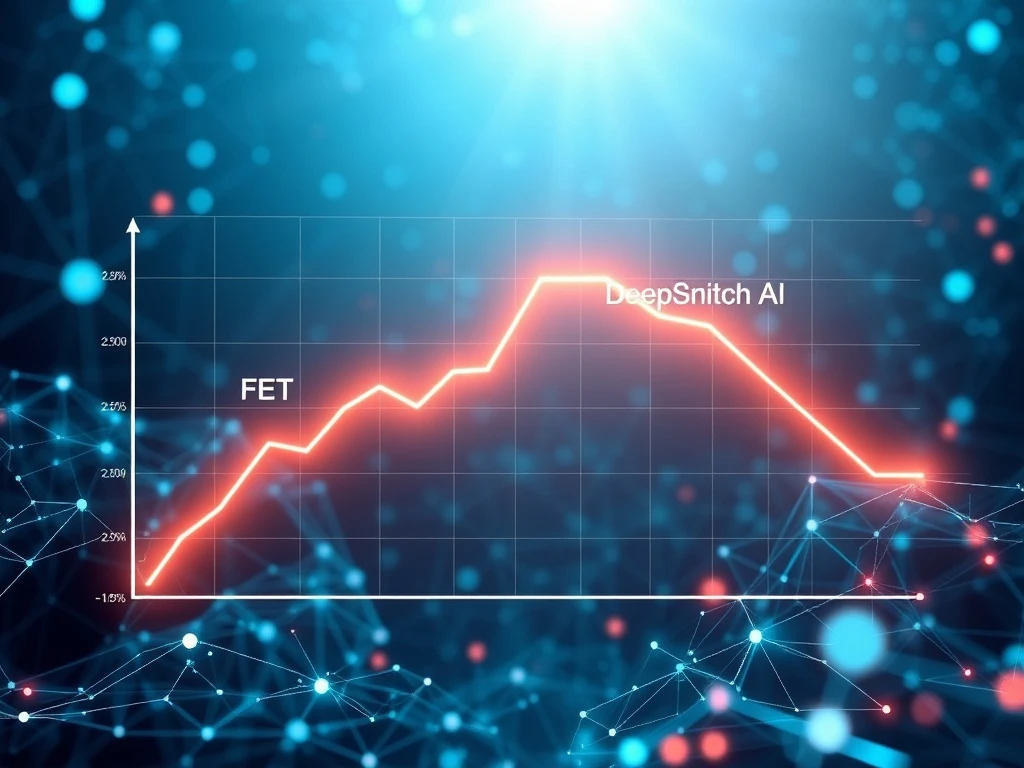
Fetch.ai (FET) has experienced notable price pressure throughout 2025, with the token declining approximately 42% from its yearly high according to CoinMarketCap data from November 2025. Several factors contribute to this performance trend. First, increased competition in the decentralized AI agent space has fragmented market attention. Second, technical challenges in scaling the network’s autonomous economic agent framework have delayed some roadmap milestones. Third, broader market rotations away from earlier-generation AI projects toward newer architectures have affected investor positioning.
Despite these challenges, Fetch.ai maintains significant technological foundations. The project continues development on its multi-agent system architecture, with recent testnet deployments showing improved transaction throughput. However, market response has been tempered by extended development timelines and the emergence of competing frameworks offering similar functionality with different technical approaches. Analysts note that FET’s decline reflects both project-specific factors and sector-wide reevaluation of first-mover advantages in rapidly evolving technological spaces.
Technical and Fundamental Assessment
Technical analysis of FET’s price action reveals weakening momentum across multiple timeframes. The token has broken below several key support levels that previously attracted buying interest. Fundamentally, while the project’s vision remains intact, execution timelines have extended beyond initial projections. Network metrics show stable but not dramatically growing active addresses, suggesting consolidation rather than expansion of the user base. Development activity remains high according to GitHub commit tracking, indicating continued technical progress despite market valuation pressures.
Beldex Project Evaluation: Market Position and Challenges
Beldex, focusing on privacy-preserving AI computations on blockchain, faces its own set of market challenges. The project’s unique approach to combining privacy protocols with machine learning operations initially attracted specialized interest. However, adoption hurdles have emerged as regulatory scrutiny increases around privacy-focused cryptocurrency applications. Additionally, technical complexity in implementing practical use cases has slowed commercial deployment timelines.
Market data indicates declining trading volumes for Beldex tokens throughout 2025, with liquidity concentrating on fewer exchanges. This concentration creates vulnerability to market microstructure effects and reduces accessibility for broader investor participation. The project’s technological differentiation, while theoretically valuable, has proven difficult to communicate effectively to mainstream cryptocurrency participants who prioritize immediate utility over long-term architectural advantages.
Comparative analysis shows Beldex facing competition from both general-purpose privacy coins and specialized AI platforms. This positioning between two established categories creates marketing and adoption challenges. Network statistics reveal moderate but stable usage, primarily from existing community members rather than new adopters. The project’s roadmap includes several technical upgrades scheduled for 2026, but market sentiment appears cautious pending demonstration of scalable real-world applications.
DeepSnitch AI: Emerging Project Analysis and Potential
DeepSnitch AI represents a newer entrant in the AI cryptocurrency space, focusing specifically on blockchain-based threat detection and security analytics. The project utilizes machine learning algorithms to identify suspicious transactions, smart contract vulnerabilities, and network anomalies across multiple blockchain ecosystems. This specialized application approach differentiates DeepSnitch from broader AI platforms, targeting the growing cybersecurity needs within decentralized finance and Web3 infrastructure.
The project’s technical architecture incorporates several innovative elements. First, its federated learning model allows analysis without compromising data privacy across different blockchain networks. Second, its reputation system for validators incorporates both on-chain and off-chain behavior metrics. Third, its token economics align incentives between security providers, network participants, and token holders through carefully designed reward mechanisms.
Market Reception and Growth Indicators
Early adoption metrics for DeepSnitch AI show promising trajectories despite the project’s recent launch. The platform has secured integration partnerships with three mid-sized decentralized exchanges and two cross-chain bridge protocols. These integrations provide real-world testing environments and initial revenue streams. Developer community growth metrics indicate increasing interest, with GitHub repository activity showing consistent contributions from both core team members and external developers.
Market analysts note several factors contributing to positive sentiment around DeepSnitch AI. The project addresses a clearly identified market need—blockchain security—with measurable metrics for success. Its focused approach avoids direct competition with established general-purpose AI platforms. Additionally, its team includes experienced professionals from both cybersecurity and blockchain development backgrounds, providing balanced expertise across both domains. Token distribution analysis shows reasonable allocation between team, ecosystem development, and public distribution, avoiding excessive concentration that sometimes plagues newer projects.
Broader Sector Analysis: AI Cryptocurrency Investment Considerations
Evaluating AI cryptocurrency projects requires multidimensional analysis beyond price movements. Several key factors distinguish sustainable projects from speculative ventures in this sector:
- Technological Differentiation: Projects must demonstrate unique technical approaches rather than incremental improvements on existing frameworks
- Market Fit: Solutions should address identifiable needs with clear adoption pathways
- Team Expertise: Balanced experience across AI/ML development and blockchain implementation
- Token Utility: Clear mechanisms linking token functionality to platform usage
- Roadmap Execution: Demonstrated ability to deliver on development milestones
- Community Engagement: Active developer and user participation beyond speculative trading
The AI cryptocurrency sector exhibits typical technology adoption cycle characteristics. Early projects often face reevaluation as the market matures and identifies which approaches deliver practical utility. This natural selection process explains why some established projects experience valuation pressures while newer entrants with differentiated approaches attract attention. Market participants increasingly distinguish between general AI platforms and specialized applications, with the latter often demonstrating clearer paths to sustainable adoption.
Regulatory and Institutional Landscape Developments
Regulatory frameworks continue evolving across major jurisdictions, with particular attention to AI applications in financial contexts. The European Union’s AI Act implementation, scheduled for full enforcement in 2026, establishes risk-based categorization that affects certain blockchain-based AI applications. United States regulatory agencies have issued guidance on AI usage in financial services, though blockchain-specific applications remain in interpretive gray areas.
Institutional participation in AI cryptocurrency projects shows selective growth. Venture capital firms increasingly focus on infrastructure-level investments rather than application tokens. Corporate partnerships between traditional AI companies and blockchain projects have increased throughout 2025, though these collaborations typically emphasize enterprise solutions rather than consumer-facing applications. This institutional interest provides validation for the sector while introducing different evaluation criteria focused on long-term viability rather than short-term price movements.
Conclusion
The AI crypto coins landscape for 2026 preparation reveals significant differentiation among projects. Established platforms like Fetch.ai face natural maturation challenges as markets evaluate execution against vision. Specialized projects like Beldex navigate adoption hurdles within competitive subsectors. Meanwhile, emerging solutions like DeepSnitch AI demonstrate how focused applications addressing specific blockchain needs can generate positive market reception despite broader sector volatility. Successful navigation of this evolving landscape requires investors to balance technological assessment, market timing, and fundamental analysis while recognizing the rapid innovation pace characteristic of blockchain and artificial intelligence convergence. The coming months will likely see continued differentiation as projects demonstrate real-world utility and sustainable adoption metrics.
FAQs
Q1: What factors typically drive price declines for established AI crypto coins like FET?
Multiple factors contribute including increased competition, technical development delays, broader market rotations, and reevaluation of first-mover advantages as the sector matures. Projects must continuously demonstrate execution and adoption to maintain valuation levels.
Q2: How does DeepSnitch AI differ from general-purpose AI blockchain platforms?
DeepSnitch AI focuses specifically on blockchain security applications using machine learning for threat detection, rather than offering broad AI functionality. This specialized approach targets identifiable market needs in DeFi and Web3 security.
Q3: What metrics should investors consider when evaluating AI cryptocurrency projects?
Key metrics include technological differentiation, market fit clarity, team expertise balance, token utility mechanisms, roadmap execution history, developer activity levels, partnership quality, and user adoption trends beyond speculative trading.
Q4: How does regulatory development affect AI crypto coin prospects for 2026?
Regulatory frameworks increasingly address AI applications in financial contexts, creating both compliance requirements and potential adoption barriers. Projects with clear utility beyond speculative trading typically navigate regulatory environments more successfully.
Q5: What role does exchange stability play in emerging AI cryptocurrency project success?
Exchange stability, as demonstrated by Binance’s continued operations despite market uncertainty, provides crucial infrastructure for liquidity, price discovery, and accessibility. Emerging projects benefit from listing on reputable exchanges with demonstrated operational resilience.