Cronos Fireblocks Partnership: Revolutionary Institutional Trading Infrastructure for Global Asset Tokenization
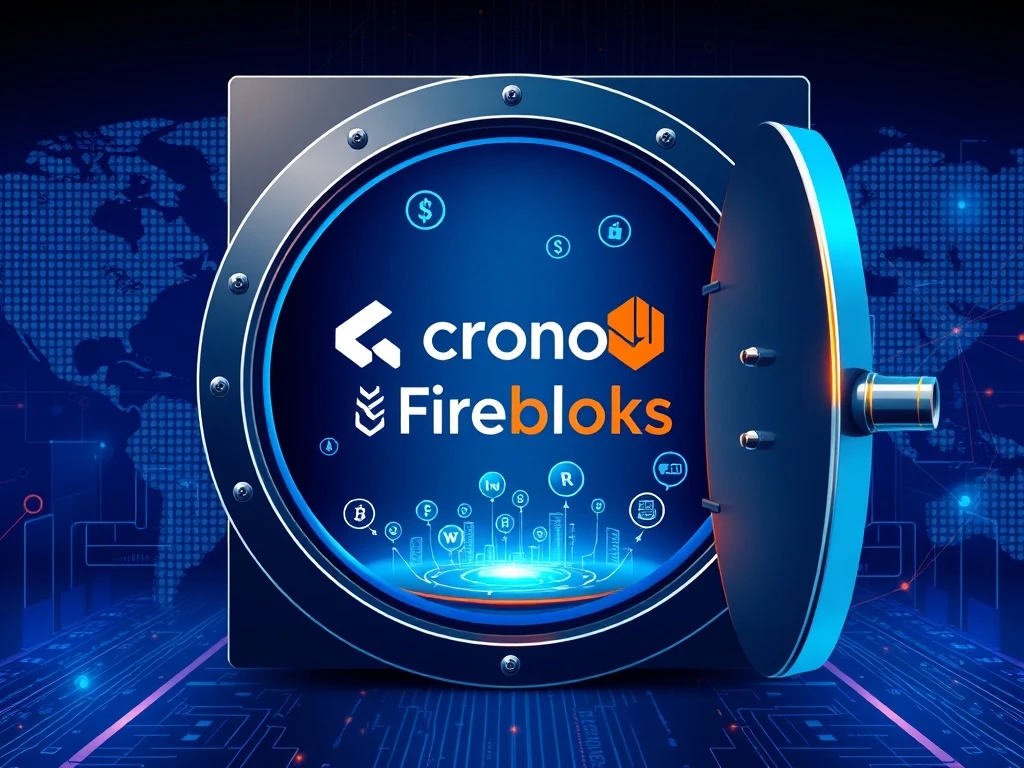
In a landmark development for blockchain institutional adoption, Cronos has announced a strategic partnership with Fireblocks to fundamentally transform institutional trading infrastructure. This collaboration, announced on March 15, 2025, represents a significant advancement in secure custody solutions for tokenized assets, prediction markets, and commodities globally. The integration addresses critical barriers that have historically limited institutional participation in digital asset markets.
Cronos Fireblocks Partnership: A Strategic Institutional Infrastructure Move
The Cronos and Fireblocks collaboration establishes a comprehensive framework for institutional trading. This partnership specifically targets three core areas: secure custody solutions, global access to tokenized assets, and enterprise-grade security protocols. Consequently, financial institutions gain unprecedented access to previously challenging markets. The infrastructure supports multiple asset classes simultaneously. Therefore, traditional finance entities can diversify portfolios efficiently.
Fireblocks brings established institutional security credentials to this partnership. The company currently secures over $3 trillion in digital assets for more than 1,800 institutional clients worldwide. Meanwhile, Cronos provides the scalable blockchain infrastructure necessary for high-volume trading. This combination creates a powerful institutional gateway. Financial analysts note this partnership addresses longstanding security concerns. Additionally, it provides regulatory compliance frameworks essential for institutional adoption.
Tokenized Assets and Commodities: The New Institutional Frontier
Tokenization represents a fundamental shift in asset management. Traditional commodities, real estate, and financial instruments increasingly transition to blockchain representation. The Cronos-Fireblocks infrastructure specifically supports this transformation. Institutional investors now access tokenized gold, oil, and agricultural products. Furthermore, they can trade these assets with traditional security expectations.
The partnership enables several key capabilities for tokenized assets:
- Multi-signature custody solutions meeting institutional governance requirements
- Real-time settlement mechanisms reducing counterparty risk significantly
- Regulatory compliance tools for global jurisdictional requirements
- Insurance-backed asset protection through Fireblocks’ enterprise network
- Cross-chain interoperability allowing asset movement between blockchain networks
Commodities trading particularly benefits from this infrastructure. Traditional commodities markets involve complex logistics and storage considerations. Tokenization simplifies these processes dramatically. For instance, agricultural commodities can trade as digital representations. Physical delivery obligations convert to digital settlements. This transformation reduces operational costs substantially. It also increases market accessibility for smaller institutions.
Prediction Markets: Institutional-Grade Infrastructure Emerges
Prediction markets represent another significant focus area. These markets allow participants to trade on event outcomes. Traditionally, they operated with limited institutional participation. Security concerns and regulatory uncertainty created substantial barriers. The Cronos-Fireblocks partnership directly addresses these challenges. Enterprise-grade security protocols now protect prediction market participation. Additionally, compliance tools ensure regulatory adherence across jurisdictions.
Institutional prediction market trading enables several applications. Corporations can hedge against specific business risks. Investment firms can gain exposure to geopolitical events. Insurance companies can develop innovative products. The infrastructure supports complex conditional trading. It also provides audit trails for regulatory purposes. This development marks a maturation phase for prediction markets. Consequently, they transition from niche applications to mainstream financial tools.
Global Impact and Market Transformation
The partnership’s global implications extend across multiple financial sectors. Emerging markets particularly benefit from enhanced accessibility. Tokenized assets require less infrastructure than traditional alternatives. Therefore, regions with underdeveloped financial systems gain improved access. This accessibility promotes financial inclusion objectives. It also creates new investment opportunities globally.
Traditional financial institutions face increasing pressure to modernize. Digital asset adoption becomes essential rather than optional. The Cronos-Fireblocks infrastructure provides a migration pathway. Banks, hedge funds, and asset managers can transition gradually. They maintain familiar security standards throughout this process. This approach reduces implementation risks significantly. It also accelerates adoption timelines across the industry.
| Feature | Traditional Systems | Cronos-Fireblocks Solution |
|---|---|---|
| Settlement Time | 2-5 business days | Near-instant |
| Global Accessibility | Regional limitations | Worldwide access |
| Asset Classes | Traditional only | Traditional + tokenized |
| Security Model | Centralized custodians | Multi-party computation |
| Operational Cost | High infrastructure | Reduced overhead |
Security Architecture and Institutional Confidence
Security remains the paramount concern for institutional adoption. The partnership combines Fireblocks’ MPC-CMP technology with Cronos’ blockchain security. This combination creates defense-in-depth protection. Assets remain secure throughout the trading lifecycle. The architecture prevents single points of failure. It also provides comprehensive audit capabilities.
Institutional confidence depends on several security factors. The infrastructure addresses each systematically. Private key management utilizes distributed computation. Transaction authorization requires multiple approvals. Network security employs advanced cryptographic techniques. These measures exceed traditional financial security standards. Consequently, institutional adoption barriers decrease substantially. Risk committees gain necessary assurance for digital asset allocation.
Conclusion
The Cronos Fireblocks partnership establishes revolutionary institutional trading infrastructure for global financial markets. This collaboration addresses critical security, accessibility, and compliance challenges. Tokenized assets, commodities, and prediction markets gain enterprise-grade infrastructure. Consequently, institutional adoption accelerates across blockchain ecosystems. The partnership represents a maturation milestone for digital asset markets. Traditional and digital finance convergence becomes increasingly seamless. Financial institutions worldwide now possess necessary tools for digital transformation. This infrastructure development promises to reshape global trading fundamentally.
FAQs
Q1: What specific security advantages does the Cronos-Fireblocks partnership provide?
The partnership combines Fireblocks’ multi-party computation technology with Cronos’ blockchain security protocols. This creates defense-in-depth protection against cyber threats, eliminates single points of failure, and provides institutional-grade private key management exceeding traditional financial security standards.
Q2: How does this infrastructure benefit traditional commodities trading?
The infrastructure enables tokenization of physical commodities, allowing digital representation and trading of assets like gold, oil, and agricultural products. This reduces logistical complexities, lowers storage costs, enables near-instant settlement, and increases accessibility for global participants.
Q3: What regulatory compliance features does the partnership offer institutions?
The infrastructure includes built-in compliance tools for global regulatory requirements, provides comprehensive audit trails for reporting, supports jurisdictional restrictions implementation, and offers transaction monitoring capabilities essential for institutional adoption across different regulatory environments.
Q4: How does this partnership affect prediction market accessibility for institutions?
The partnership creates enterprise-grade security protocols specifically for prediction markets, addresses historical regulatory concerns through compliance frameworks, enables conditional trading structures, and provides the institutional confidence necessary for mainstream financial application of prediction markets.
Q5: What timeline should institutions expect for implementing this trading infrastructure?
The infrastructure is currently available for institutional implementation, with integration timelines varying by institution size and existing systems. Most institutions can implement basic functionality within 30-60 days, while comprehensive integration typically requires 90-180 days depending on compliance requirements and internal processes.