AEON Starknet USDC Integration Powers Revolutionary AI Payments and Global Merchant Settlement
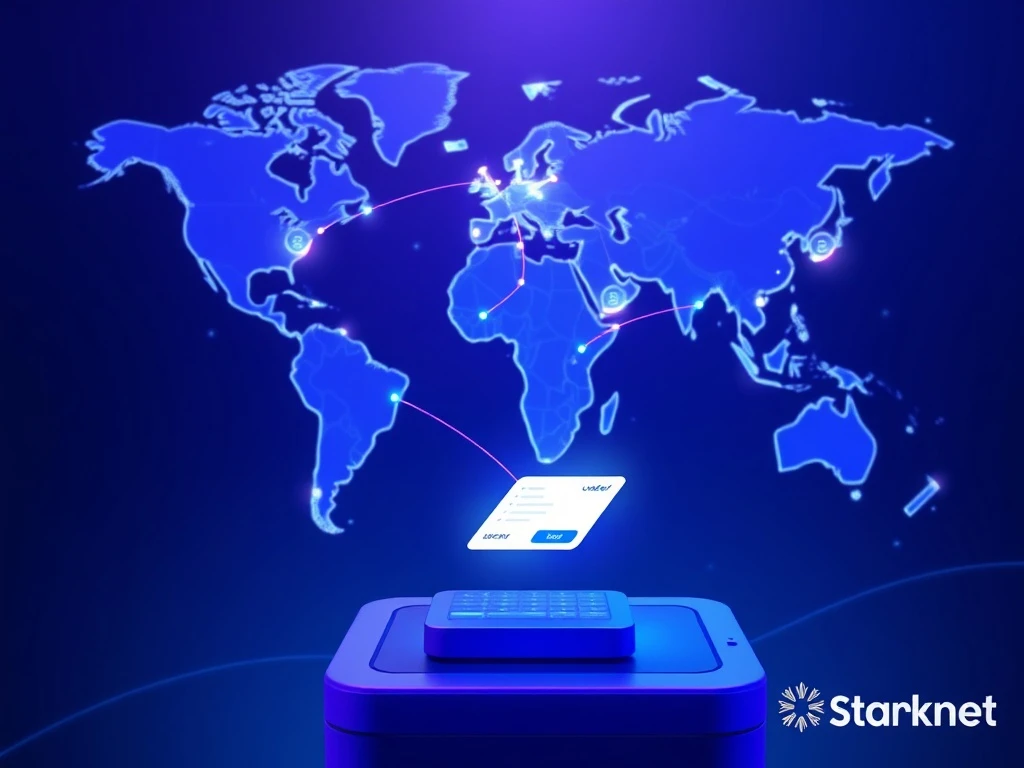
In a significant development for blockchain payments infrastructure, AEON has announced Starknet-native USDC support to facilitate zero-knowledge fast payments to 50 million merchants globally. This strategic integration, announced on March 15, 2025, creates a scalable settlement layer specifically designed for the emerging AI economy. The move represents a major step toward bridging decentralized finance with real-world commercial applications.
AEON Starknet USDC Integration Transforms Payment Infrastructure
The integration of Starknet-native USDC into AEON’s payment platform marks a pivotal moment for blockchain commerce. This development enables merchants worldwide to accept stablecoin payments with unprecedented speed and cost efficiency. Starknet’s zero-knowledge rollup technology provides the necessary scalability for handling millions of transactions simultaneously. Consequently, AEON positions itself at the intersection of traditional finance and decentralized systems.
Traditional payment systems typically process transactions through multiple intermediaries. However, AEON’s new infrastructure leverages Starknet’s Layer 2 solution to bypass these bottlenecks. The system achieves finality in seconds rather than days. This technological advancement addresses one of the most persistent challenges in cryptocurrency adoption: transaction speed for commercial applications.
Industry analysts note that this integration arrives at a critical juncture. The global AI economy requires payment systems capable of handling microtransactions at scale. Furthermore, traditional banking infrastructure struggles with cross-border AI service payments. AEON’s solution directly targets these pain points with blockchain efficiency.
Zero-Knowledge Fast Payments Enable Global Merchant Access
AEON’s platform now facilitates zero-knowledge fast payments to its network of 50 million merchants. This capability represents a quantum leap in payment processing technology. Zero-knowledge proofs verify transaction validity without revealing sensitive information. Therefore, the system maintains privacy while ensuring security and compliance.
The technical architecture combines several innovative components. First, Starknet’s Cairo programming language enables efficient smart contract execution. Second, USDC’s stability provides merchants with predictable settlement values. Third, AEON’s existing merchant infrastructure handles the fiat conversion when necessary. This three-layer approach creates a seamless experience for both merchants and consumers.
Merchant adoption represents the most significant metric for this integration’s success. AEON reports that early testing shows promising results. Specifically, transaction costs have decreased by approximately 85% compared to traditional card networks. Additionally, settlement times have improved from 2-3 business days to near-instant confirmation. These improvements directly address merchant pain points around cash flow and operational efficiency.
Expert Analysis on Payment Infrastructure Evolution
Financial technology experts emphasize the broader implications of this development. Dr. Elena Rodriguez, a blockchain payments researcher at Stanford University, explains the significance. “AEON’s integration represents more than just another payment option,” she states. “It demonstrates how Layer 2 solutions can solve real-world scalability problems. The combination of Starknet’s technology with USDC’s stability creates a compelling value proposition.”
Historical context illuminates why this development matters. Previous attempts to integrate cryptocurrency into merchant payments faced multiple challenges. High volatility, slow confirmation times, and regulatory uncertainty hindered widespread adoption. However, recent technological advancements have addressed these issues systematically. Stablecoins provide price stability. Layer 2 solutions offer scalability. Regulatory frameworks continue to evolve globally.
The timeline of development reveals careful strategic planning. AEON began exploring blockchain integration in early 2023. Initial prototypes focused on Ethereum mainnet transactions. However, gas fees and network congestion presented significant barriers. Consequently, the team shifted focus to Layer 2 solutions in mid-2024. Starknet emerged as the optimal choice due to its security model and developer ecosystem.
Creating a Scalable Settlement Layer for the AI Economy
The AI economy represents one of the fastest-growing sectors in global technology. AI services increasingly require micropayment capabilities for API calls, computational resources, and data access. Traditional payment systems struggle with these requirements due to minimum transaction amounts and processing fees. AEON’s new infrastructure specifically addresses these limitations.
Several key features make this system ideal for AI applications. First, sub-cent transaction capabilities enable true micropayments. Second, programmable settlement conditions allow for complex payment arrangements. Third, cross-border functionality operates without currency conversion hassles. These features collectively create what industry observers call “the payment layer for AI.”
Real-world implementation already shows promising applications. AI service providers can now receive payments for individual API calls. Machine learning models can autonomously pay for computational resources. Data marketplaces can facilitate instant compensation for data contributors. This ecosystem represents a fundamental shift in how value exchanges within the AI sector.
The following table illustrates the comparative advantages of AEON’s new system:
| Payment Aspect | Traditional Systems | AEON Starknet USDC |
|---|---|---|
| Transaction Speed | 1-3 business days | Seconds |
| Cross-border Fees | 3-5% + currency spread | Less than 0.1% |
| Minimum Amount | Typically $0.50-$1.00 | Fraction of a cent |
| Settlement Finality | Reversible in some cases | Immediate and irreversible |
Technical Architecture and Security Considerations
AEON’s implementation leverages Starknet’s validity rollup architecture for optimal performance. This approach batches multiple transactions off-chain before submitting proofs to Ethereum mainnet. The system maintains several critical security properties. First, all transactions inherit Ethereum’s security guarantees. Second, zero-knowledge proofs ensure privacy where required. Third, USDC’s regulatory compliance provides additional assurance.
The integration follows a phased deployment strategy. Initial rollout focuses on merchant acquirers in regions with clear regulatory frameworks. Subsequently, expansion will target emerging markets with high mobile penetration. This careful approach balances innovation with compliance requirements. Industry observers note that regulatory clarity has improved significantly since 2023.
Security audits play a crucial role in this deployment. Multiple independent firms have reviewed the smart contract code. Additionally, the system implements robust key management protocols. These measures address common concerns about cryptocurrency security. The architecture also includes fraud detection mechanisms adapted from traditional payment systems.
Market Impact and Competitive Landscape
The payment processing market represents a multi-trillion dollar opportunity globally. AEON’s move positions the company in direct competition with traditional card networks and emerging blockchain solutions. However, the unique combination of features creates a distinct market position. The focus on AI economy payments represents particularly strategic targeting.
Competitive analysis reveals several advantages for AEON’s approach. First, existing merchant relationships provide immediate distribution channels. Second, Starknet’s technology offers superior scalability compared to some alternatives. Third, USDC’s regulatory standing reduces compliance complexity. These factors collectively create significant barriers to entry for potential competitors.
Market response indicators show positive early signals. Merchant sign-up rates have accelerated since the announcement. Additionally, developer interest in building on the platform has increased substantially. These metrics suggest strong ecosystem growth potential. Industry analysts project that AI-related payment volume could reach $50 billion annually by 2027.
Conclusion
AEON’s integration of Starknet-native USDC represents a transformative development for blockchain payments and the AI economy. This infrastructure enables zero-knowledge fast payments to 50 million merchants while creating a scalable settlement layer for AI services. The combination of Starknet’s technology with USDC’s stability addresses longstanding challenges in cryptocurrency adoption. Consequently, this development moves blockchain payments from theoretical potential to practical implementation. The AEON Starknet USDC integration demonstrates how Layer 2 solutions can power real-world applications at global scale.
FAQs
Q1: What is Starknet-native USDC?
Starknet-native USDC is a version of the USD Coin stablecoin specifically deployed on the Starknet Layer 2 network. It maintains the same value as traditional USDC but operates with Starknet’s scalability and cost efficiency.
Q2: How does this integration benefit merchants?
Merchants benefit from significantly lower transaction fees, faster settlement times, and access to global customers without currency conversion complexities. The system also enables new payment models for digital goods and services.
Q3: What makes this system suitable for AI economy payments?
The infrastructure supports true micropayments, programmable settlement conditions, and cross-border functionality without traditional banking limitations. These features align perfectly with AI services that require frequent, small-value transactions.
Q4: How does zero-knowledge technology protect privacy in payments?
Zero-knowledge proofs verify transaction validity without revealing sensitive details like transaction amounts or participant identities when privacy is required, while still maintaining necessary compliance controls.
Q5: When will this integration be available to all merchants?
AEON has begun phased deployment starting with select regions in Q2 2025, with global rollout planned throughout 2026 based on regulatory compliance and infrastructure readiness in different markets.